The Grand Tour
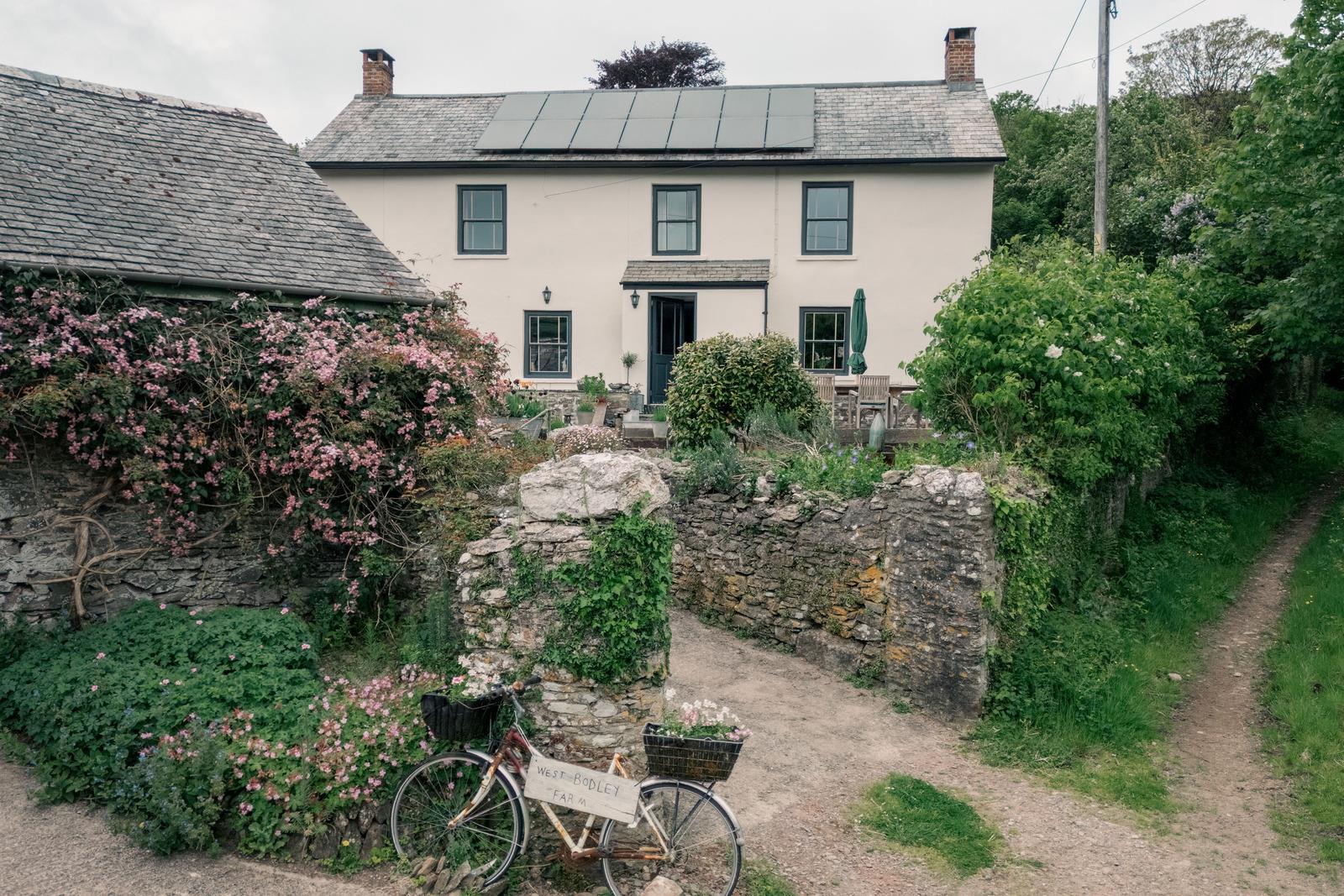
The farm sits at the end of a quiet no-through lane. Steps lead up to the front porch, opening onto a welcoming living space, bathed in natural light courtesy of two sash windows. A log burner sits in a large inglenook fireplace, framed by original glazed cupboards.
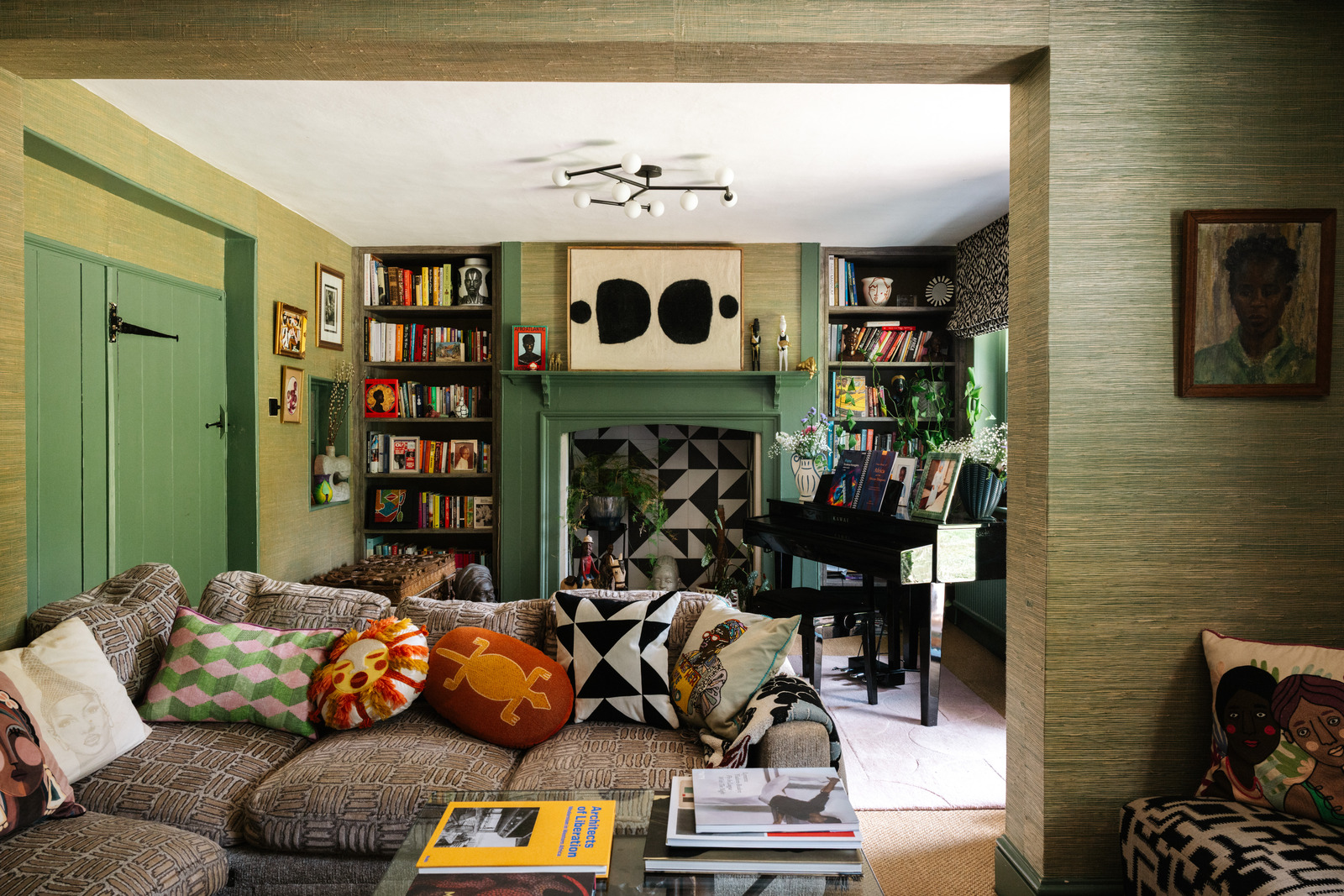
A second sitting room has a log burner and full-height fitted storage. Here, dado-height panelling is complemented by warm plum-toned walls.
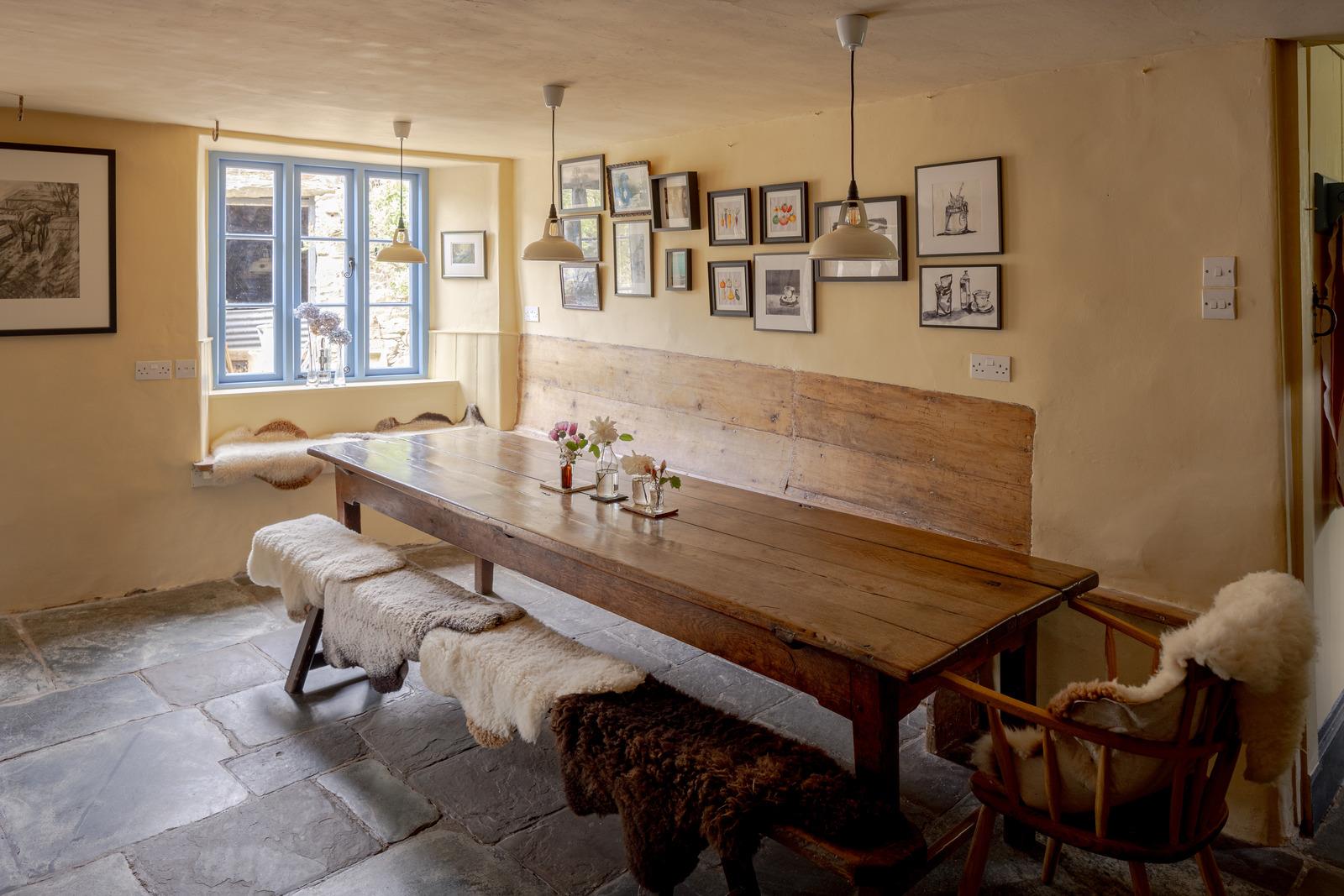
A short flight of stone steps ascends from the main living space to a vast open-plan kitchen and dining room with original flagstone flooring. The dining area has built-in bench seating and an original timber door onto the yard. A log burner and an electric Aga sit in an alcove; behind the latter, the backing plate of the original cast-iron stove remains in situ. Kitchen work surfaces are topped with slate, and there is an AEG induction hob and oven and underfloor heating. To the rear is the original dairy, complete with slate open shelving. On this floor there is also a handy utility room, a guest WC and a studio.
The first floor is occupied by six bedrooms. Two have en suite bathrooms (one with a deluge shower, one with a roll-top bathtub), while another has fitted bookshelves and is currently used as a library. There is also a shared bathroom on this floor.
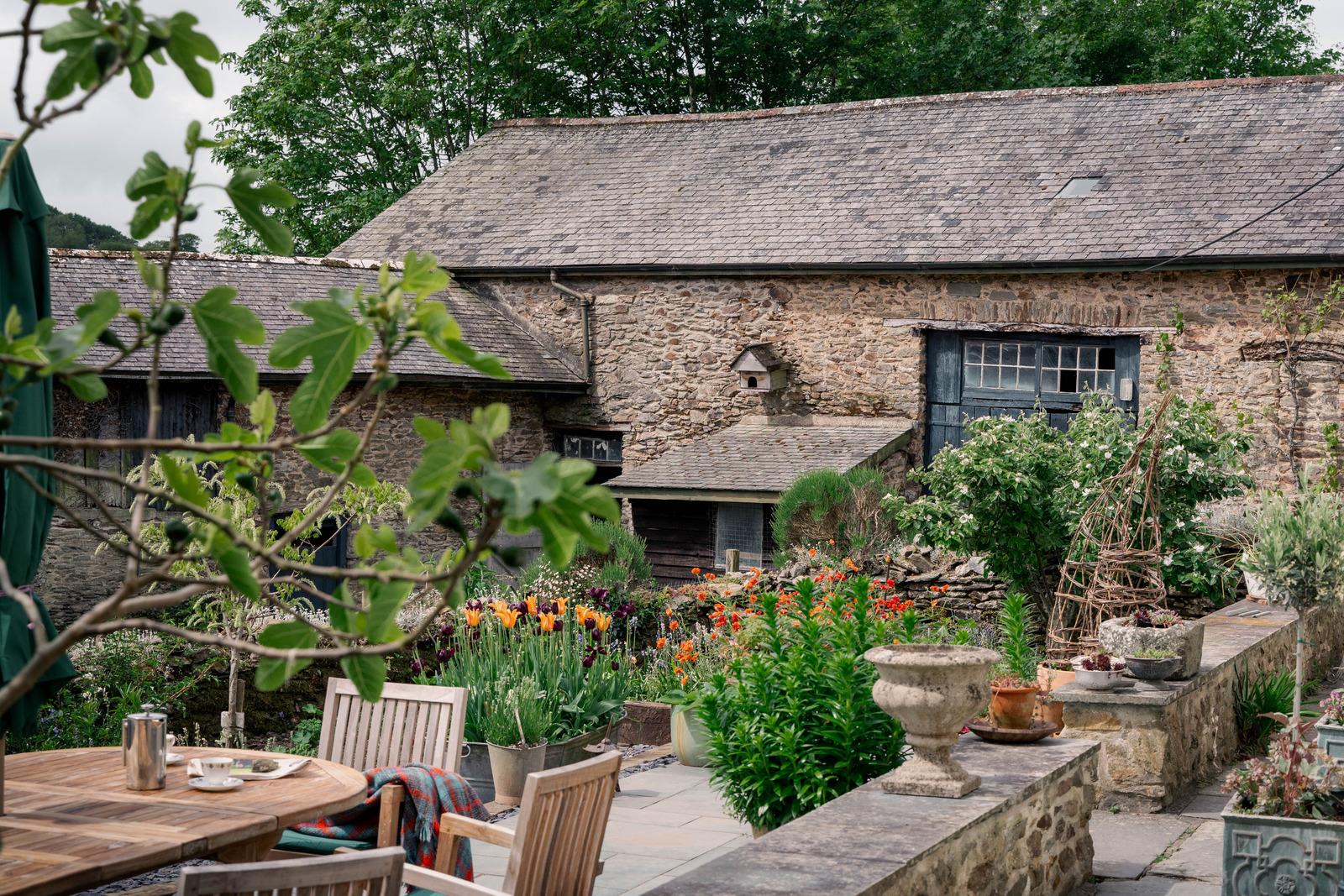
The original stone barns wrap around the south and west of the house, enclosing the cobbled yard. Supplied with electricity and water, they are otherwise untouched, with many artefacts from the farm’s past remaining in situ, including the original water wheel mechanism for the threshing barn.
The barns create a warm, sheltered area, where the current owners grow outdoor grapes and kiwis. The barn at the front of the house is used as a large carport.
The Great Outdoors
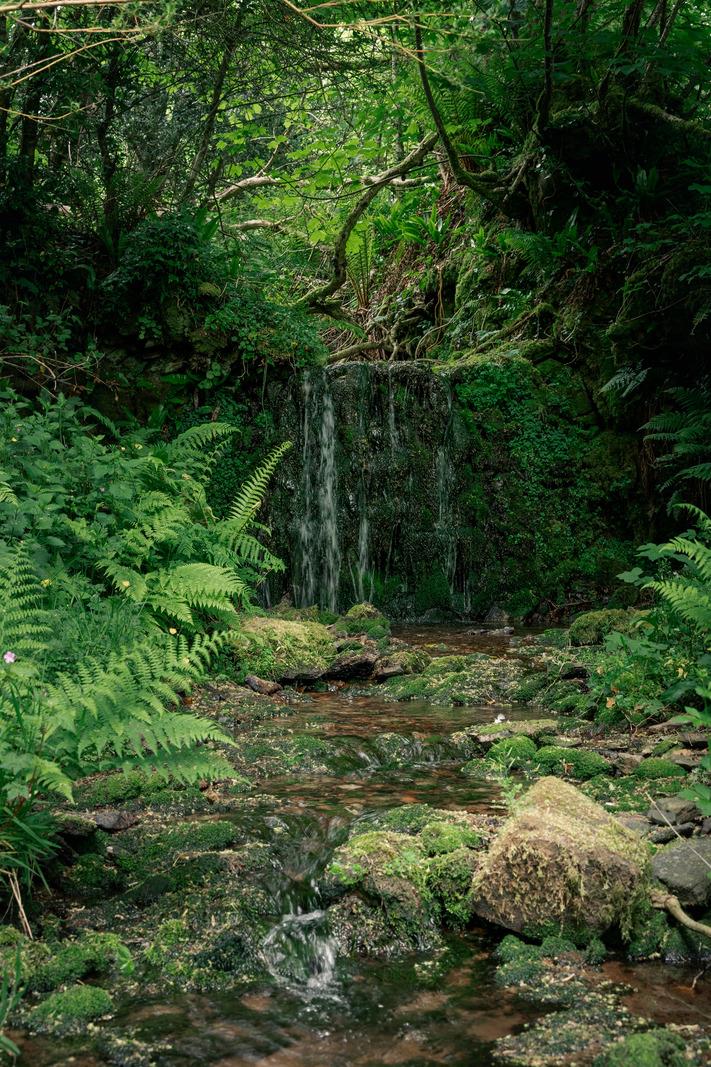
The house sits in almost four acres of land, including a walled garden, a large paved terrace, a vegetable garden, a polytunnel and a fruit cage. The gardens at the top of the house enjoy magnificent panoramic views across the verdant landscape, and there is a timber garden house. Here, a stream runs through a wild garden, cascading into a pretty waterfall.
The gardens are brimming with fruit trees, including pear, apple, damson, quince, cherry and ancient medlars. There are paddocks on both sides of the house, and the current owners run the farm as a successful smallholding with chickens, sheep and goats.
Out and About
The house sits in Parracombe, a rural village within Exmoor National Park. The village pub, primary school, community shop and church are all within easy walking distance, while further amenities are found in the nearby towns of Ilfracombe and Barnstaple.
The farm is perfectly located for exploring in nature; the moors that surround it are an excellent starting point. The South West Coast Path is easily accessible by car or a walk across the fields behind the house; a popular stretch is the picturesque walk from Woolacombe to Ilfracombe. The latter is one of the liveliest towns on the North Devon coast, thanks to its harbour with a range of attractions from Damian Hirst's imposing sculpture of Verity to the mignon Chapel of Saint Nicholas. It is also the departure point for boat rides to Lundy Island, famous for its dramatic scenery and array of wildlife.
There are several schooling options in the area, including Parracombe C of E Primary, Kentisbury Primary and West Buckland all-through school.
Barnstaple rail station is a 30-minute drive from the house, and runs regular services to Exeter St Davids. From here, trains run to London Paddington.
Council Tax Band: E





 Related Stories