The Grand Tour
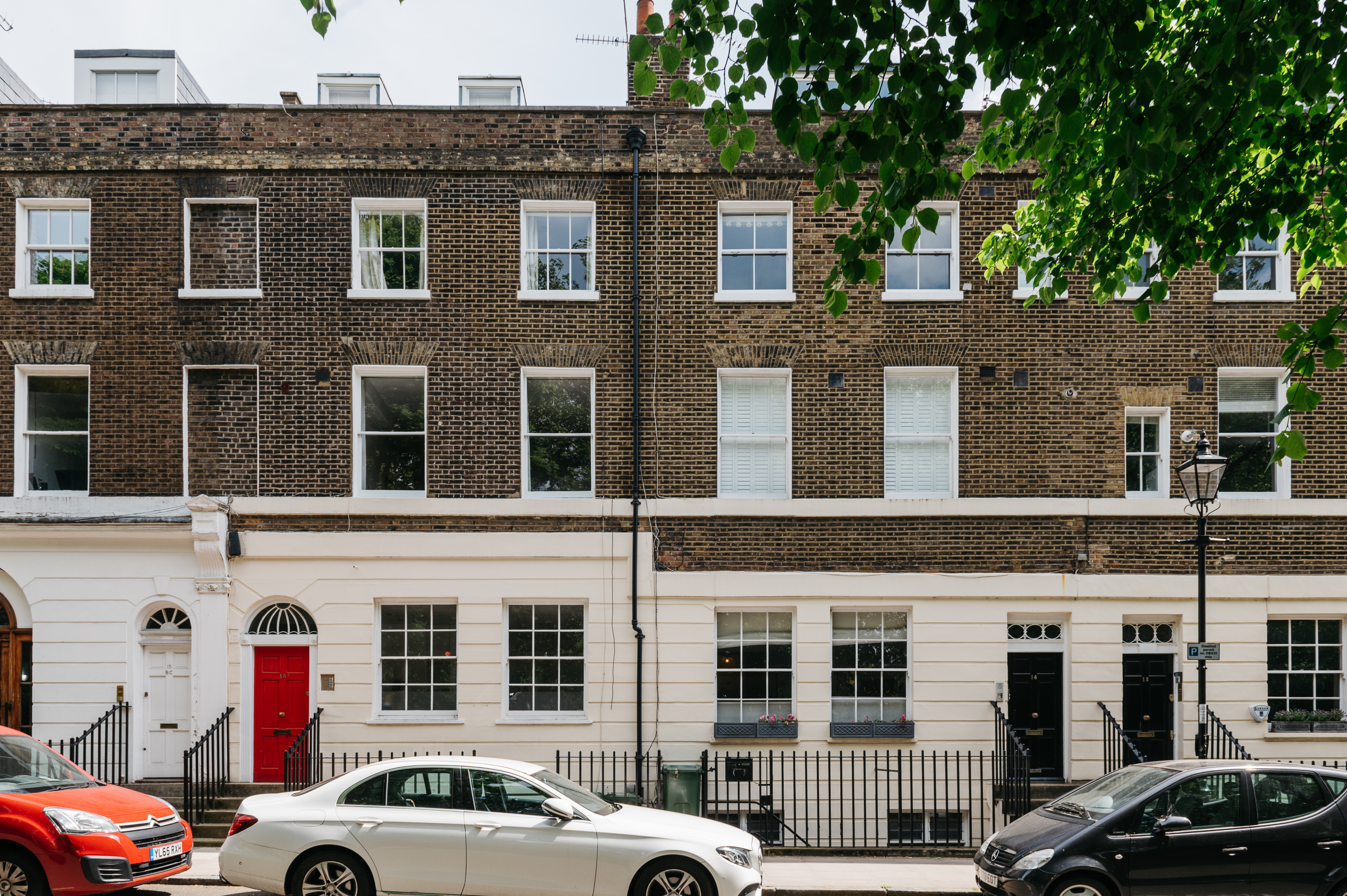
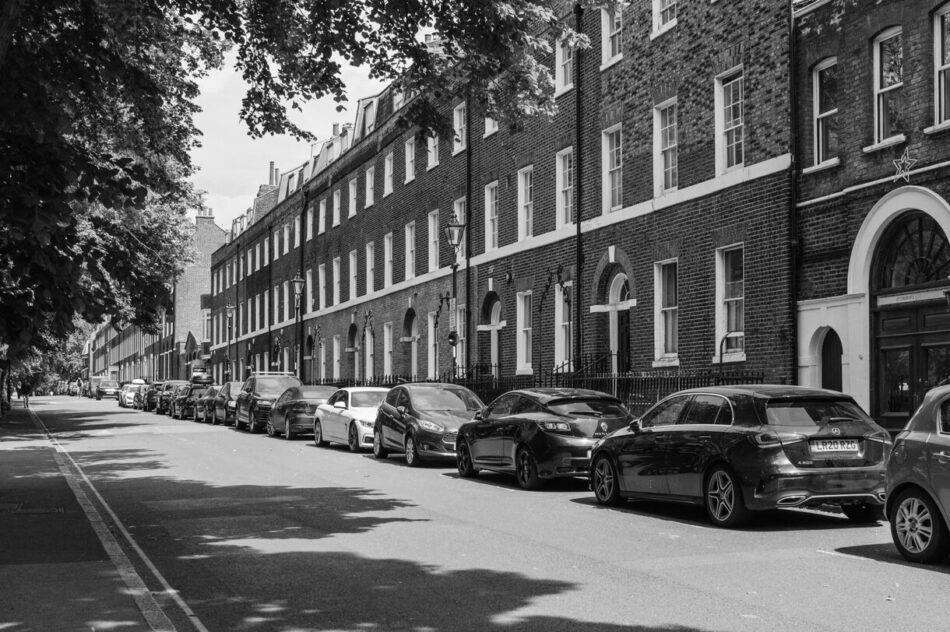
The apartment is situated on the top two floors of a brick and stucco Georgian townhouse. Entrance is via a spacious turned staircase, with a beautiful stained-glass arched window casting light over the main landing.
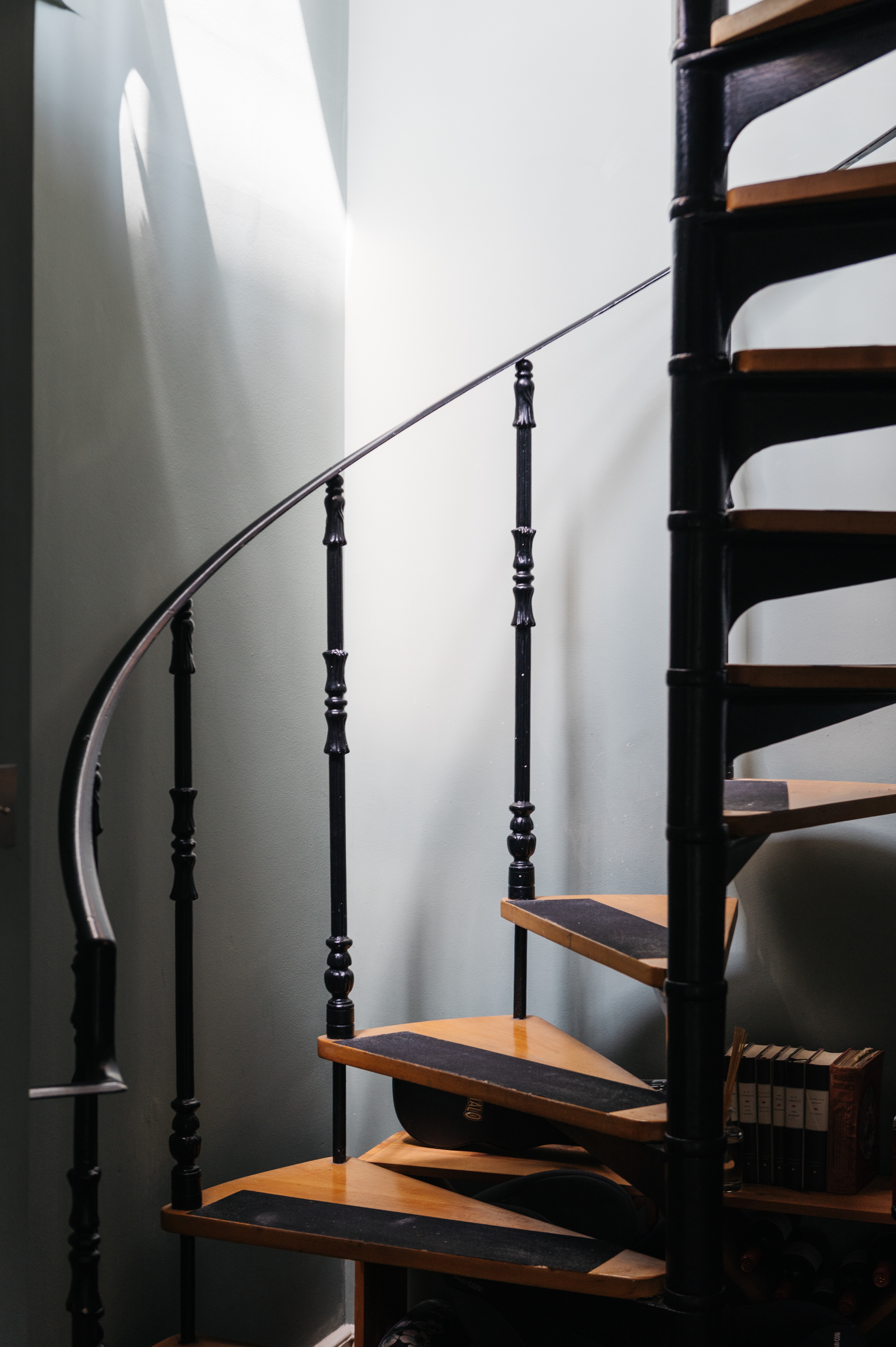
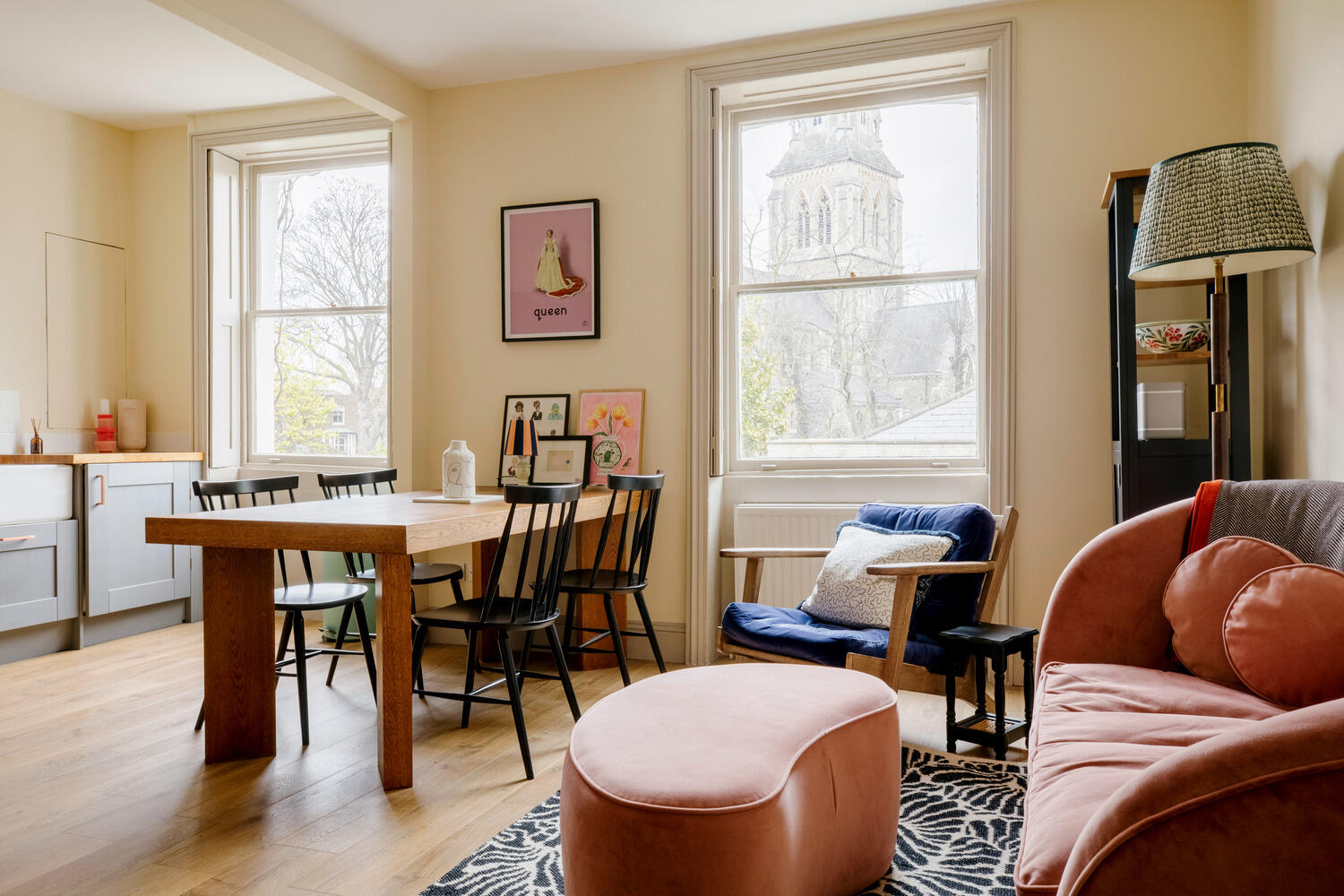
Accessed via a spiral staircase, the living/kitchen/dining area has been finished in a palette of calming tones by Farrow & Ball. It is bathed in light from twin skylights and dual-aspect windows with far-reaching views over both Highbury fields and the surrounding cityscape. A later Victorian fireplace has been added as a focal point for the room, and a large contemporary kitchen, with stone worktops, sits adjacent to the spacious terrace area. There is room for a dining table and chairs making it the perfect space for entertaining.
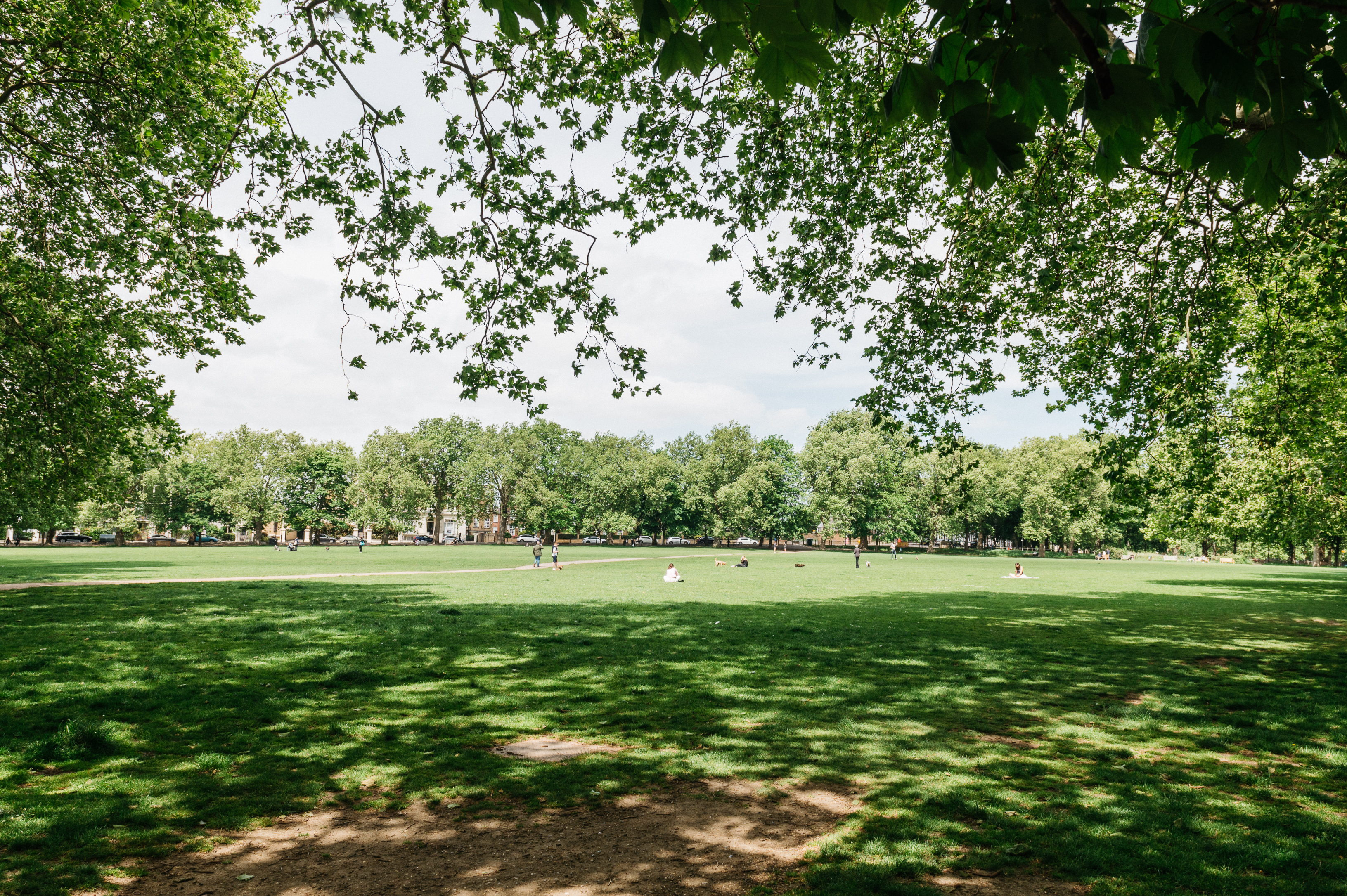
At the front of the plan, on the lower floor, sits the main bedroom, with views over bucolic Highbury Fields (new windows have been installed throughout). The space has been finished in Farrow & Ball ‘Stiffkey Blue’ and has built-in wardrobes and a spacious en suite bathroom. Adjacent sits a large second bedroom, with original floorboards and a large picture window. On this floor, there is an abundance of fitted storage space for life’s necessities.
A main bathroom has been finished in pretty blue and white tiles and has a matching rolltop bathtub.
The Great Outdoors
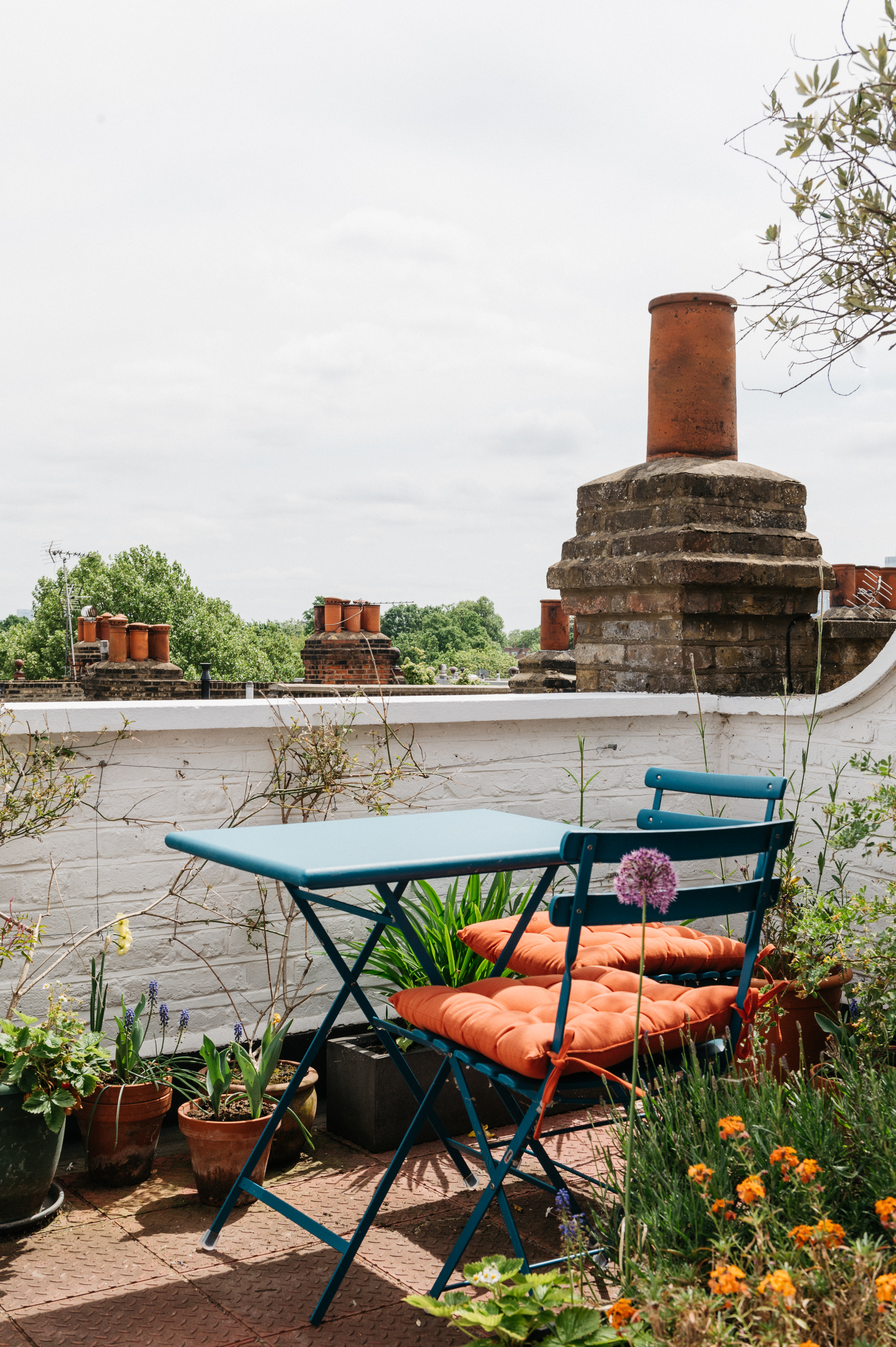
A large outdoor terrace provides an ardent oasis in Highbury’s central location and offers extensive views over the chimney pots of neighbouring houses and beyond. Perfect for morning coffee or alfresco dining, the space allows light to flood into the surrounding rooms. There is room for planters and a small table and chairs.
Out and About
The apartment offers a small village atmosphere thanks to nearby Highbury Barn, where Godfrey’s butcher, Bourne’s Fishmongers and the excellent, original branch of La Fromagerie are all within easy reach. The Maison Bleue cafe is just around the corner and especially popular for weekend coffee or brunch before a walk around Highbury Fields. Food lovers are spoilt for choice with award-winning restaurants Trullo, Westerns Laundry and Farang all within walking distance, and excellent gastro pubs such as The Pig and Butcher and Smokehouse. Upper Street is moments away and home to an abundance of amenities from Ottolenghi to the Superette deli, Sampler wine shop and Udderlicious for ice cream.
Entertainment can be found in many forms, thanks to the Almeida Theatre, Everyman Screen on the Green, Union Chapel and Sadler’s Wells. Upper Street has recently benefited from the Islington Square development, where the arrival of Third Space provides health club facilities equal to any in the city.
Highbury Fields presents ample opportunities to enjoy the outdoors with tennis and netball courts, five-a-side football pitches and as a regular meeting point for the Islington Cycle Club. There is also Highbury Fields parkrun every Saturday morning with the start line just outside the front door. King’s Cross and recently developed Coal Drops Yard are one stop away by Tube and home to excellent restaurants like Barrafina, Granger & Co. and Dishoom as well as the cultural hub at King’s Place. Dalston is also one stop away by Overground with all manner of vibrant bars, eateries and live music venues.
Highbury Place has excellent access to public transport with Highbury & Islington Station, only a few minutes’ walk from the front door, on the Victoria Line, London Overground and Northern City Line. There are plenty of bus routes into and out of the city, and with King’s Cross only one stop away on the Victoria Line, it’s possible to be at St Pancras International and the Eurostar in under 15 minutes.
Tenure: Share of Freehold
Lease Length: approx. 92 years remaining
Service Charge: N/A
Ground Rent: N/A
Council Tax Band: E


 Related Stories