InigoInigo Logo

A Private View: a former rectory turned artistic shoreline sanctuary

Ten years ago, the artist Tim Noble and photographer Scarlett Carlos Clarke made the leap from London to a life by the sea in Kingsdown, Kent. Enchanted by the magnificent Neptune House, they became its custodians, lovingly restoring its grand features and allowing the house to breathe. Awash with colour and pattern (and now ready for its next chapter) the house has been the perfect home for the couple – and a container for their superb art collection ...

Homes
words
Dale Berning Sawa
photography
Clàudia Padrosa
A Private View: a former rectory turned artistic shoreline sanctuary

When the artist Tim Noble met photographer Scarlett Carlos Clarke, they were both coming out of relationships and, as Tim puts it, “it seemed like a really good idea to jettison from the big city.” They had been living in a Victorian artist’s studio in Parson’s Green. Scarlett owned a beach house in Kingsdown, on the outskirts of Deal in Kent. Tim found a garage nearby to work in, and moving in was like heeding a call from the sea. “Being a bit of a Pisces Aquarius,” he says, “I think I had a massive water obsession. It just needed to be answered.”

Ten years on, the Kingsdown home that the couple are now preparing to leave is altogether grander than a beach house, yet it comes with the same intimate connection to the water. Now for sale, Neptune House is Kingsdown’s former rectory, a stone’s throw from the 1853 church of St John the Evangelist. It sits proudly on the south side of Upper Street, its grand circular driveway leading up to the arched front door. Views to the front look out over the village, storied Victorian houses dancing up the hill across the road. A treehouse stands guard by the gate. The shingle and the waves are just minutes away down a coastal path.
When the house came to market, Tim says it felt like a kind of “message”: both he and Scarlett were enchanted. Its inherent grandeur did need some coaxing out, however. The walls inside and out were of an aged yellow, the tall-ceilinged rooms made dark and cramped by multiple subdivisions and varnished pine panelling. The first thing their architect did was remove the utilities to the basement and open up the ground floor, with giant black-framed industrial glass doors and windows giving on to the greenery out back.

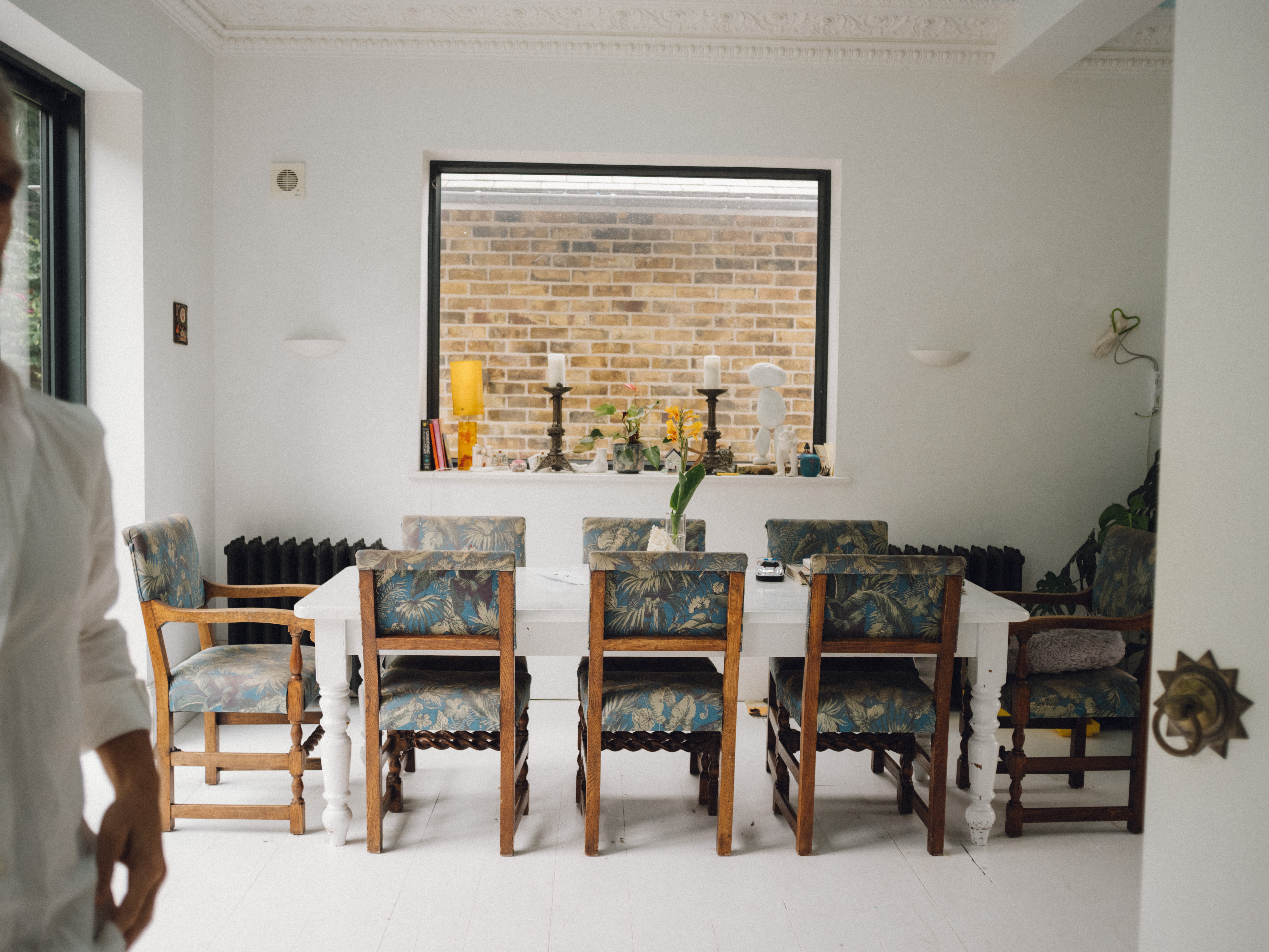
“The house started to breathe,” says Tim. His two boys, now six and eight, can tear around in a full circle, from the entrance through a bright red living room to the full-width kitchen at the back, then round through the dining area, with its massive table built to be drawn on, a second living room, and back to the front door.

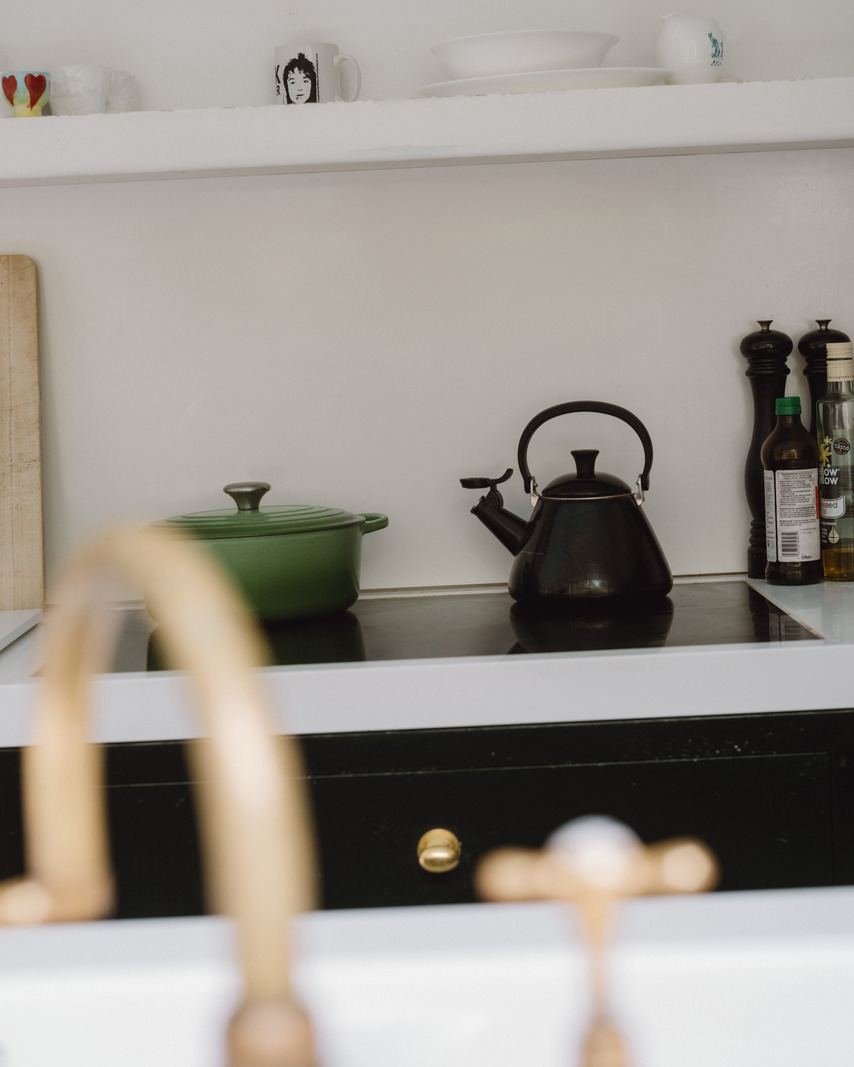
The black and white kitchen – with long, wide shelves, generous dark cabinetry and white Corian worktops – is the house’s beating heart. Beside the glass doors is a raised fireplace set into the wall. Tim got the idea from Lypiatt Park, the crenellated manor house in Gloucestershire that belonged to architect and sculptor Lynn Chadwick, whose son was one of his childhood friends.

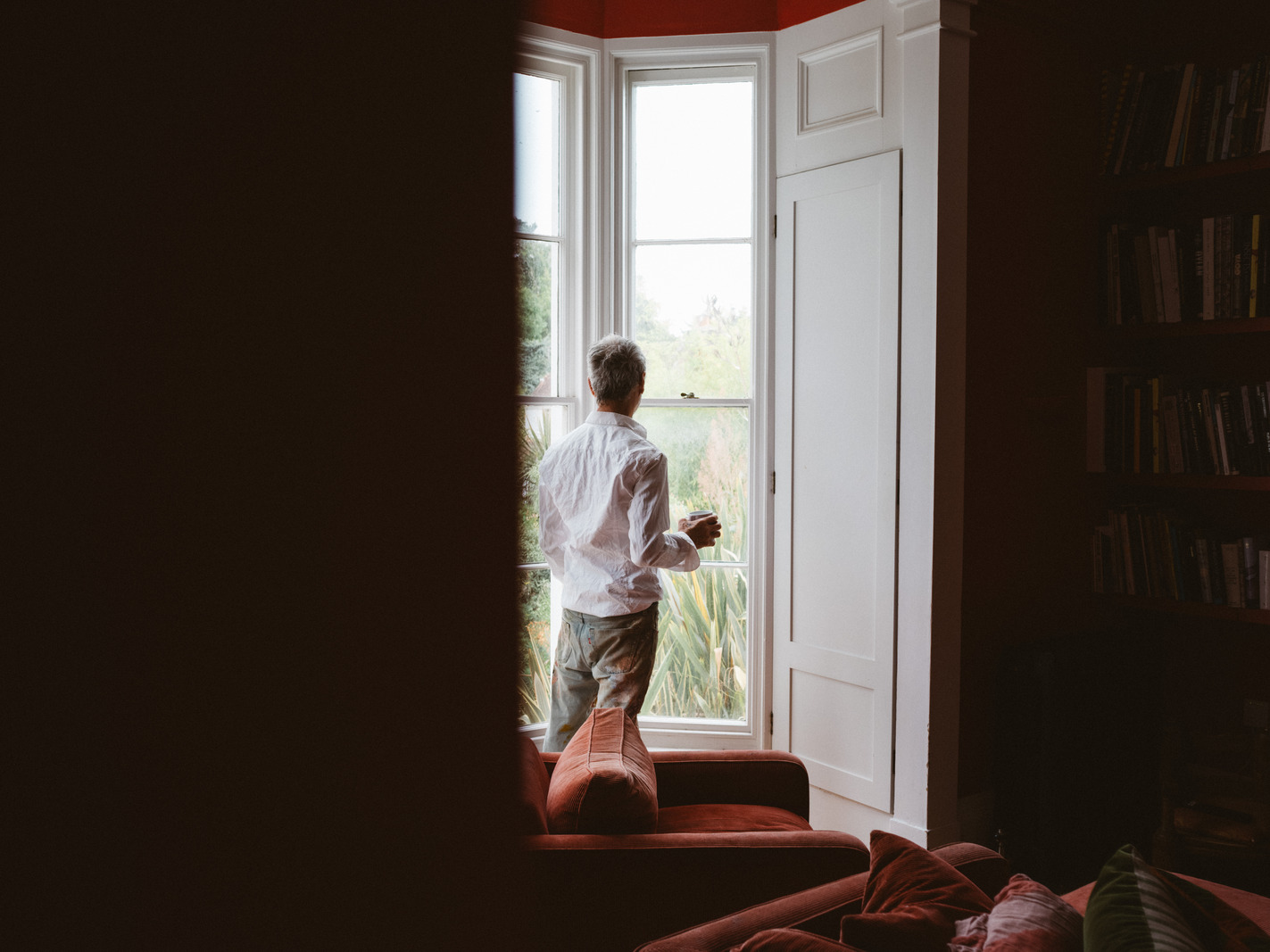
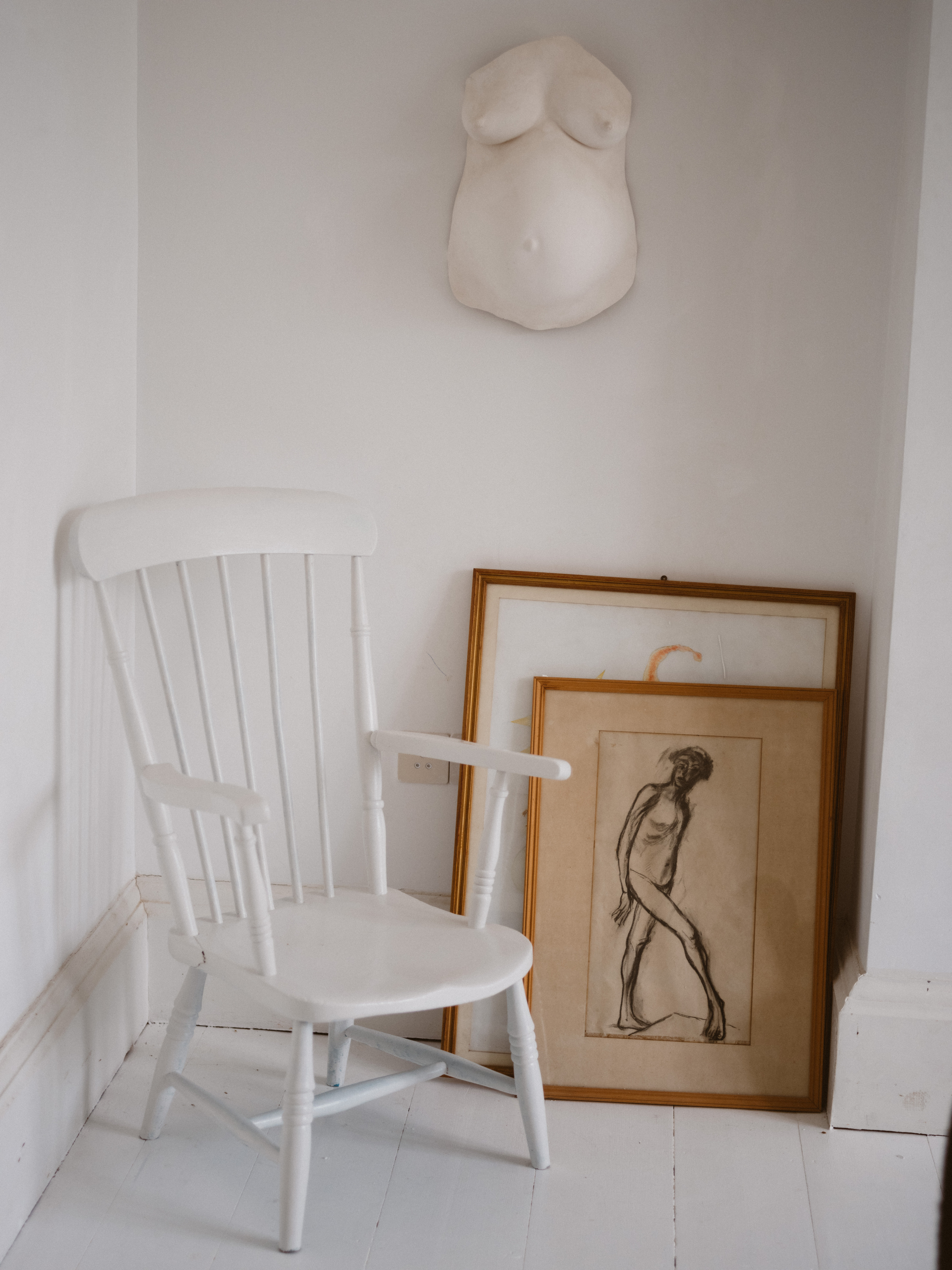
Scarlett was behind the decision to paint the kitchen ceiling sky blue. She also picked out the boldest hues for the walls (crimson, bottle green, peach, lemon yellow), leaving the restored Victorian mouldings pure white. Painting the wide ground-floor floorboards the same bright white further emboldened the light throughout the space.

These block-colour spaces serve as backdrops to some fabulous art. (Tim is the son of Dave Noble, who taught sculpture at Cheltenham College of Art, and Mary Noble, a Stroud-based jeweller; Scarlett’s father was the Irish-born fashion photographer Bob Carlos Clarke, who famously shot White Heat, Marco Pierre White’s culinary biography.) In the hall downstairs, above a canvas by her grandfather that was inspired by the Lascaux cave paintings, Scarlett has hung a large-scale print from her 2024 series, The Smell of Calpol on a Warm Summer’s Night. A naked woman reclines on a pink leather armchair – cigarette in hand, a two-litre bottle of Irn Bru at her feet, the otherwise-emptied room aglow with the blue light of a TV just outside of the frame. The bleak domesticity of the work belies the photographer’s own wild edges: around the time she and Tim moved to Kingsdown, she told Domus Life magazine how restorative taking long walks and going fishing was. “I like the sea’s unpredictability — you never know what you’re going to catch,” she said.

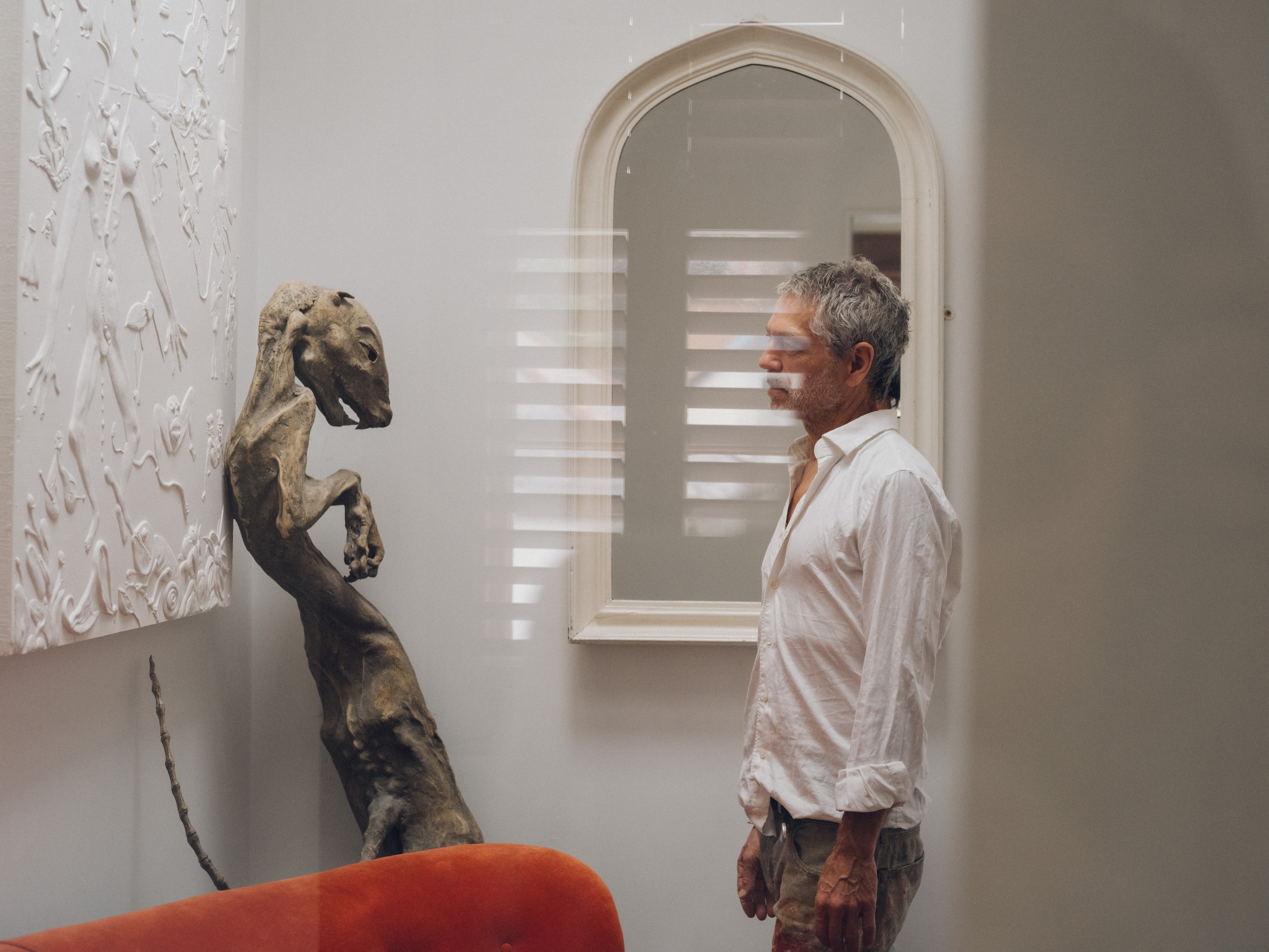
For Tim, in artistic terms, moving to Kent was similarly life-affirming. His collaborative practice with his first wife, Sue Webster, was coming to an end, and he retrained his focus on his solo career. Working in that first garage studio, he says, “I could literally just go out the studio, take my clothes off, and dive straight into the sea.” This new-found sense of freedom sent his work in a new direction: Imaginary Beings, several panels of which are hung upstairs, features twisted, surreal montages from a fantastical Hieronymus Bosch-like universe, sculpted into bas-relief panels and cast in jesmonite. Tim has paired the works here with a striking sculpture by his father, modelled from a squirrel hung on a gamekeeper's fence.

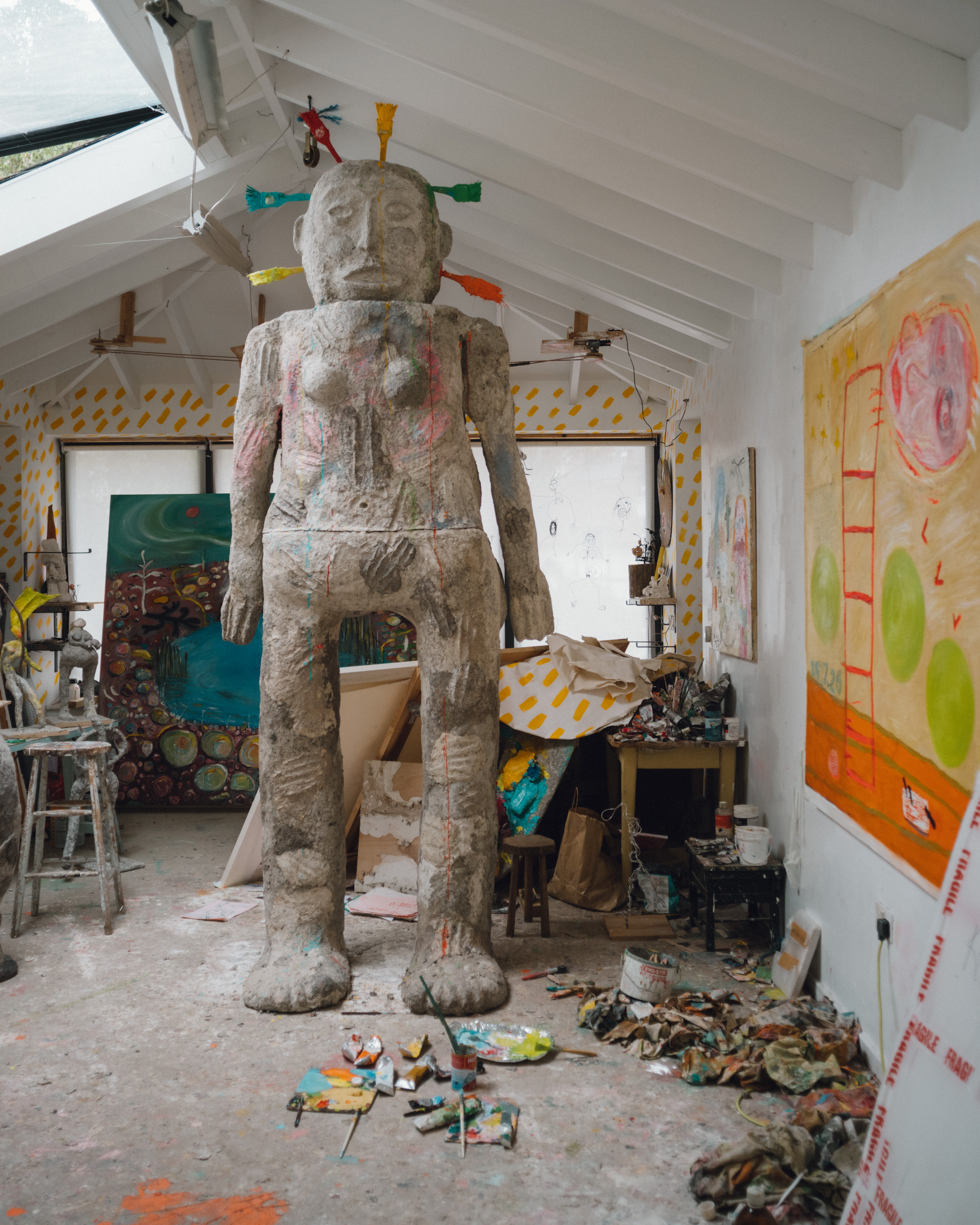
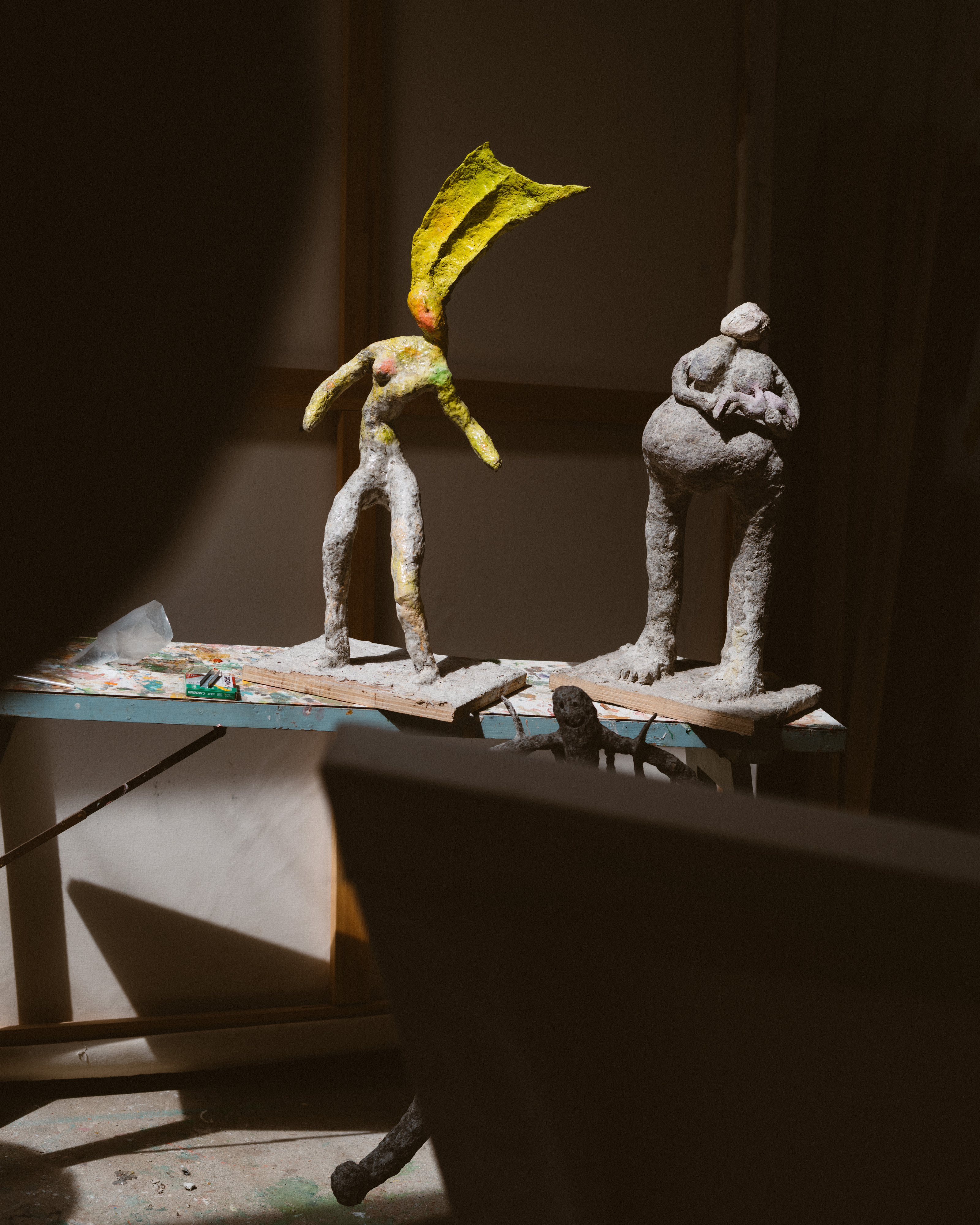
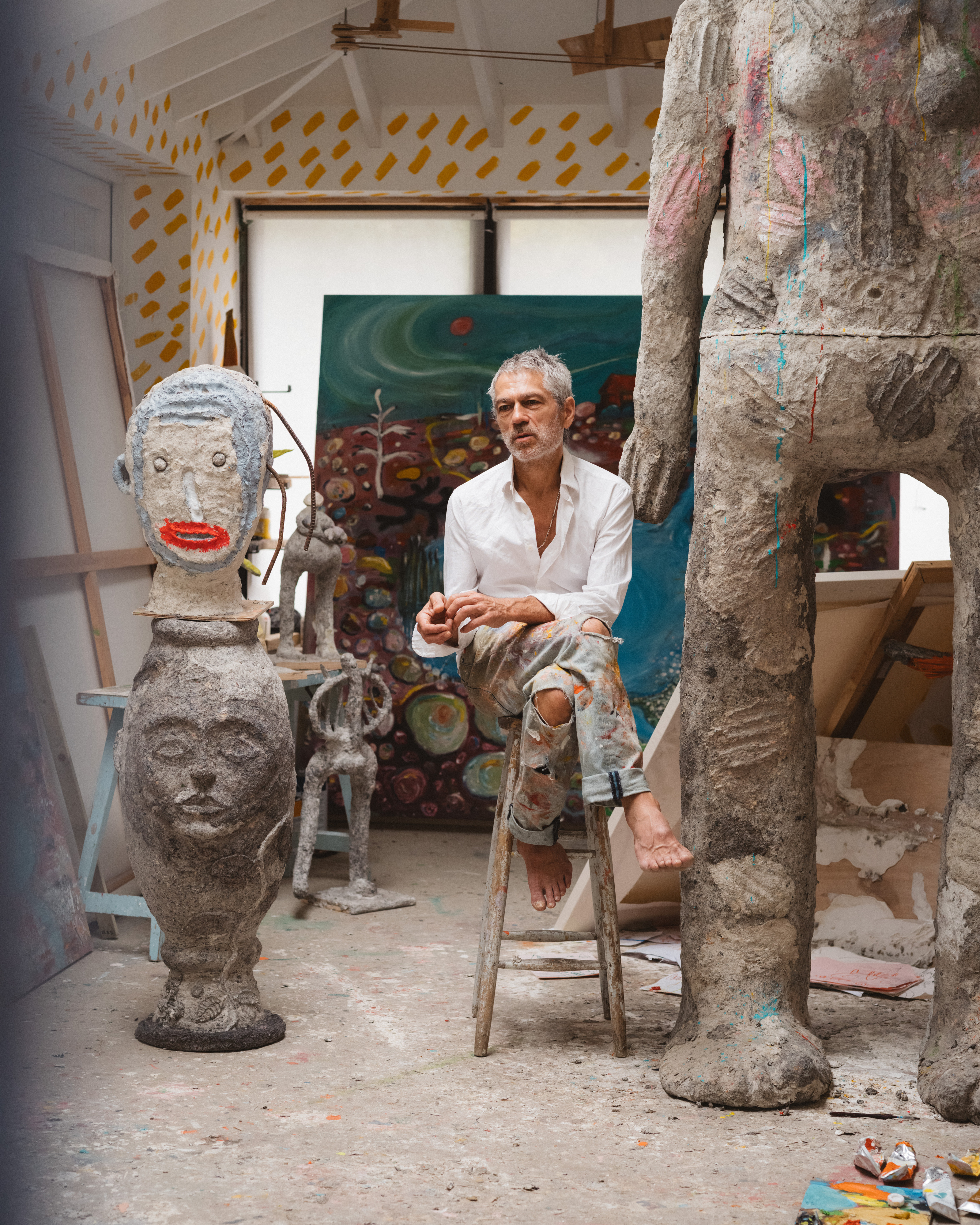
Tim’s Neptune House studio is custom-built and altogether sturdier than his shoreline garage. Yet here too, the exhilaration of working in such close proximity to nature is tangible. Strange sculpted creatures strain against the double-ceiling height and populate shelves and corners. In the garden beyond, he recently installed a claw-foot cast- iron tub for those times when only a full-moon bath will do. Or when he’s run down to the beach for a dip and run back up again, barefoot, shivering and oh-so-alive. “If I have a bath at the moment, I have it out there,” he says.

One of Tim’s favourite things to do is to walk underneath the cliff at low tide. There is no real footpath, he says, and it is a little treacherous. But that’s what makes it exciting. “It’s otherworldly. You always slightly think you're going to get cut off. And then you pop out where Ian Fleming's house is – the big white house underneath the cliff, where he wrote Moonraker.” Of his regular swims, he says, “I always say that you walk in like a little whippet with your tail between your legs, and you come out going, ‘Ah, I can take the world on now.’”

Neptune House, Kingsdown, Kent

view listing
A Private View: a former rectory turned artistic shoreline sanctuary