Today the beautiful gardens contain 130 mature trees and a wide variety of flowering plants and shrubs, with thousands of bulbs bursting into colour every spring. The Gardens, a tranquil green oasis, include a woodland area designed for children to safely wander in and explore, a herb garden, several fruit trees, many plants attractive to bees, and a period garden shed. For more information, please see the History section.
The Grand Tour
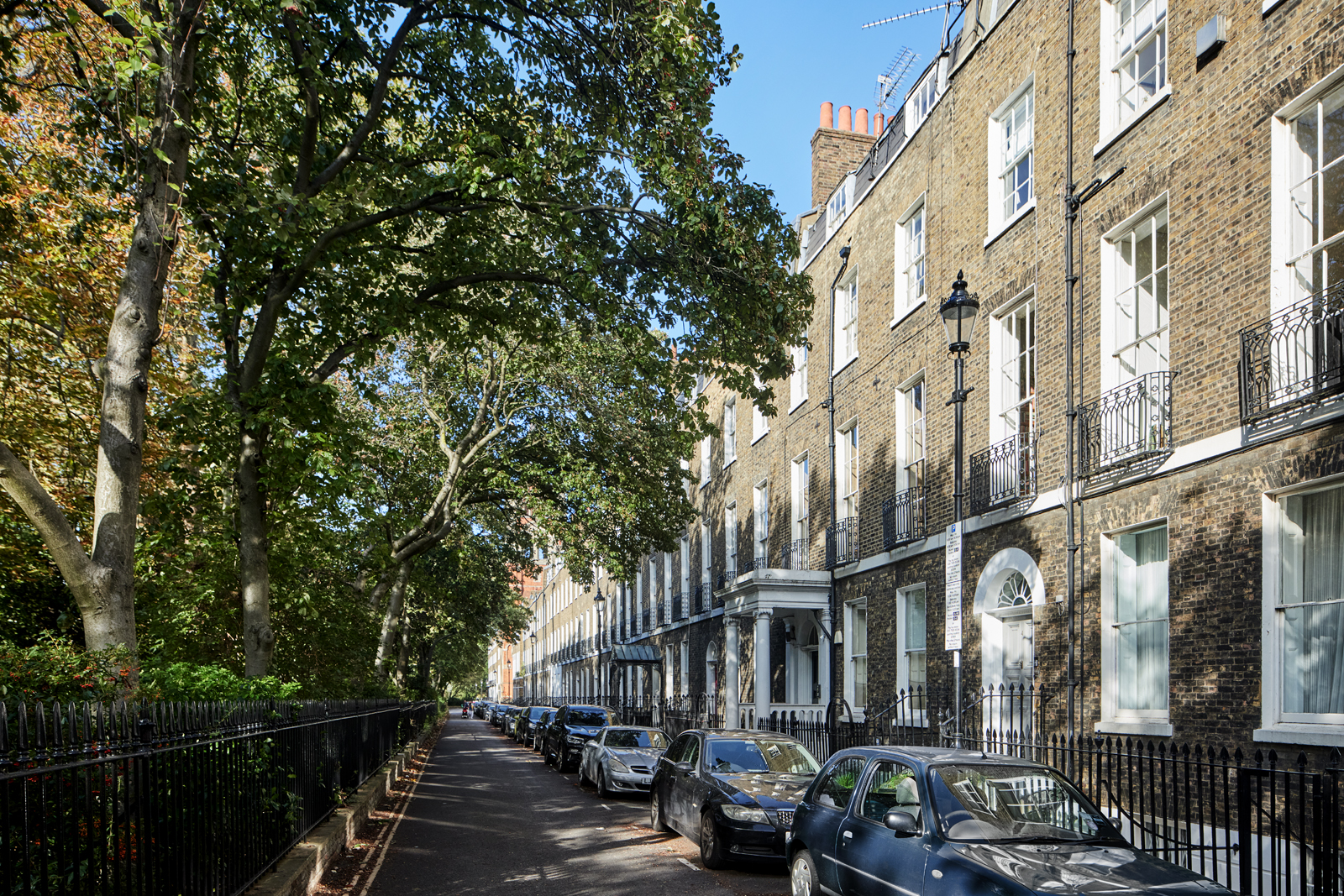
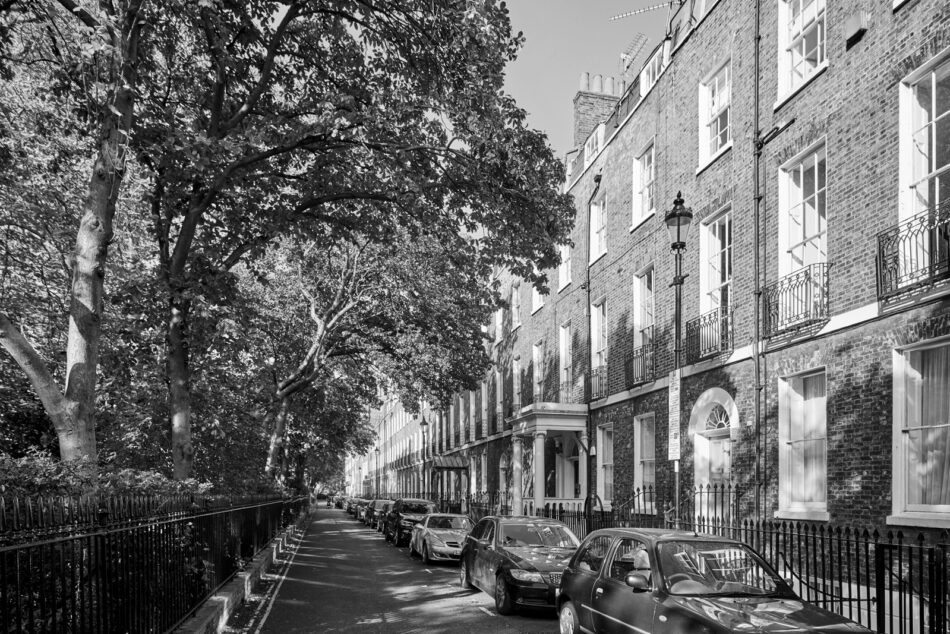
Set behind spearhead iron railings, the house has a grand appearance from the street side, five storeys high and three bays wide and crowned with a Welsh slated mansard roof. The main elevation is built from blackened London stock brick, punctuated with six-over-six box sash windows; the soaring windows at the piano nobile feature original cast iron Juliet balconies with a quatrefoil motif. The original six-panel front door is inset in a handsome neoclassical doorcase, with fluted quadrant pilasters supporting an entablature with delicate radiating roundhead fanlight set above. A further entrance to the lower-ground floor apartment is set into the railings.
Opening to the wideset entrance hall, ceilings are remarkably high, and a clear vista leads to the garden to the rear of the house. Deep pitch pine floorboards are laid horizontally and the first of several examples of beautiful original plasterwork featuring throughout the house frame the hall’s elevations. The grand winding staircase is positioned centrally and connects all the upper storeys, while six-panel doors remain throughout.
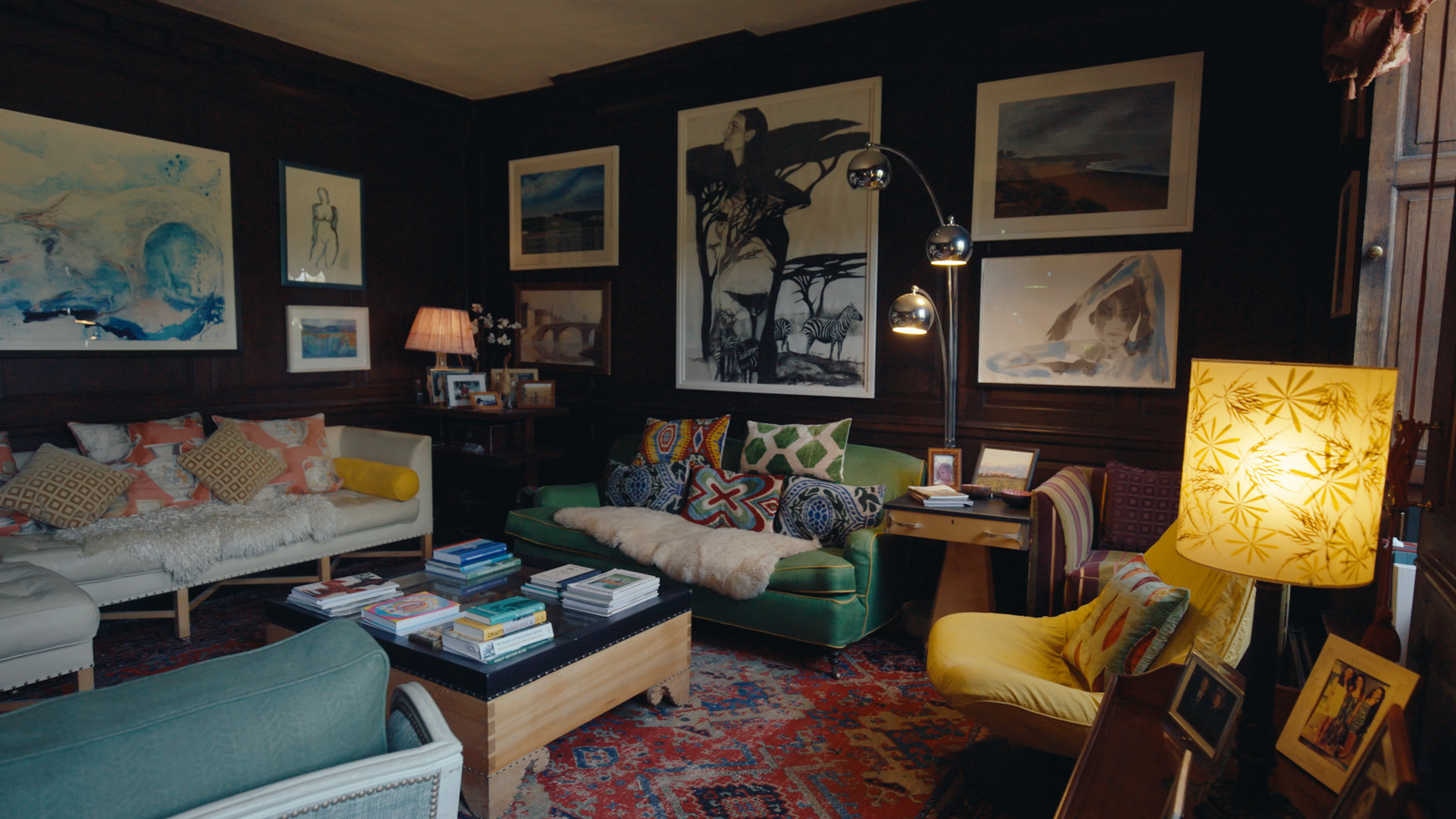
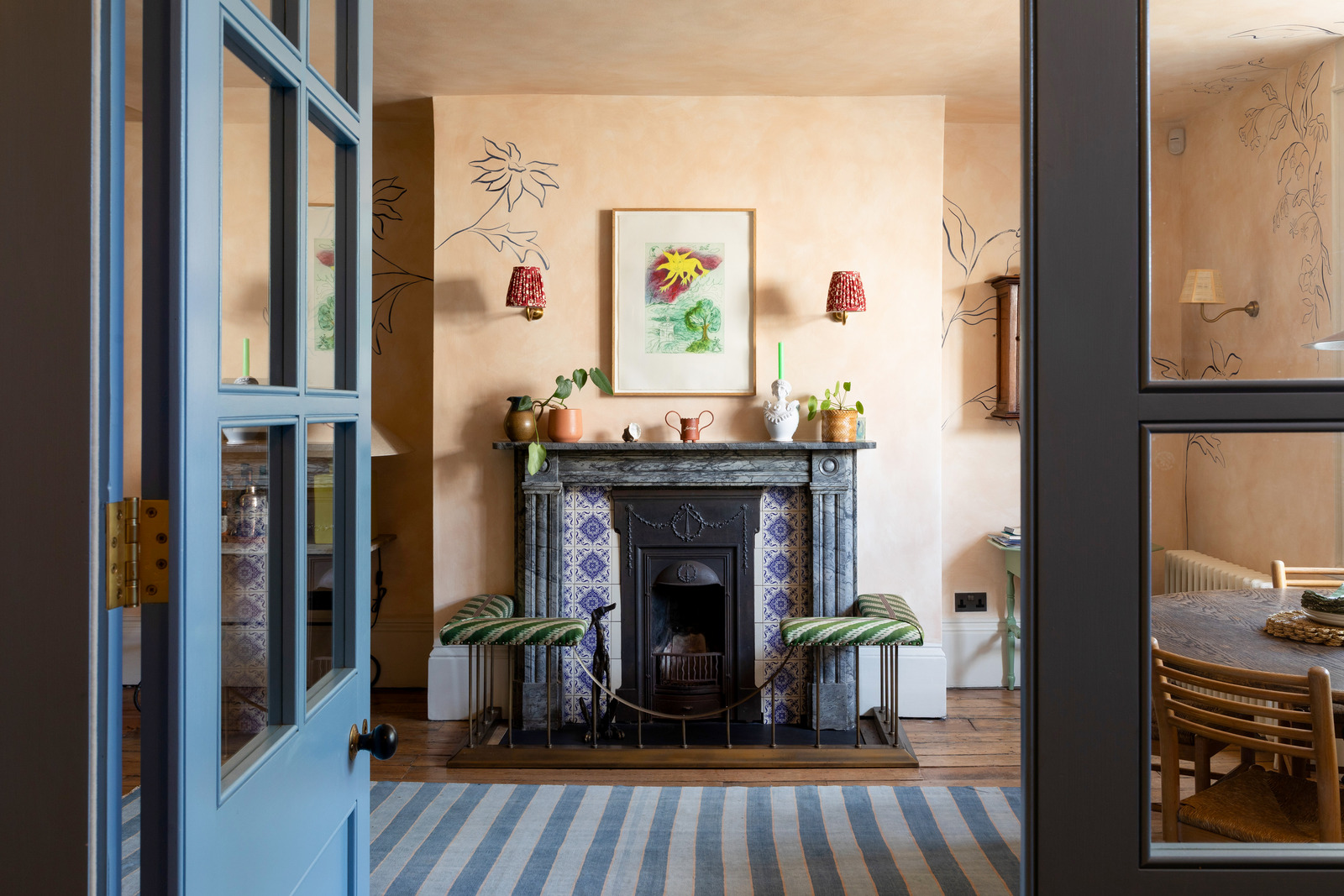
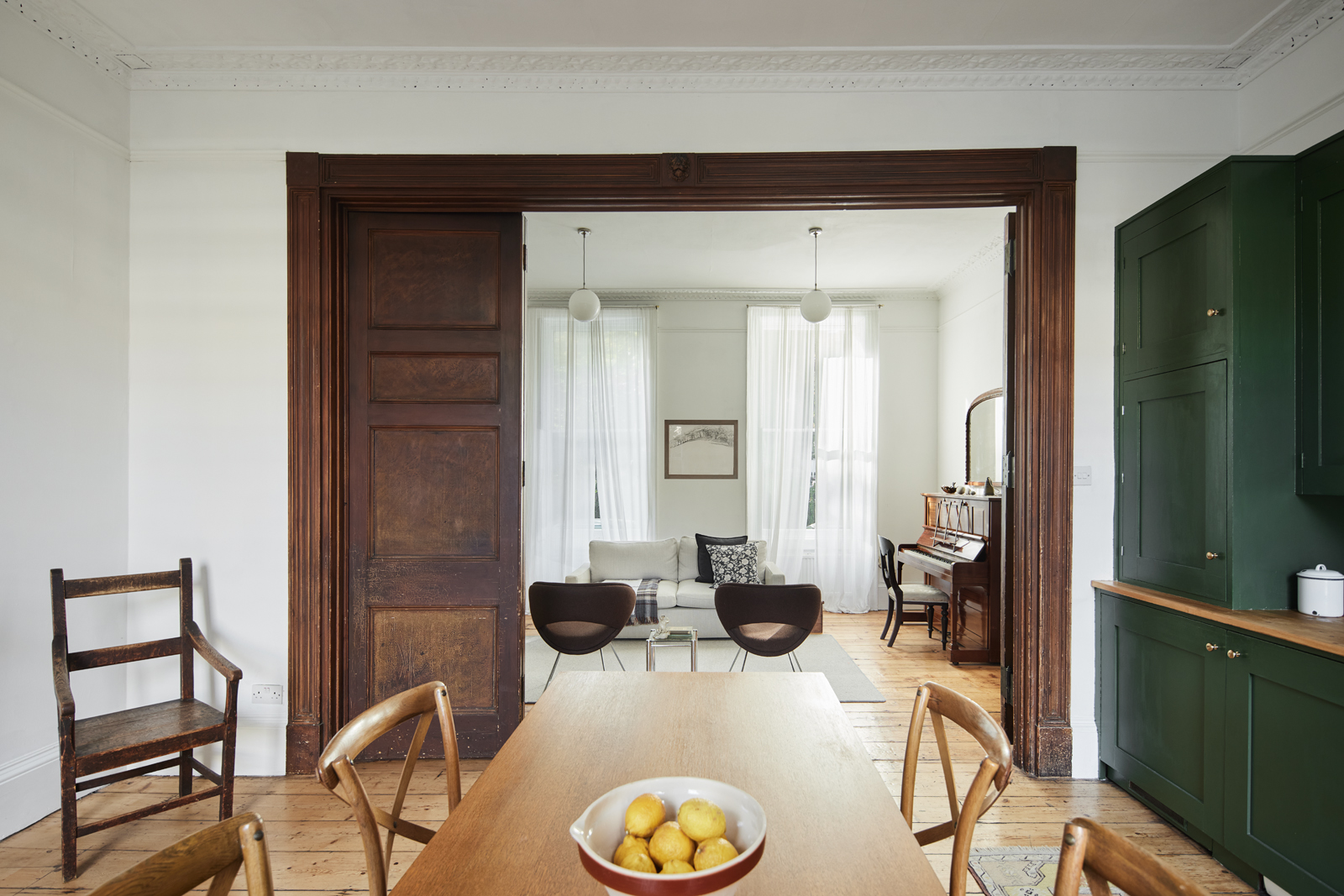
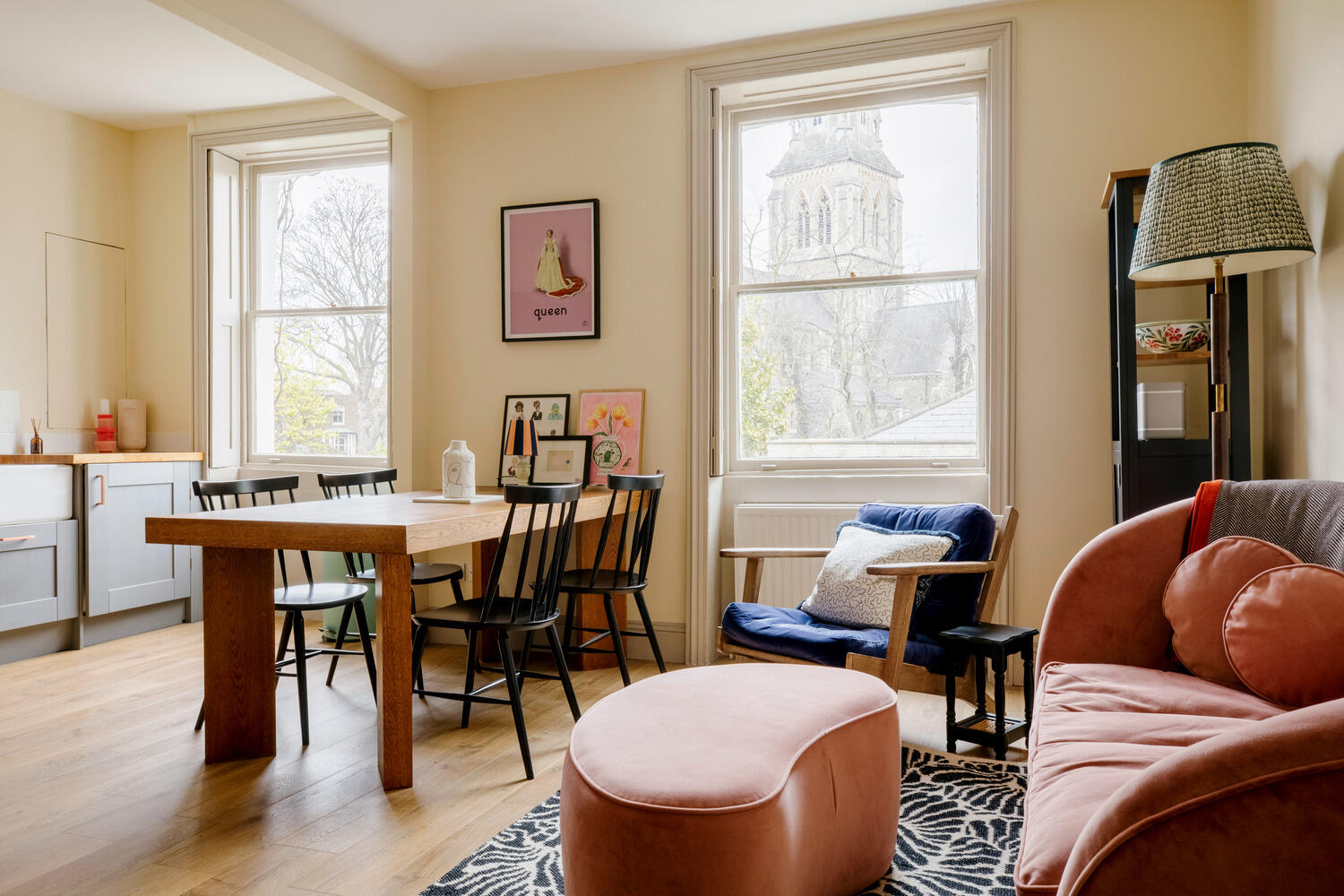
A capacious bipartite reception room defines the ground floor, almost 30 ft deep and with two tall, shuttered sash windows at both east and west aspects. The rear space is currently configured as a kitchen-cum-dining room, while the front is used as a sitting room; they are separated by fine original wooden wedding doors set in a beautiful wooden architrave. Carrara marble bullseye chimney pieces are positioned centrally in both rooms, inset with original cast iron baskets.
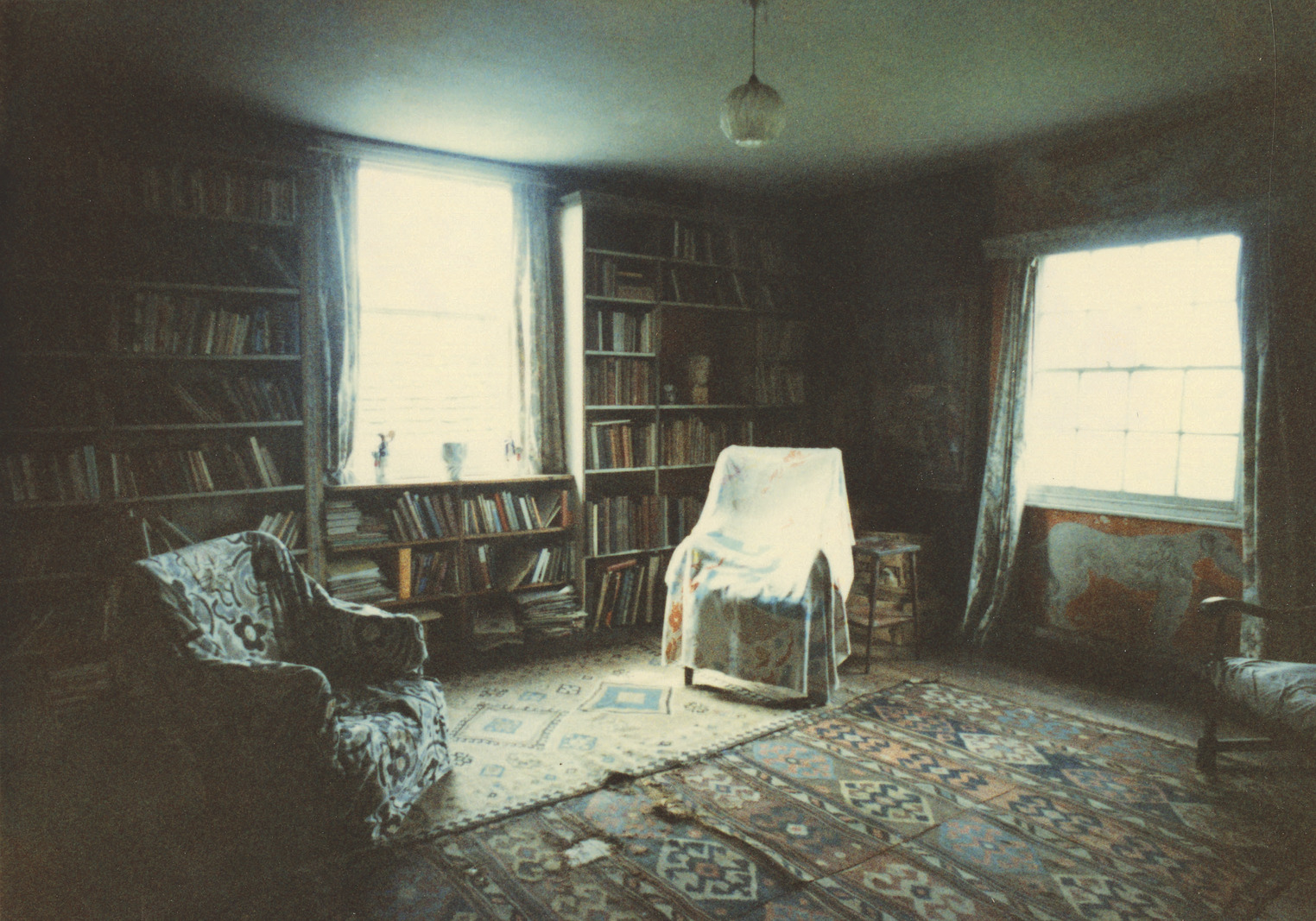
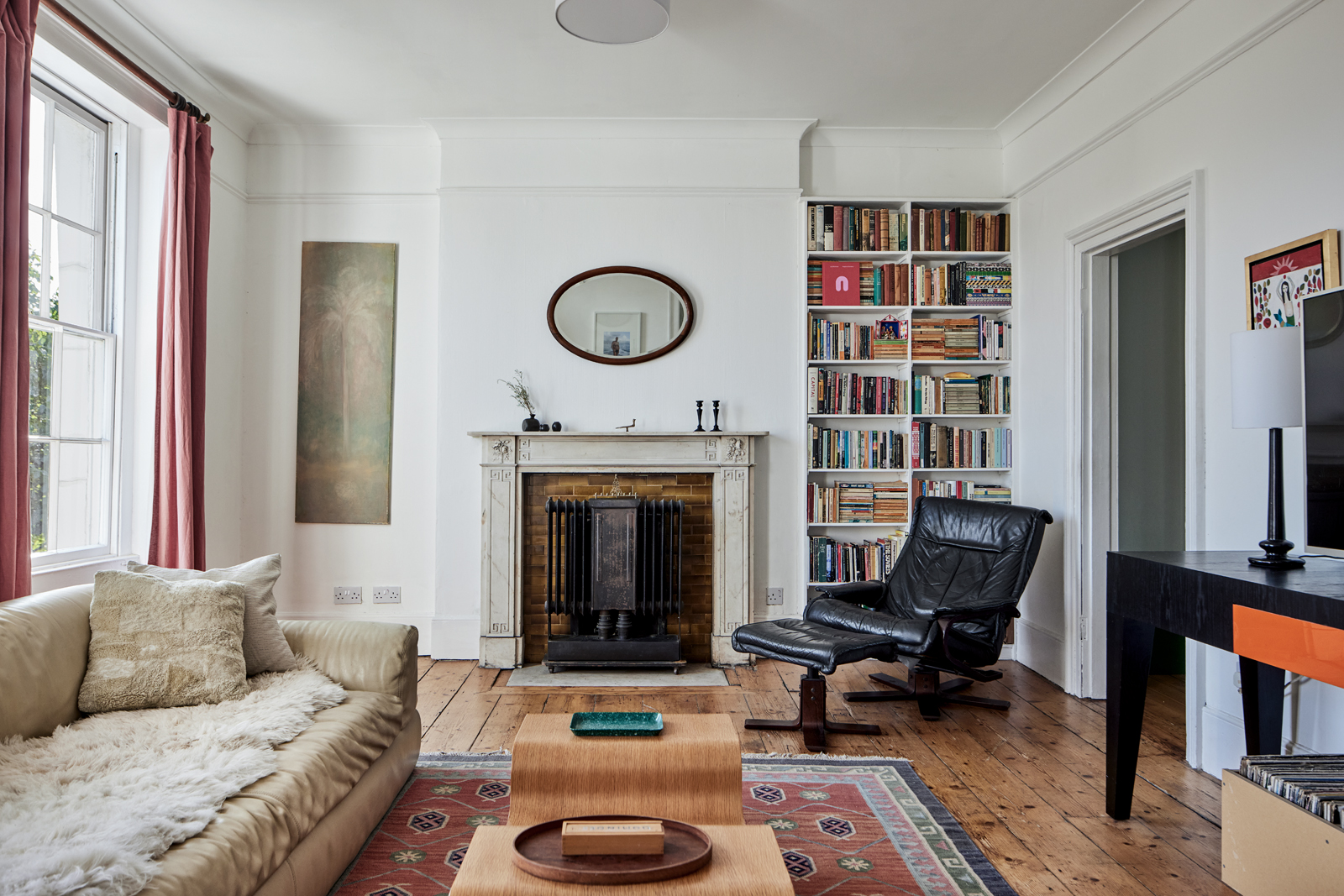
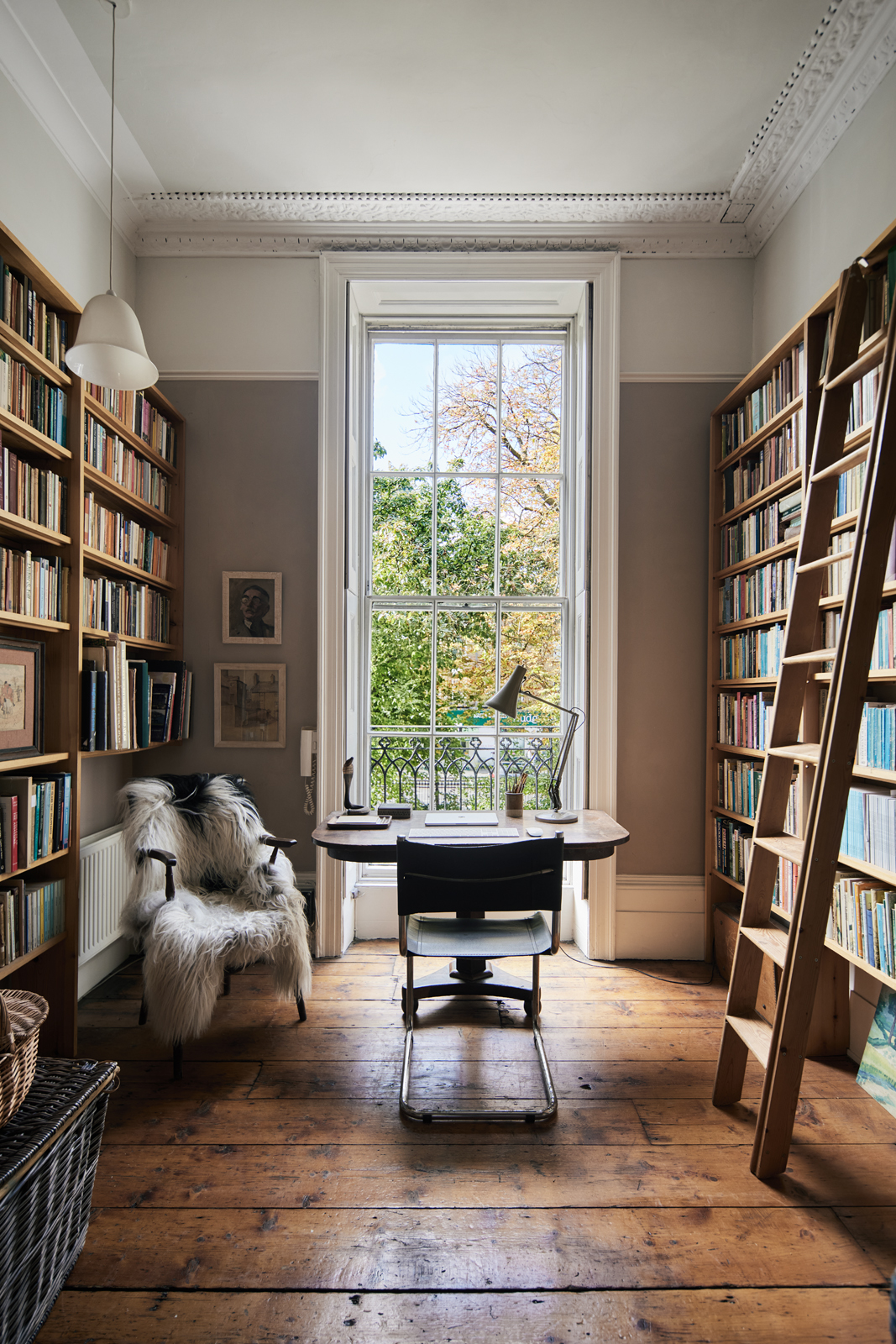
Ascending to the first floor there are three rooms and a shower room. Two double bedrooms with Carrara marble chimney pieces are set to the front and rear of the floor, while the third room is configured as a study and library, with a mezzanine above. The second floor is currently used as additional informal living quarters, with a connected secondary kitchen and living room and a further study room; the sitting room has a beautiful marble chimney piece with ornate carvings. The third study room could also be used as a bedroom if required. The uppermost storey is home to three further double bedrooms and a spacious bathroom.
At lower-ground level there is a one-bedroom apartment, with independent access via the lower lightwell from Compton Terrace. Additionally, there are three large storage vaults set beneath the pavement.
The Great Outdoors
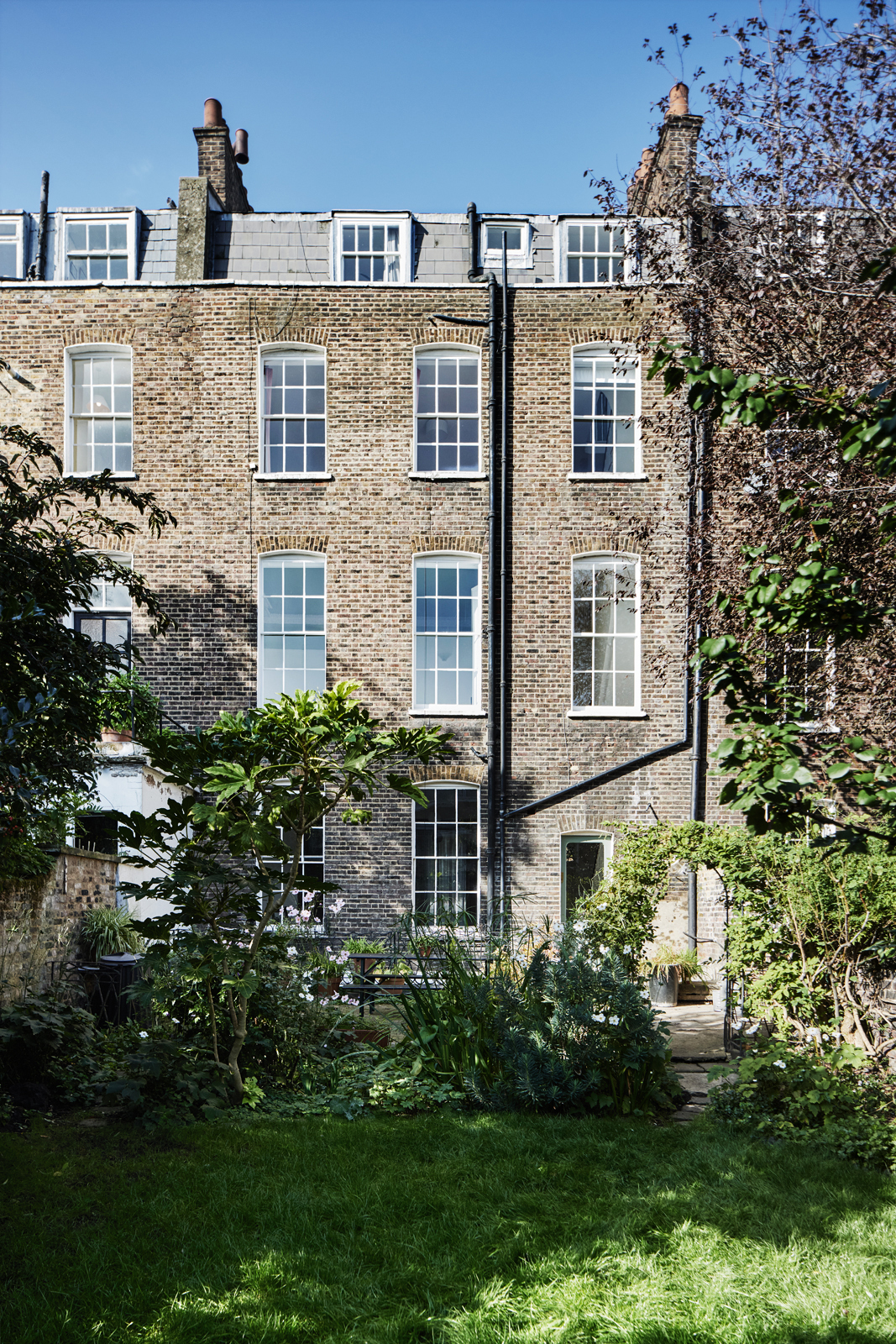
The garden opens from the ground floor hallway to a terrace spanning the width of the house. Several trees, including a mature fig tree, define the garden and there are further shrubs and flowers in the beds surrounding the lawn. The garden is east-facing and particularly wonderful to be enjoyed in the mornings, while providing cool shade on hot summer afternoons and evenings.
Out and About
Compton Terrace is seconds away from the boutiques, cafes, and eateries of Upper Street, home to an abundance of amenities, from Ottolenghi to Gails, the Almeida Theatre to The Old Red Lion Theatre & Pub. The charming Compton Arms and the fantastic Union Chapel are also moments from the house. Islington High Street and the excellent Camden Passage are also close by. The area has very good gastropubs, including The Drapers Arms and The Albion. Corbin and King’s Bellanger is nearby on Islington Green.
The much-admired shops and restaurants of Highbury Barn are just to the north, through the green open space of Highbury Fields–which has tennis courts, a playground, and a swimming pool. King’s Cross and Coal Drops Yard are also within easy reach.
Several quality schools are within easy reach of Compton Terrace, including the Ofted-rated “Outstanding” William Tyndale Primary School, the independent Dallington School, St Paul’s Cathedral School and North Bridge House School. London’s best independent secondary schools are a short bus or tube ride away and include City of London School and the City of London School for Girls.
The area enjoys excellent access to public transport, including several main bus routes to the City and central London. The Victoria Line at Highbury & Islington is two minutes’ walk from the house to the north, and the Northern Line is ten minutes’ walk away at Angel to the south. The Eurostar at King’s Cross St Pancras is also easily accessible, as are London’s airports.
Council Tax Band: F

 Related Stories