The Grand Tour
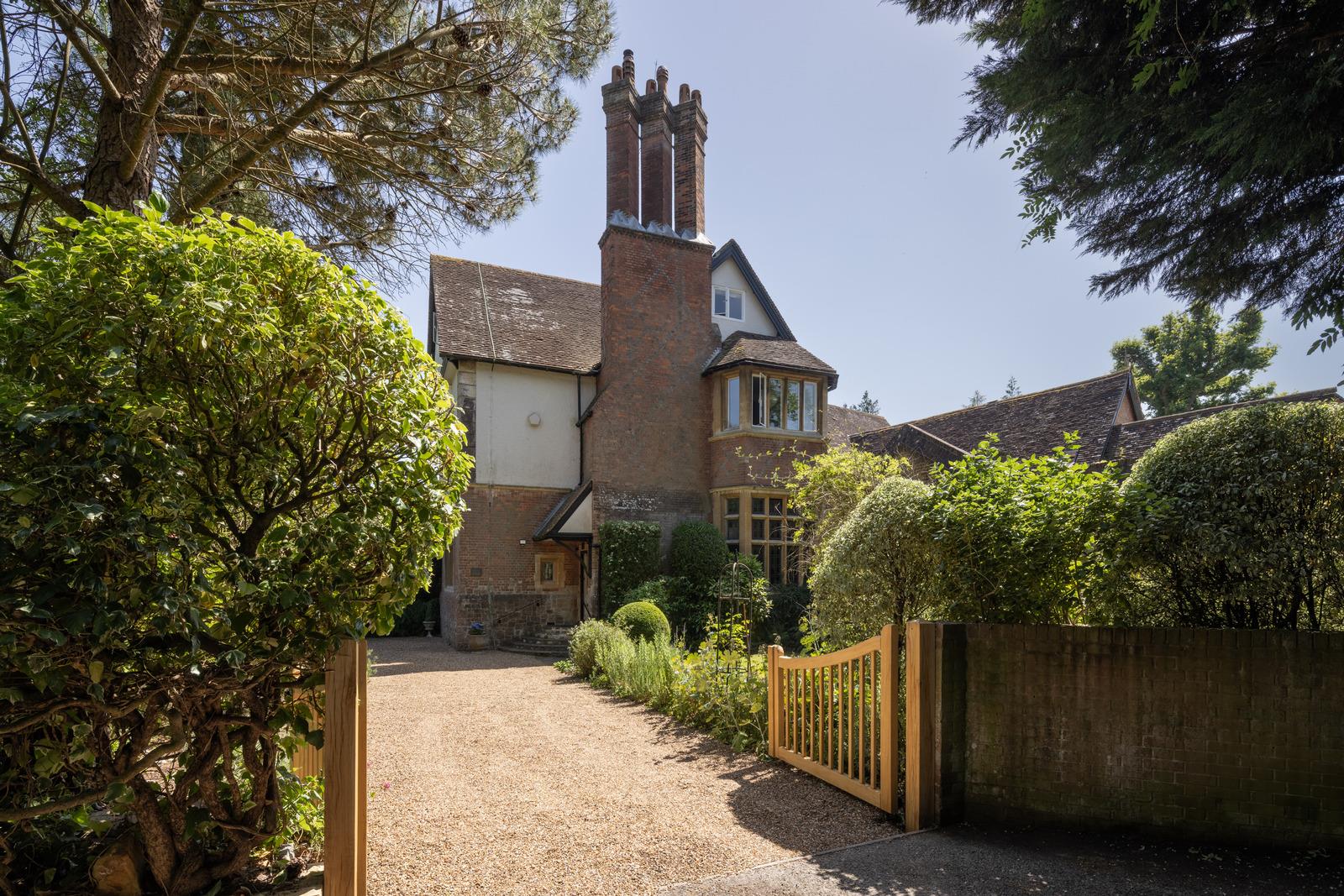
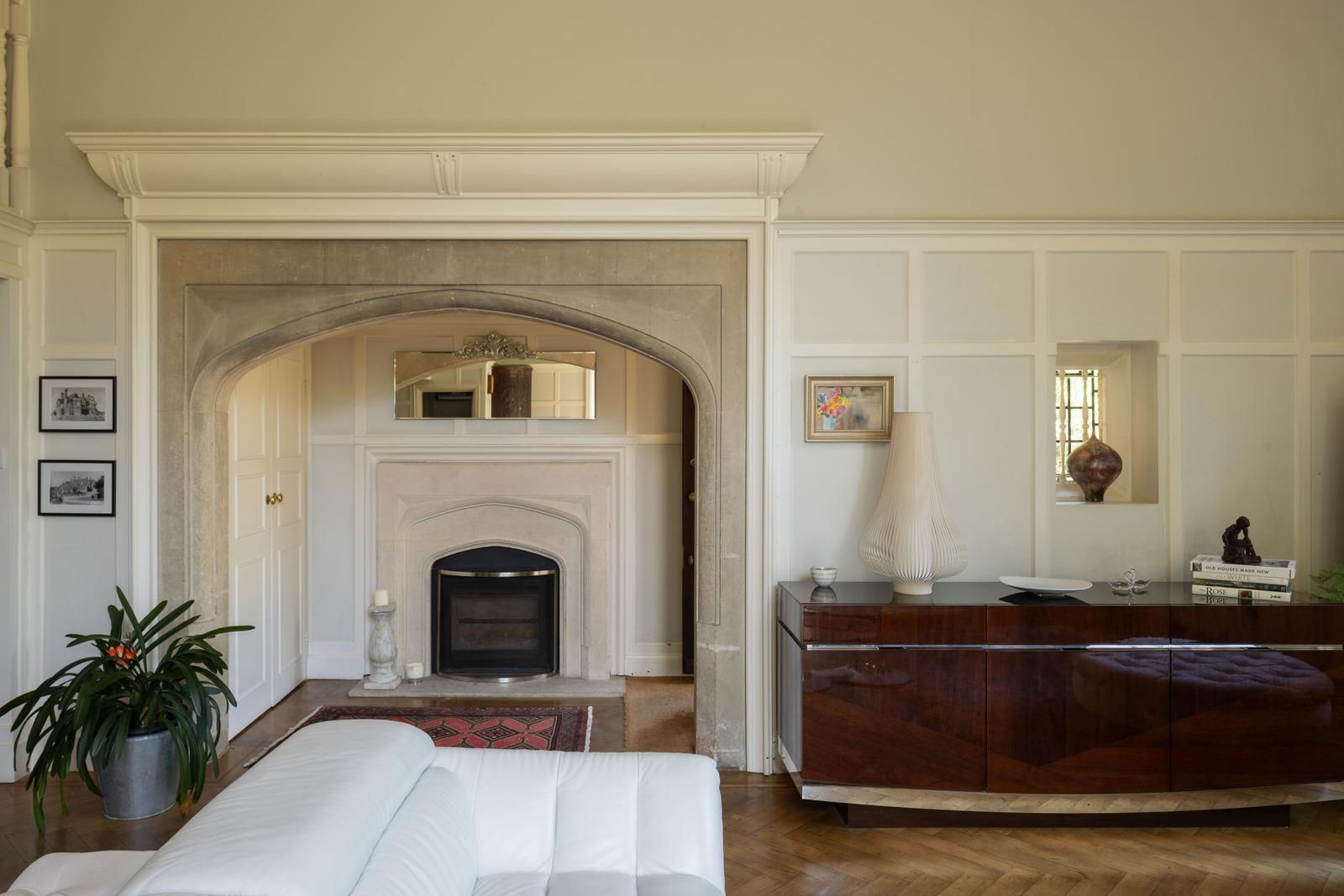
Beyond a private entrance with a large driveway that edges onto the front garden’s herbaceous borders, the home’s arresting irregular silhouette comes into view. An oak door opens onto a transient reception area framed by a cast-iron fireplace and a stone inset arch – with a cupboard for coat storage – leading to the main living space.
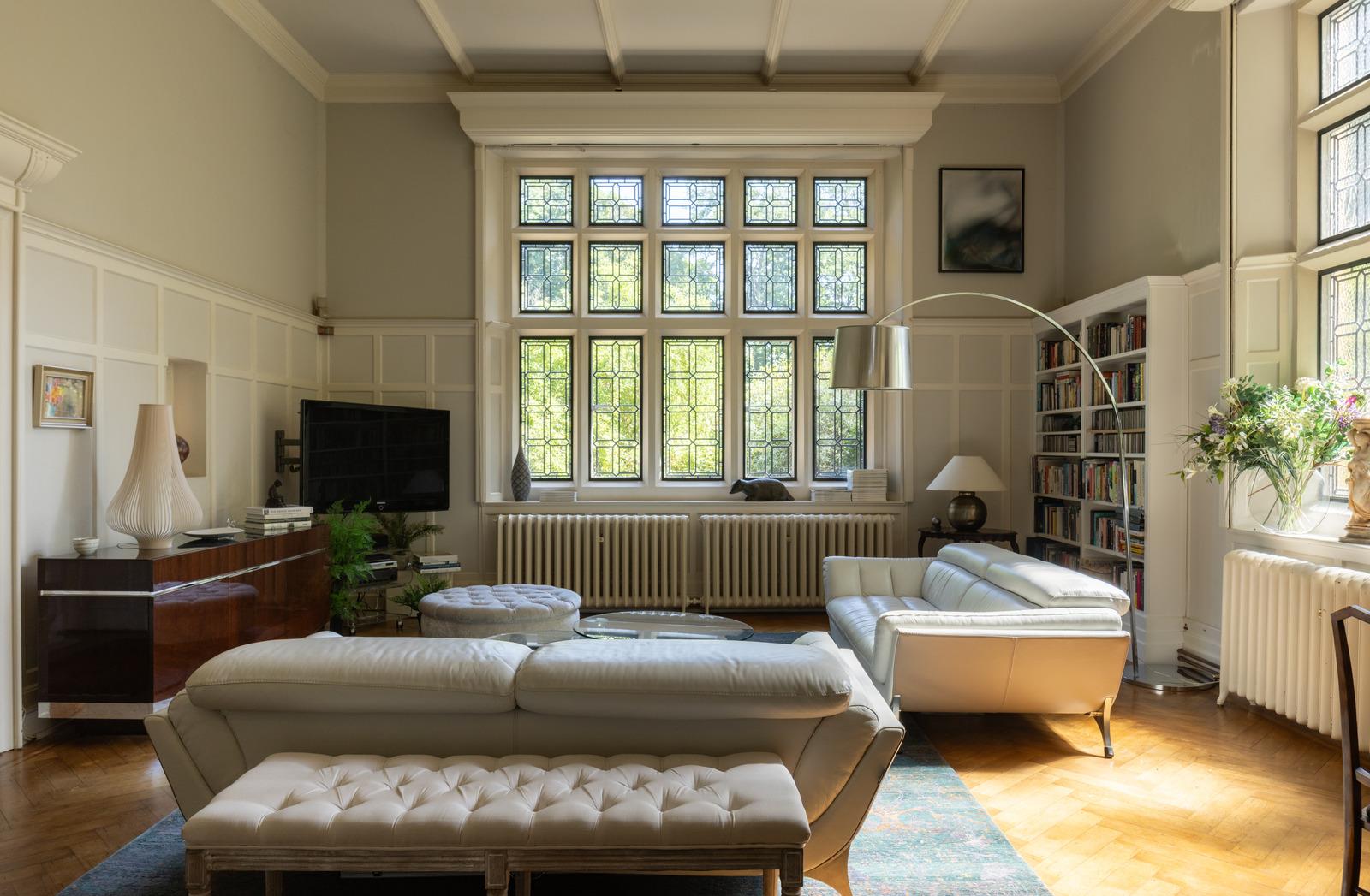
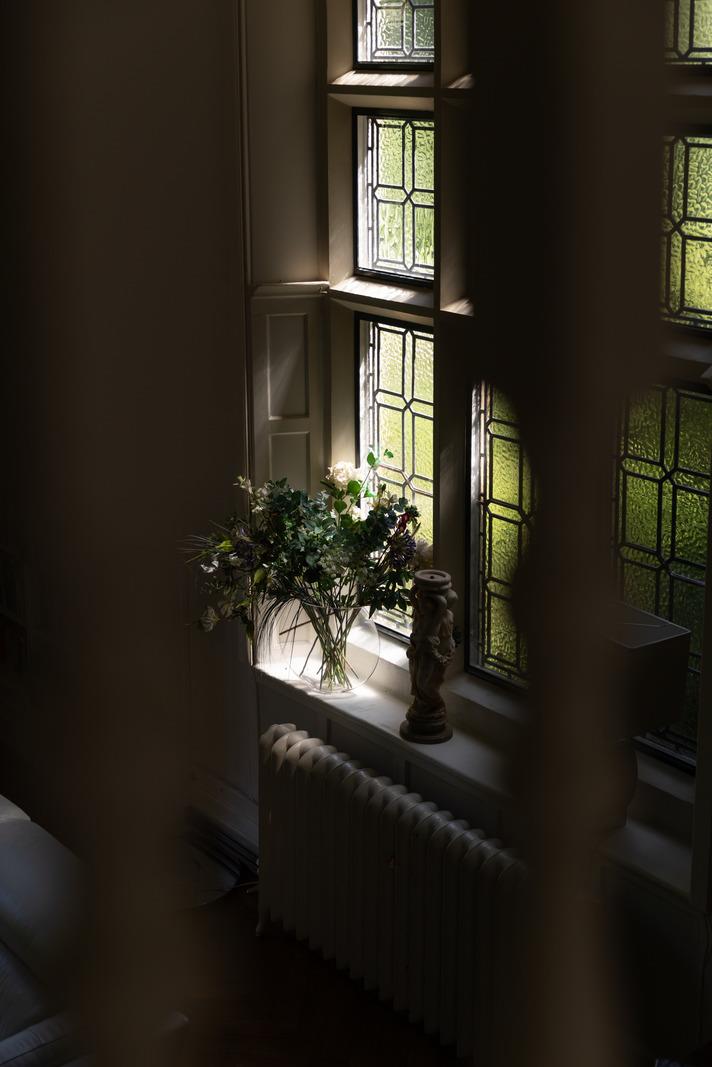
Arranged as a free-flowing kitchen-living room, this space has an incredible sense of volume. A double-height ceiling creates space for a mezzanine level (with additional living areas) and rises alongside an elaborate triple-section window with etched glass panels. White-painted dado panelling wraps the whole room up to the kitchen, where modern cabinets, quartz countertops and a stainless-steel splashback add a contemporary feel. Underfoot, a timeworn chevron parquet runs throughout.
Just off the kitchen are a conveniently placed WC and the stairs up to the intimate yet airy mezzanine.
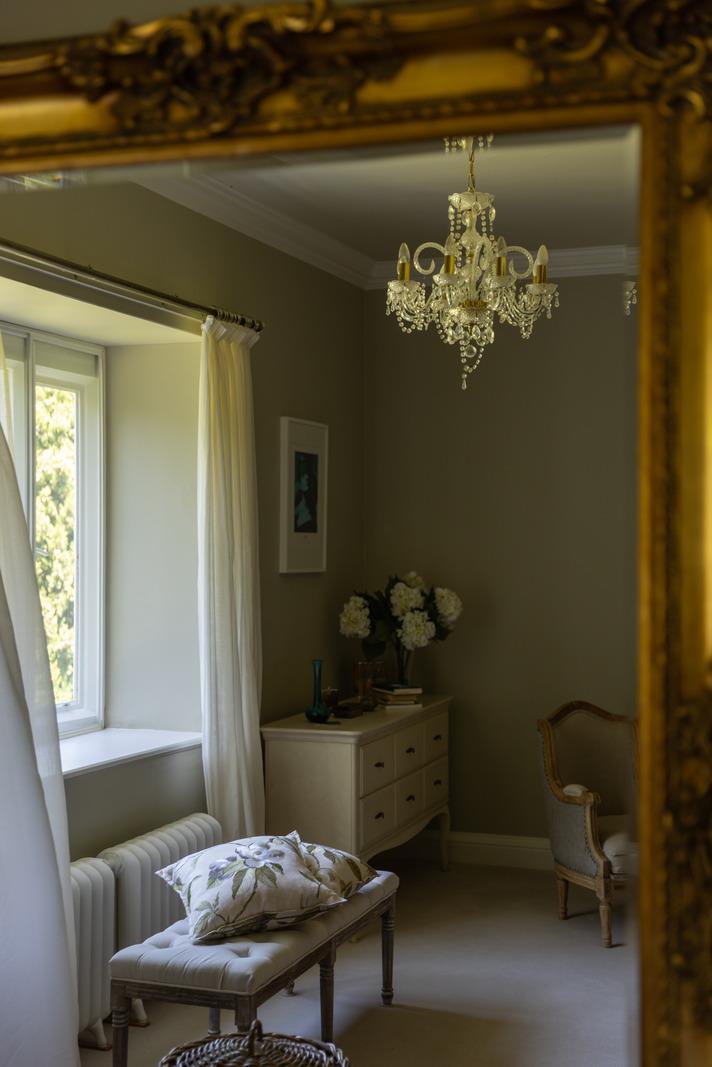
A carpeted staircase with turned balustrades rises to the first floor. An initial bedroom sits at the front of the house, its canted bay window filtering gentle northerly light across the room and inviting views over the front garden. The principal bedroom is generous in size, with sage-green paint on the walls and carpet underfoot. A shared bathroom on the landing is well-appointed with a walk-in shower and a frosted-glass window that illuminates the room.
Two additional bedrooms sit beneath the eaves with a neutral palette and each with a window overlooking the treetops. Storage space is abundant, and a generous bathroom has a shower, grey tile flooring and white wall tiles.
The Great Outdoors
A tranquil west-facing garden, laid to lawn, is at the front of the house, with borders brimming with perennials and mature hedging. On the other side, a brick wall provides privacy from the neighbours. The landscaping creates a sense of openness, while still providing intimate, shaded seating areas.
Out and About
Devey Gables sits in a peaceful, leafy pocket on the north-eastern edge of Royal Tunbridge Wells, well placed for the town’s vibrant centre and the surrounding Kentish countryside. Tunbridge Wells is renowned for its historic architecture, expansive green spaces, and a celebrated scene of independent shops, cafes, and restaurants. Nearby green spaces include Calverley Park and the ancient, towering sandstone formations at High Rocks. Further afield, the romantic moated ruins of Scotney Castle provide a picturesque backdrop for weekend walks.
The Pantiles, an iconic Georgian colonnade famous for its regular live jazz performances on the bandstand, is particularly popular in warmer months. The area has an impressive culinary landscape, with local favourites including St Kilda, Cantuccio, The Hidden Well, The Bakery TW, and fine dining at The Counter by Robin Read. Nearby Camden Road adds an eclectic mix of independent boutiques. The Forum offers a legendary local venue for live music, while The Amelia Scott hosts annual literary festivals, art exhibitions, and community events.
The area is also renowned for its outstanding education, including highly sought-after selective grammar schools such as Tunbridge Wells Boys Grammar, Tunbridge Wells Girls Grammar, Skinners, Judd, and Tonbridge Grammar School, alongside top primary options like St James, Rose Hill, and The Mead. Mainline rail services from Tunbridge Wells station reach London Bridge, Waterloo East, and Charing Cross in under an hour, with easy access to the M25 and Gatwick Airport.





 Related Stories