The Grand Tour
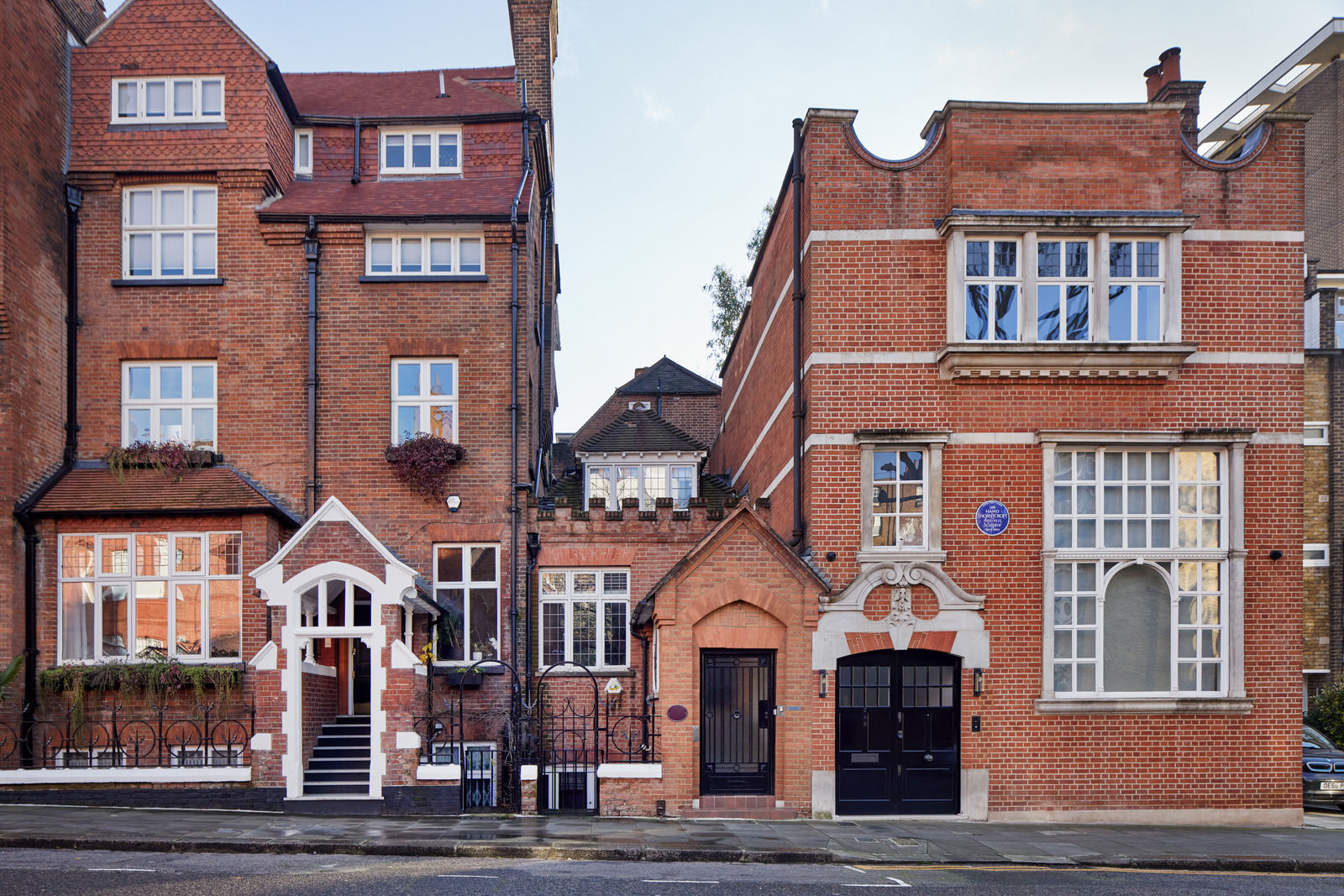
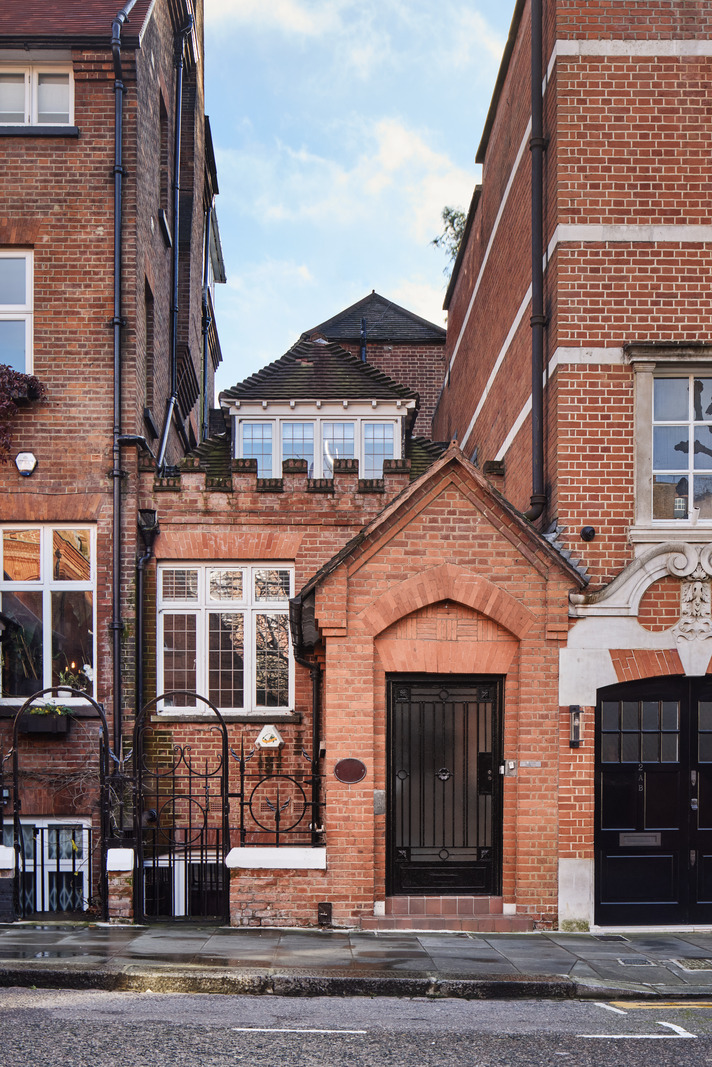
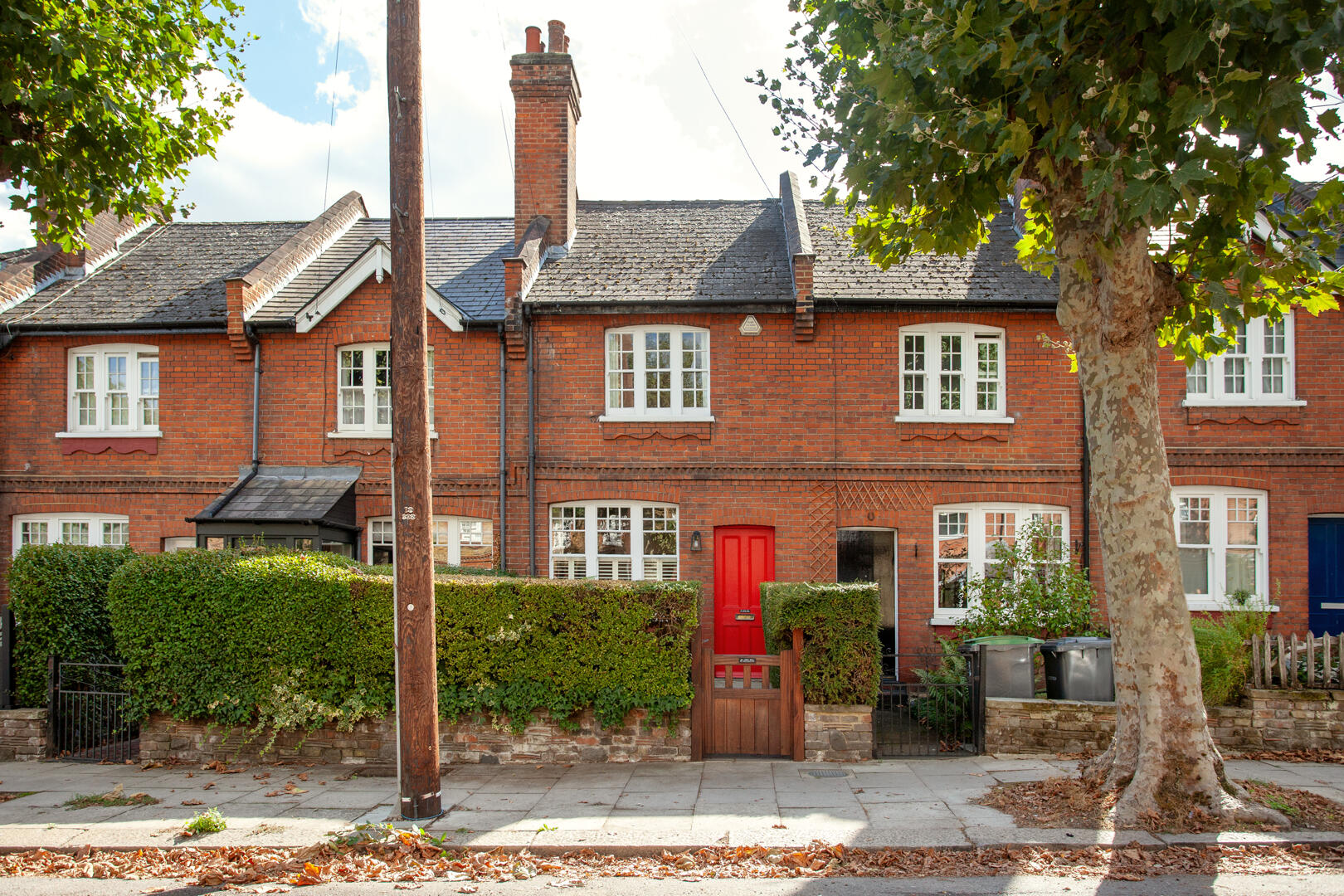
Melbury Cottage occupies the centre portion of the Thornycrofts’ larger original house. Formed of red brick, it has a striking decorative crenellation below a series of hipped clay-tiled roofs. Leaded casement windows frame views out across the exceptionally attractive surrounding architecture. Behind an arched iron railing, steps lead through a brick-paved courtyard garden to a separate entrance to the lower ground floor annexe.
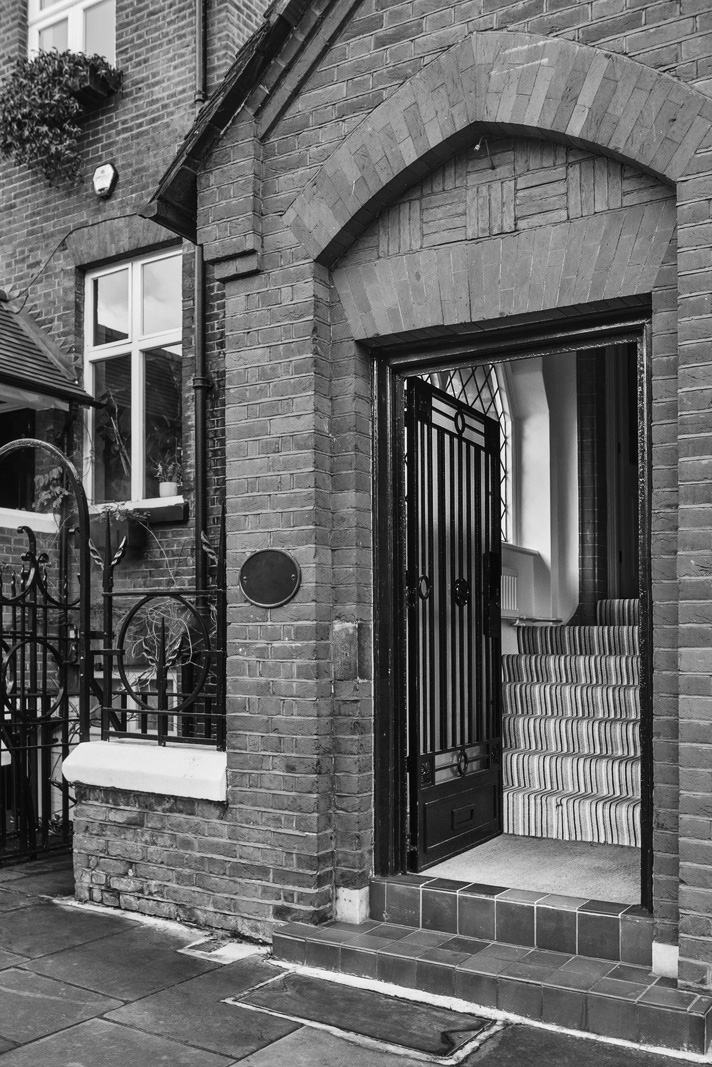
Within a pitched entrance porch sits the original steel decorative front door painted in black gloss and inset with period glazing.
The front porch opens into a lobby with softly carpeted stairs that ascend to a generous hallway. Here, oak floorboards begin underfoot and blocks of neutral colours lend a contemporary feel to fine wall panels and ornate cornicing. Modern interventions include column radiators and ceiling speakers paired with fine details including Corston electric plates.
The kitchen is entered via a glass pocket door to the left of the hallway. Cornicing traces around the room, which has smart panelled cabinetry arranged in a U-shape with quartz worktops above. Integrated appliances include Siemens double and warming ovens and a Miele gas hob, dishwasher and coffee machine. There is ample space for informal dining in front of a tall window.
A long hall leads towards the formal dining area, where a pitched lantern roof and window flood the room with an easterly light. At different points in the day, atmospheric shadows are cast across impressive original mouldings on the walls. Two separate staircases lead both up and down from here.
An arched roundhead doorway from this central space opens into the drawing room through pretty wedding doors. A grey Carrara marble chimneypiece in the French style creates a focal point at the end of the room and is surrounded by further elevation moulding and ornate cornicing. Tall ceilings allow for a galleried study or library area above, with a turned balustrade separating the two spaces. The study has fitted bookcases with low cupboards and a writing desk. Glazed doors here lead to an internal courtyard garden.
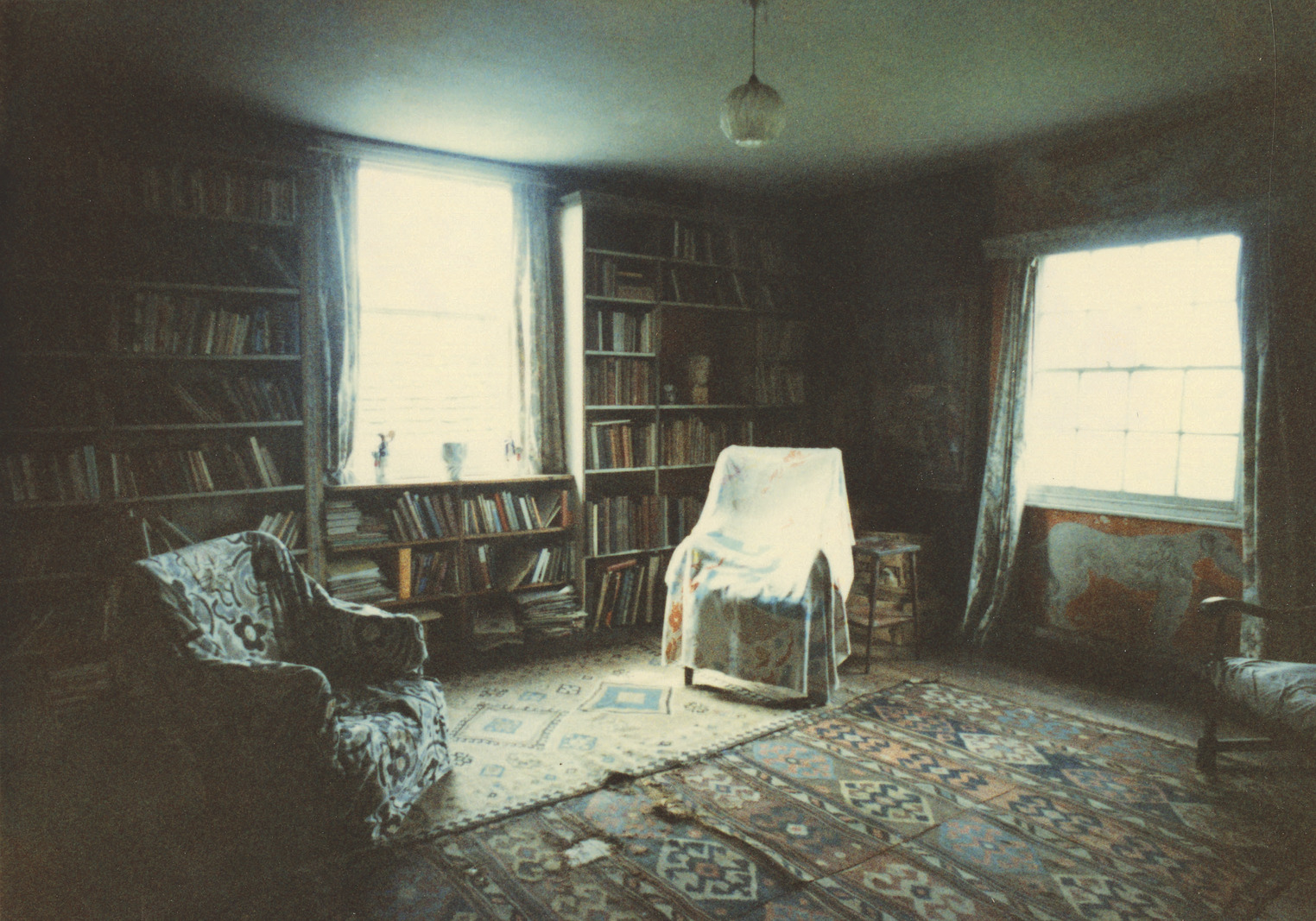
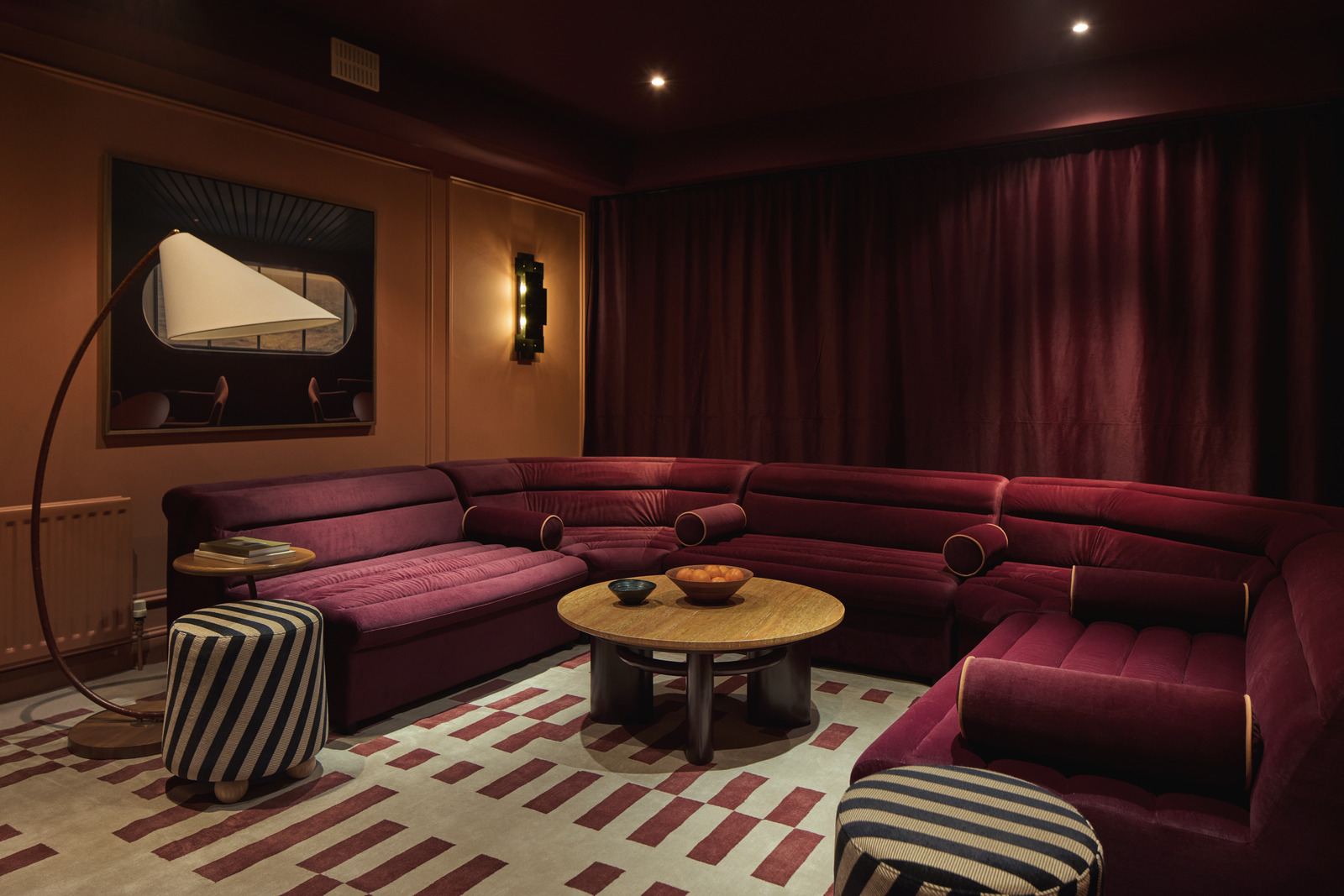
Downstairs, on the lower-ground floor, is a room finished with rich red moulded walls; this, along with several other rooms in the house, was creatively designed by Finch. Currently used as a cinema room with an adjacent utility and kitchenette, it could also become a private sixth bedroom suite. A glass door to the front provides additional independent and secure external entry from the front of the house and draws in natural light.
The front staircase grants access to another bedroom of especially spacious proportions and with a generous en suite shower room. The second and third bedrooms are also on the first floor, but are reached via an oak-railed rear staircase.
Among these is the principal bedroom, which is drenched in light from dual-aspect windows. A large en suite lies adjacent and has a bath with an overhead shower, a bidet and a double vanity with under-mounted sinks. The room adjacent to the principal bedroom has fitted cupboards and could be used as a dressing room, if desired.
The uppermost story contains two magnificent bedrooms set within the eaves. A bathroom with an overhead shower and exquisite period tiling is shared between the two.
The Great Outdoors
The south-facing courtyard garden is entered via the drawing room. Enveloped by London stock bricks and peacefully sheltered, it has plenty of room for entertaining a couple of guests amongst potted plants, and is an ideal spot for relaxing with a book or morning coffee.
Out and About
Holland Park is one of London’s most coveted neighbourhoods, awash with independent shops, cafés and restaurants. Weekends can be spent sampling delights from the butcher C Lidgate or fishmonger The Fish Shop, perhaps with a trip to independent booksellers Daunt Books or local Soho House cinema The Electric. Portobello Market is close at hand, as well as a selection of delectable restaurants – Core by Clare Smyth and The Ledbury are both local (and Michelin) favourites – and bars such as Julie’s.
Holland Park and its calm Japanese-style Kyoto Gardens are just minutes away. The wide expanse of Hyde Park and neighbouring Kensington Gardens is slightly further away but still easily accessible for weekend picnics and strolls.
The cultural offerings in the area are impressive, from the Design Museum, Japan House London and, even closer to home, the breathtaking Leighton House. The Victoria and Albert Museum, the Natural History Museum and the Royal Albert Hall are slightly further afield but still within easy distance for a weekend’s stroll.
Some of the capital’s best schooling options are within walking distance, including St Paul’s Girls’ School, Francis Holland School and the state-run Holland Park School.
Kensington Olympia (Mildmay line and National Rail services) is the closest station to the house at a mere eight minutes’ walk away; Holland Park station can be reached through the park and runs Central line services on an west-east axis. The A4 is within easy reach for a swift half hour’s drive to Heathrow Airport.
Council Tax Band: H


 Related Stories