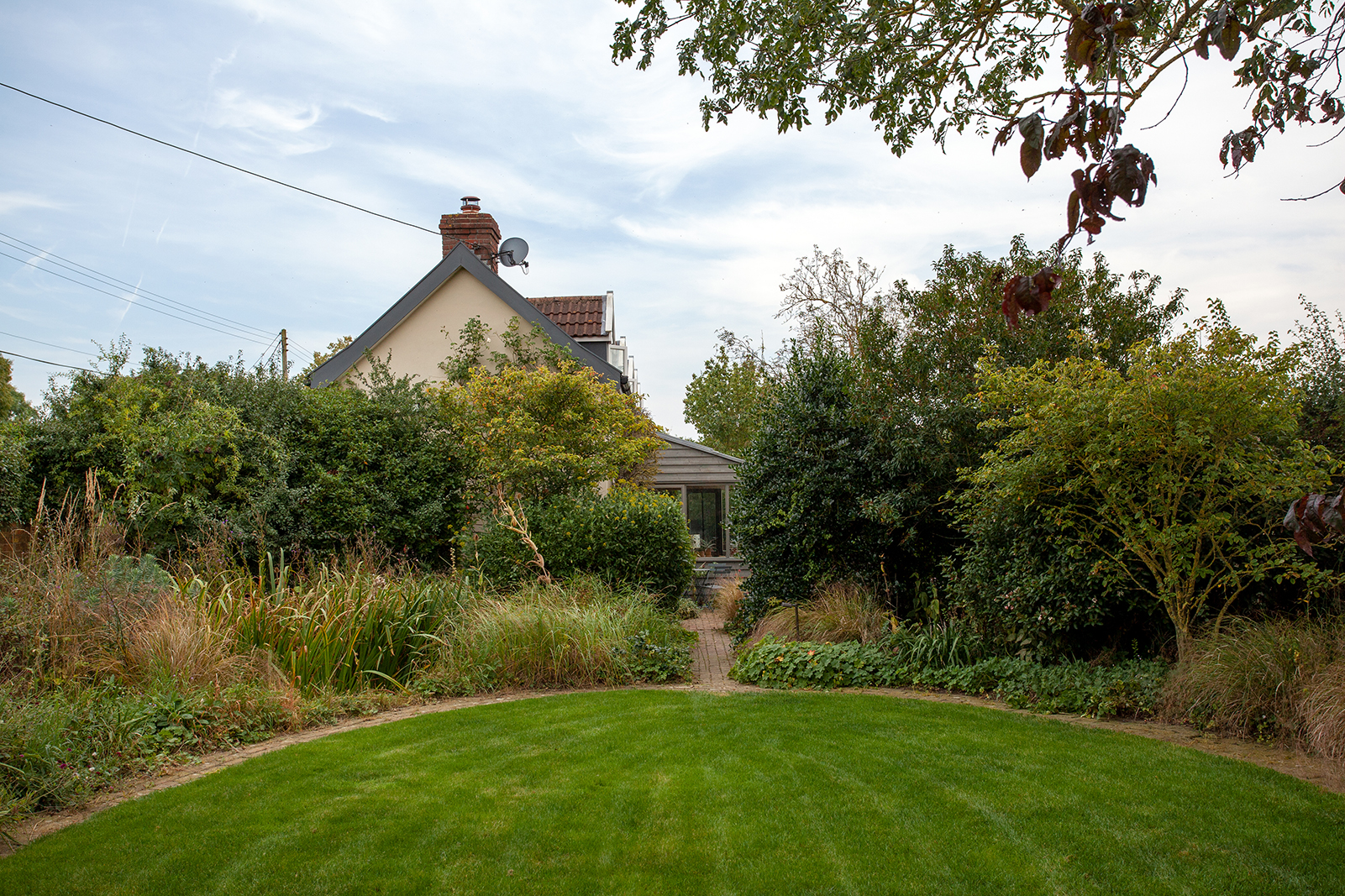
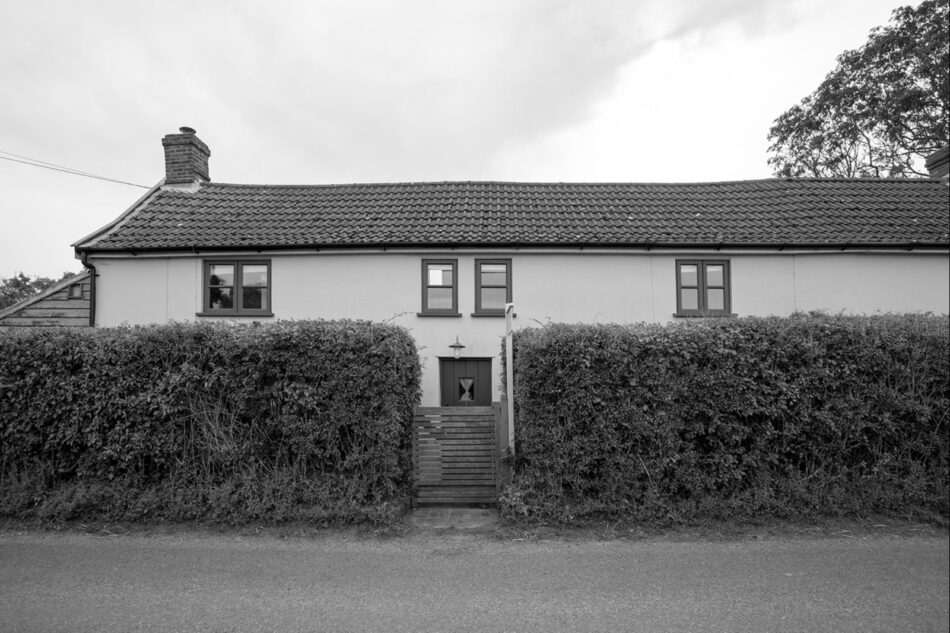
The long, linear form of this traditional 18th-century cottage is immediately apparent from the approach; its clay tiled roof running parallel to the hedge and finished with stout brick chimneys at either end. Internally, the spaces run in sequence, cleverly punctuated by a light and spacious hallway.
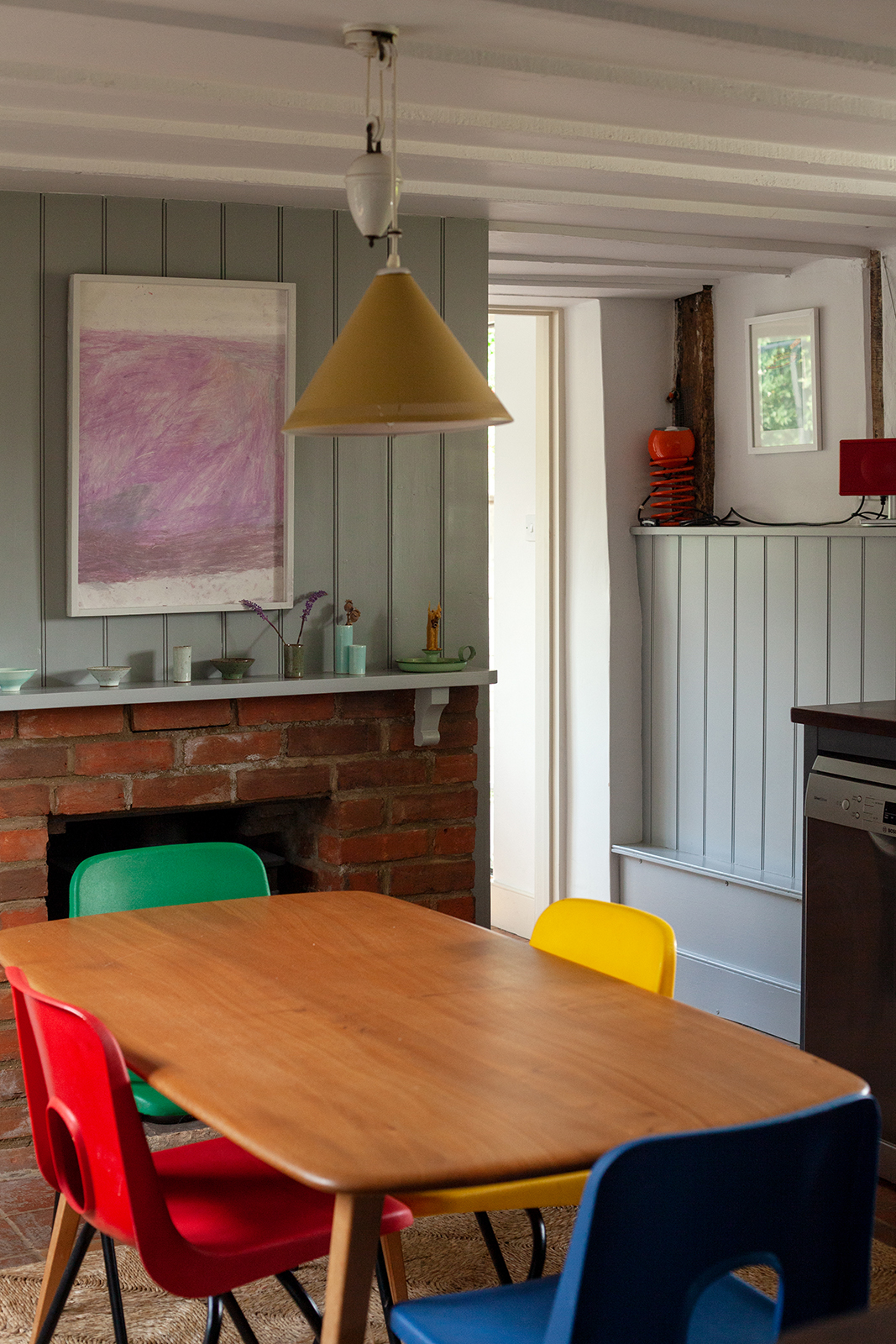
Great care has been taken in the layering of decoration throughout and in the kitchen, the original timber frame exposes itself above butt and bead timber panelling painted Thundercloud blue by Sanderson, set at the perfect height and depth for showcasing prized possessions. This boarded finish wraps around the room, concealing a pantry and backing a brick fireplace complete with wood burner. The adjacent well-equipped utility room also functions as a boot room, perfect for wellingtons and coats when returning from a long walk in the Suffolk countryside.
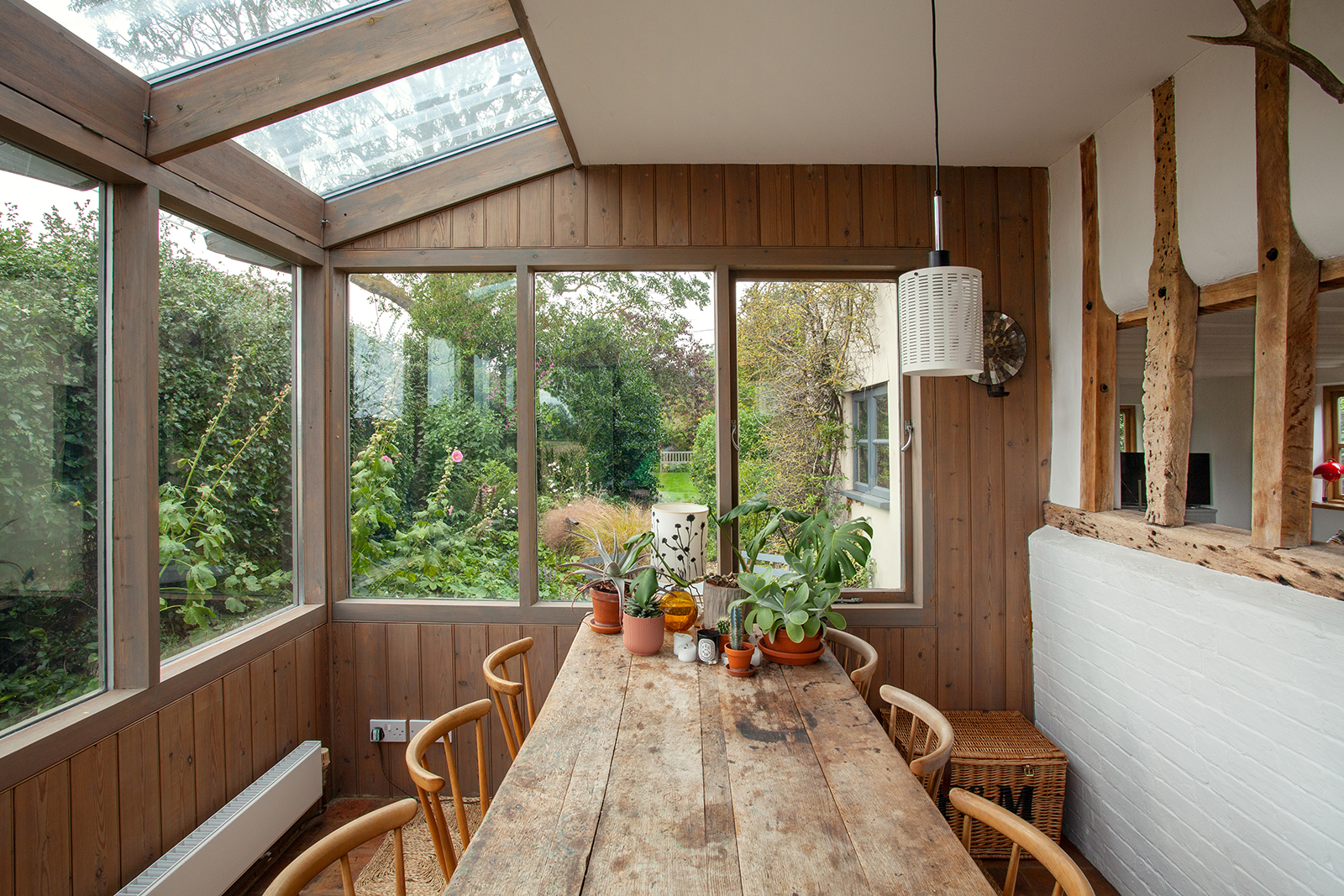
At the opposite end of the house, a generously proportioned living room is well lit by oak framed casement windows and is centred around a large cast iron wood burner. Gently exposed beams repeat as in the kitchen, creating a connecting rhythm throughout the ground floor. To the rear, the garden room is a wonderful interstitial space that brings the outside in through three walls of large, casement windows that frame views into the gardens and the seemingly unending fields beyond.
A discrete bathroom is tucked between the two living spaces, with a shower and window looking out into the garden.
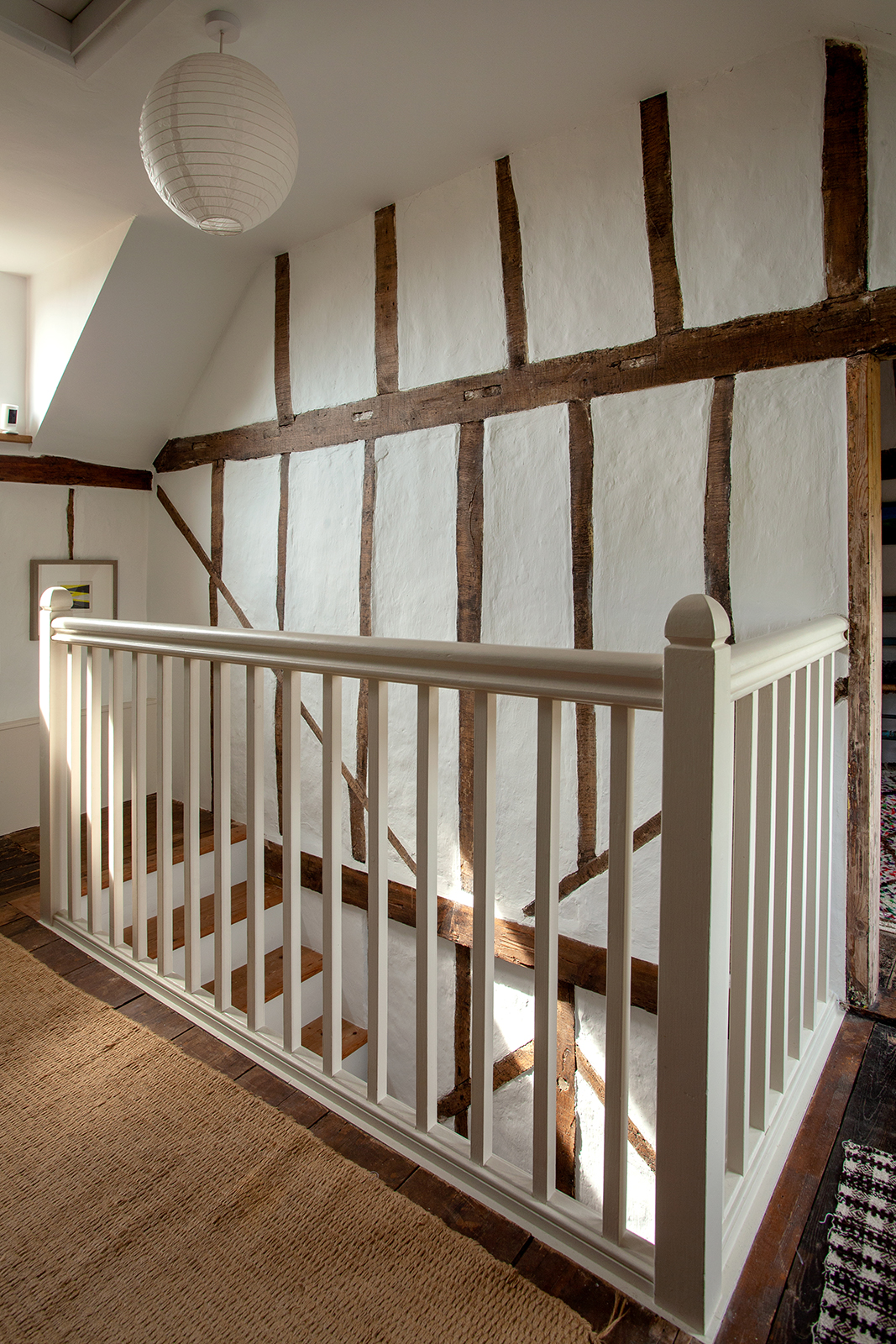
Upstairs, original floorboards, smooth with age, run along a corridor divided by oak beams and posts which create frames that separate the space like a stage set when looking from end to end. Throughout, windows frame views out across the open countryside in both directions; while to the rear of the plan, cheerful dormer windows punctuate the overhanging eaves.
Two double bedrooms bookend the house; one, within the oldest core of the house, is interspersed by beams and a chimney breast, whilst its opposite is characterised by butt and bead panelling to the gable end, painted a warm Dusky White by Sanderson, that conceals plenty of integrated storage. Between the rooms, a third bedroom with a Dutch-style built-in bed, is set within the house’s timber frame and forms the perfect den for both young and old. Alongside, a bright and spacious bathroom is emboldened by a reclaimed period brick red cast iron bathtub.
Great Outdoors
The linear plot on which the cottage sits has been cleverly divided to create a number of different spaces. Closest to the house and adjacent to the garden room is a gravel and brick patio area. The rear facade here is finished with storm grey shiplap timber cladding with a vast crimson glory vine planted nearby that turns a resplendent vermillion come autumn. Cardoons, hollyhocks and roses form a loose border with the open fields that surround the plot.
To the side of the house, a pleasing oval lawn is bound by a brick path and well-established borders; a welcoming open space bordered by eucalyptus and sycamore. A working vegetable garden sits alongside, divided into four raised beds and accompanied by a compost and bike storage. Apple and plum trees, heavy with ripe fruit separate this space from the parking area and a further lawn that looks onto a wildlife rich pond.
Out and About
Larkspur Cottage sits at the edge of the village of Brundish, a seemingly unchanged hamlet surrounded by fields and winding lanes, a little over 15 miles to the north of Woodbridge. Neighbouring Laxfield is home offers a number of amenities; a supermarket, primary school and the wonderfully idiosynractic Kings Head pub.
Brundish is less than twenty miles from the sea, and the Suffolk Coast and Heaths AONB, covering 403 square kilometres, including wildlife rich wetlands, ancient heaths, windswept shingle beaches and historic towns and villages. At it’s heart are the towns of Woodbridge, Aldeburgh and Orford. The latter, a pretty medieval village on the River Alde, attracts visitors for its twice daily drops of fresh lobster and crabs, its renowned oysterage and smokehouse and the excellent Pump Street Bakery. Aldeburgh is famed for ice cream, fish and chips and having once been home to Benjamin Britten. Between the two and astride the river Alde is the fantastic Snape Maltings, an arts and cultural centre occupying a cluster of converted Victorian buildings. There are independent shops and galleries, wonderful places to eat, and several performance venues – including the world-famous Snape Maltings Concert Hall.
The nearby market town of Diss, only a 30-minute drive away, benefits from excellent rail connections to London with a journey time of around 90 minutes to Liverpool Street.
Council Tax Band: E


 Related Stories