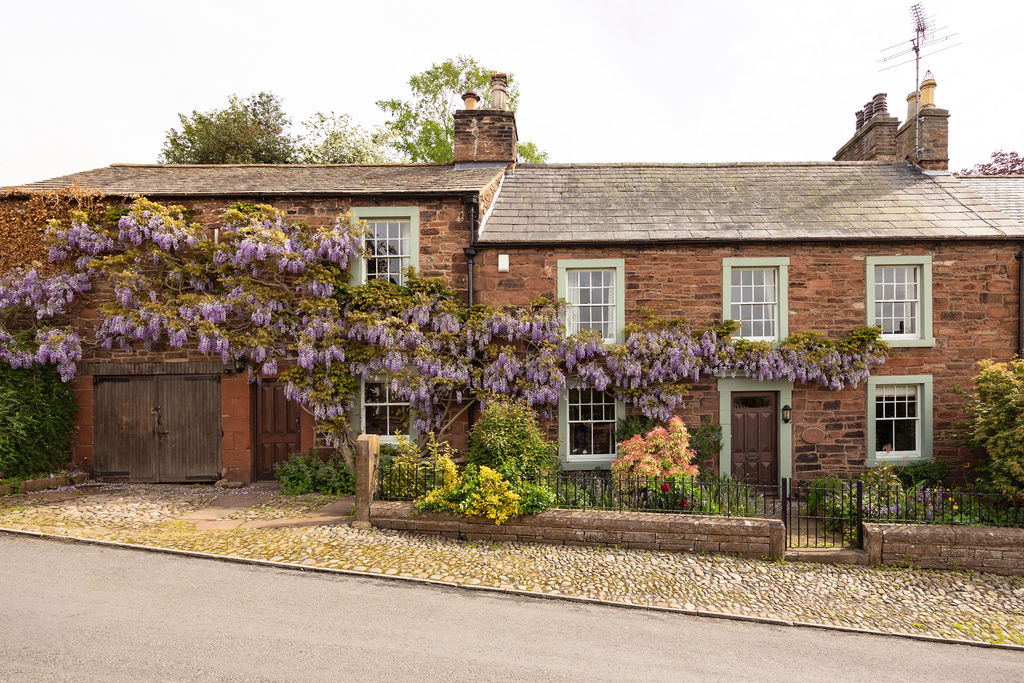
The main entrance to the home is via a pathway flanked by established flower beds, leading up to a door surrounded by a near century-old wisteria. Entry is to the main hallway where original oak floorboards run underfoot, and walls have been finished in calming, neutral Off White by Farrow & Ball. Adjacent to the entrance hall is a spacious reception room. Currently used as a snug, this room is separate from the main entertaining spaces. Timber beams run overhead, and a wood-burning stove has been incorporated into one of the original fireplaces.
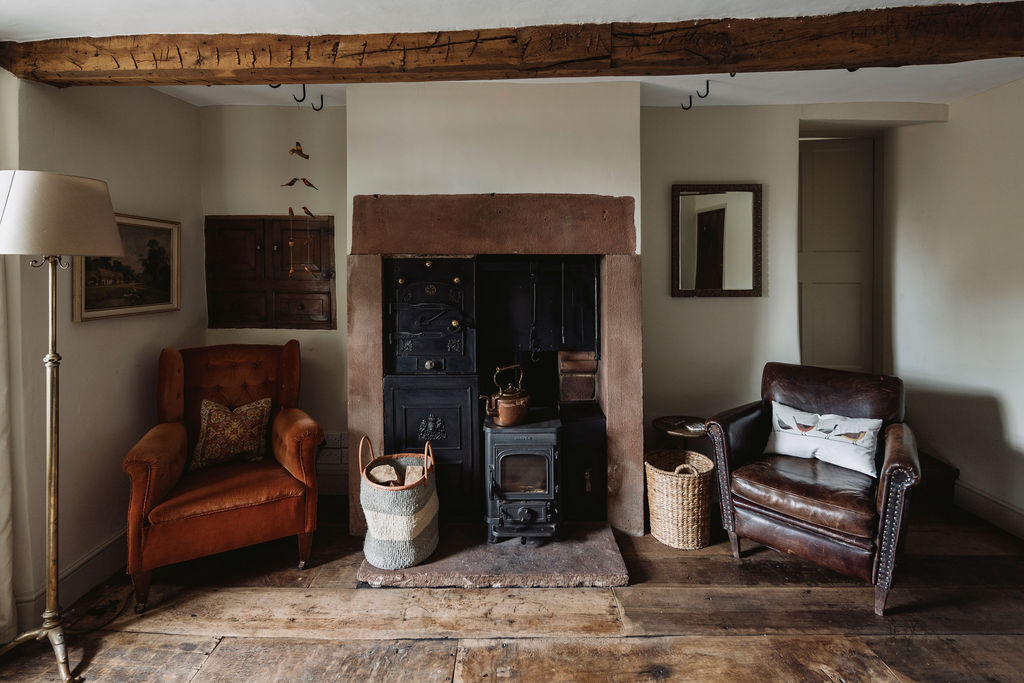
Opposite the reception room is another large living area. The focal point of the room is a marvellous 19th-century cooking range, which is flanked by an original sandstone fire surround. Notched timber beams and sash picture windows are found here and throughout the house. Through the main reception room sits the spacious kitchen and dining room. Sensitively designed, light-coloured wooden cabinets and walls painted French Grey by Farrow & Ball complement dark sandstone flooring. A black, two-door Aga provides a focal point for the room, and an electric oven and hob add a 21st-century practicality to the space. There is a large pantry to the rear of the ground floor. At the back entrance of the house is a boot room with a WC; painted in Breakfast Room Green by Farrow & Ball, it is the perfect space to come in and take off muddy wellies after a long walk.
A turned staircase of solid sandstone slabs leads to the first floor of the house. There is the spacious primary bedroom at the far end of the plan, with built-in storage and dual-aspect views, overlooking the village at the front of the room and the surrounding countryside to the rear. A large en suite bathroom accompanies the space, with a beautiful vaulted ceiling and views over the gardens. Adjacent, there are three additional bedrooms, all of very good size with picture-perfect views of the charming village. Also on this floor is a large family bathroom with a bath and separate shower and a large linen storeroom.
Accessed via a side return, at the furthest end of the plot is a good-sized galley room, which has been utilised as a gym.
The Great Outdoors
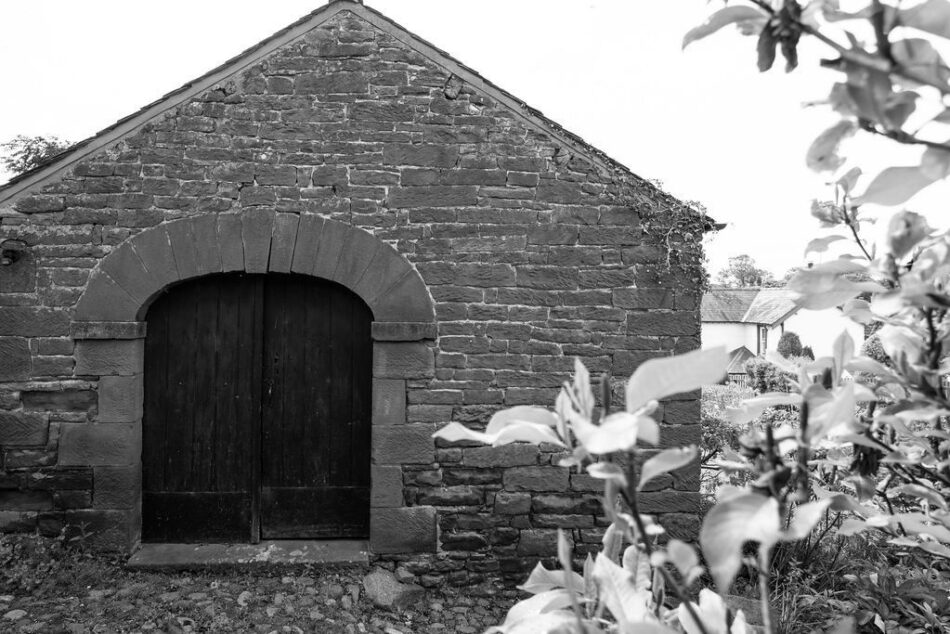
Externally, a patio leads to a raised lawn, which opens to the expansive main lawn with well-established beds and breathtaking, far-reaching vistas of the surrounding countryside. The current owners have utilised the far-end of the plot with well-established vegetable gardens and a high decking space, a perfect spot for an evening drink or alfresco dining. There is a small outbuilding near the house for storing gardening necessities.
Out and About
The civil parish of Kirkoswald is located in the Lower Eden Valley of Cumbria, an area awash with natural beauty and rolling green spaces. In a detailed survey in 2005, the Office for National Statistics stated that the Eden District has the second-lowest proportion of land taken up by roads of any district in England. The village has one main street with two pubs, The Crown Inn and Fetherston Arms (perfect for a bite to eat following a Sunday walk), there is a local convenience store for life’s necessities, a post office and a well-attended primary school. Kirkoswald is a frequent winner of the best-kept village competition and has been a winner of ‘Cumbria in Bloom’.
Locally is renowned Askham Hall with a Michelin Star restaurant and health barn for those seeking a tranquil break. Nearby Penrith has an abundance of amenities, including retail, dining and schooling; there is an abundance of well-noted state and public schools in the area.
A fast train to London Euston runs regularly from Penrith, and the immediate area is served by nearby Lazonby & Kirkoswald station, with regular services to London Kings Cross. The Scottish Border is some 30 minutes drive.
Council Tax Band: E



 Related Stories