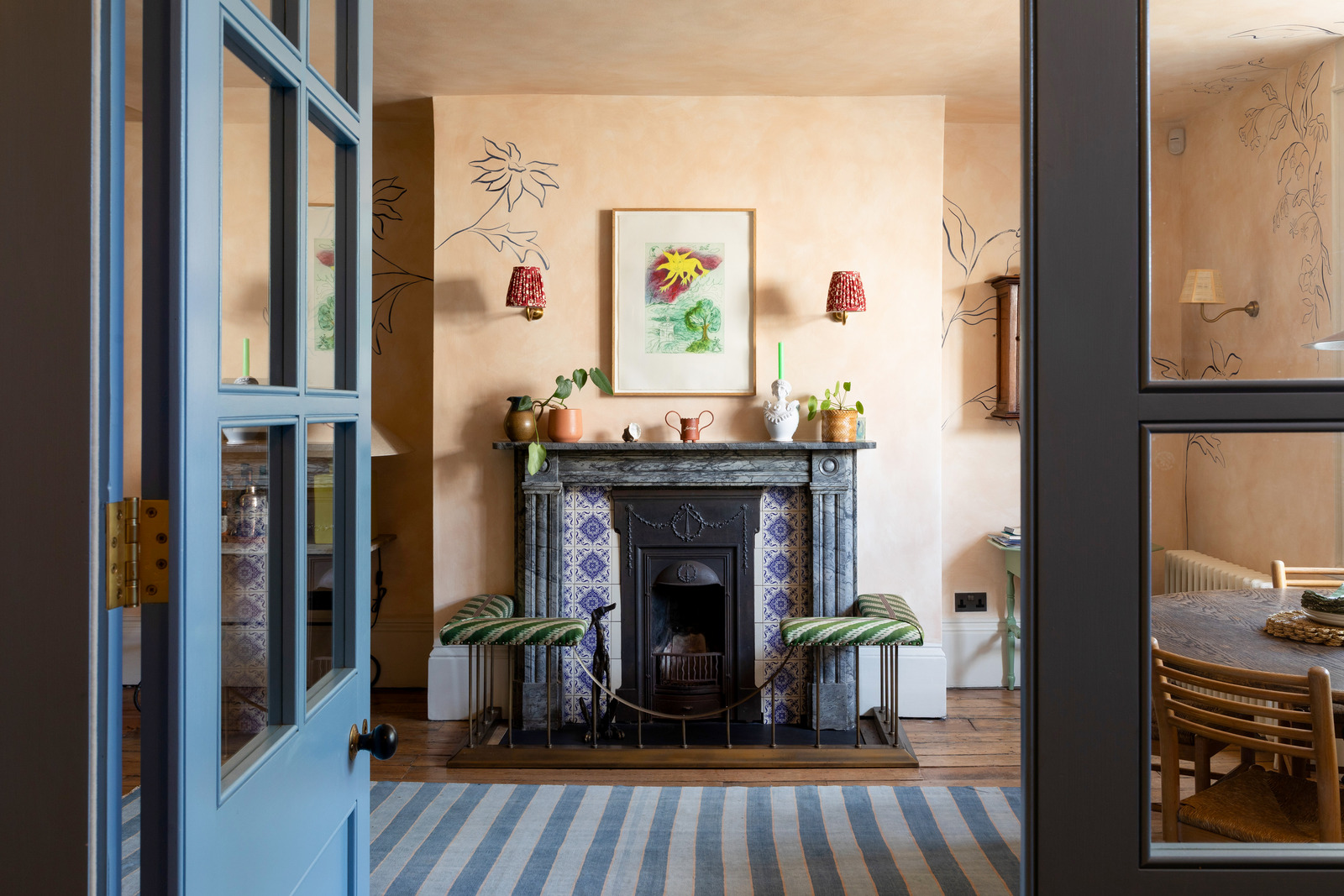
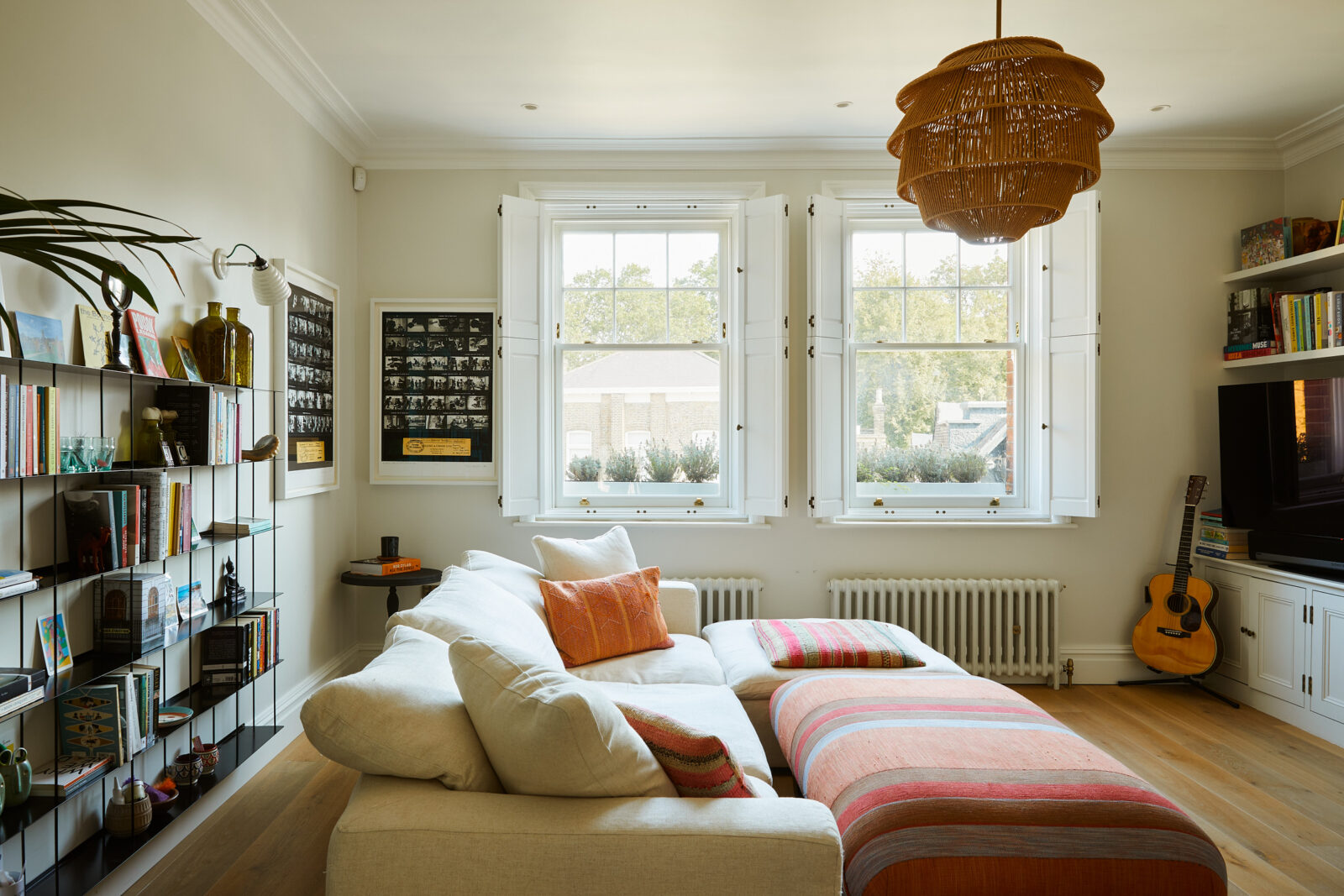
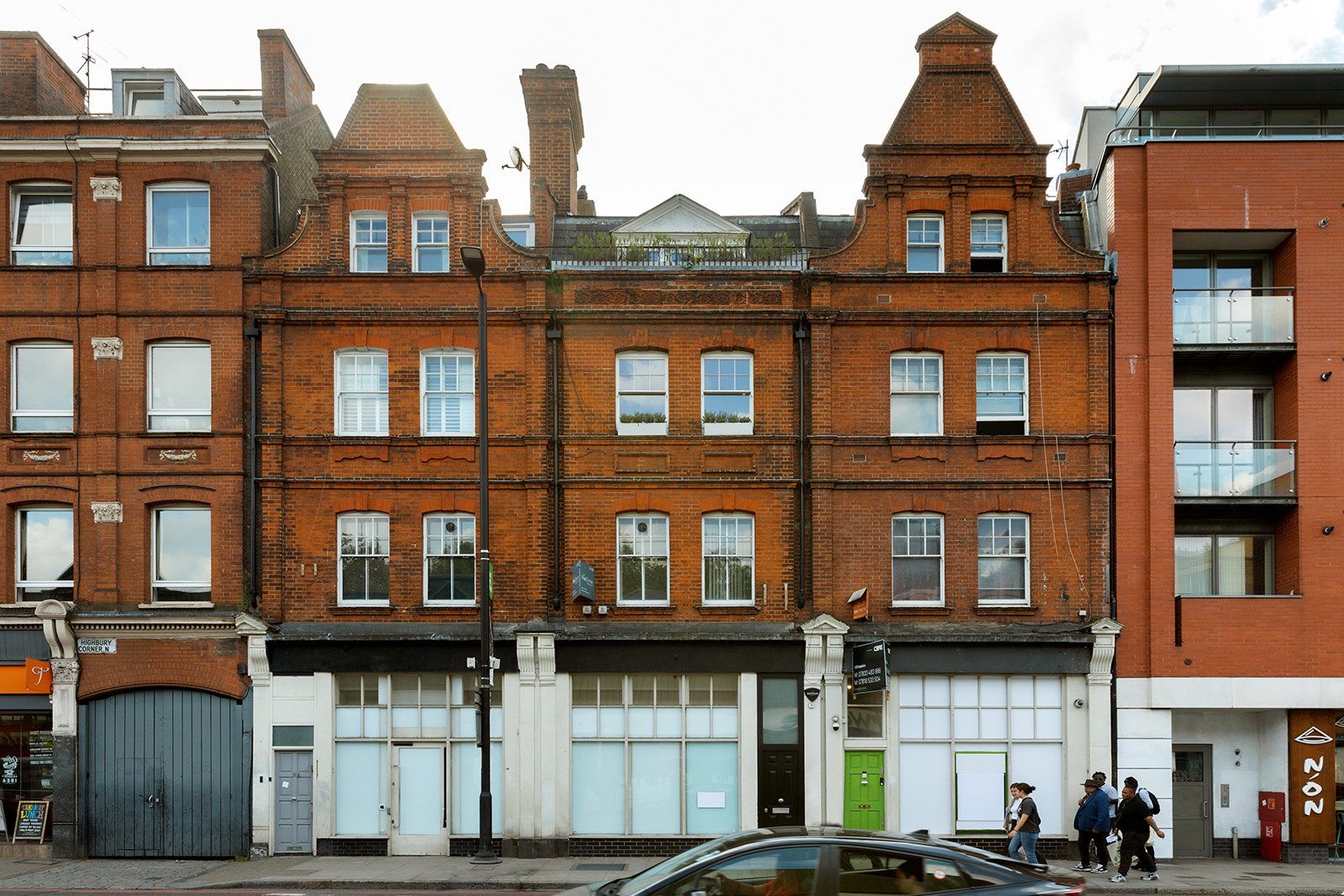
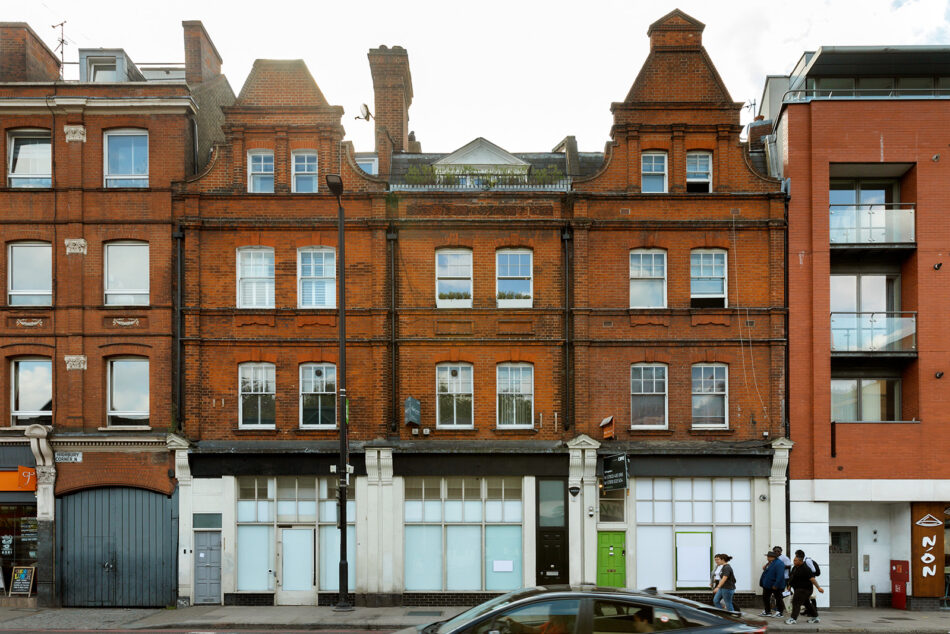
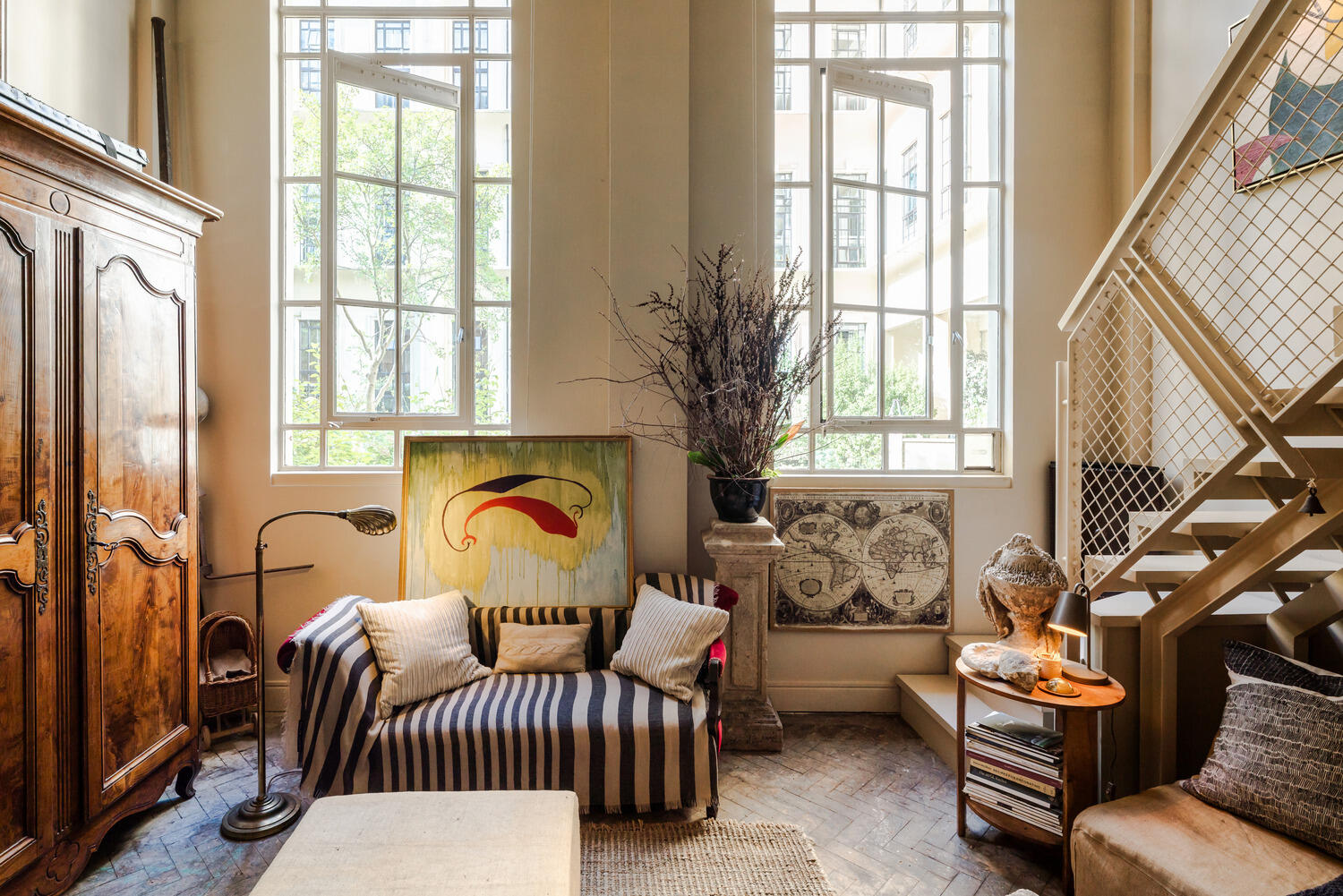
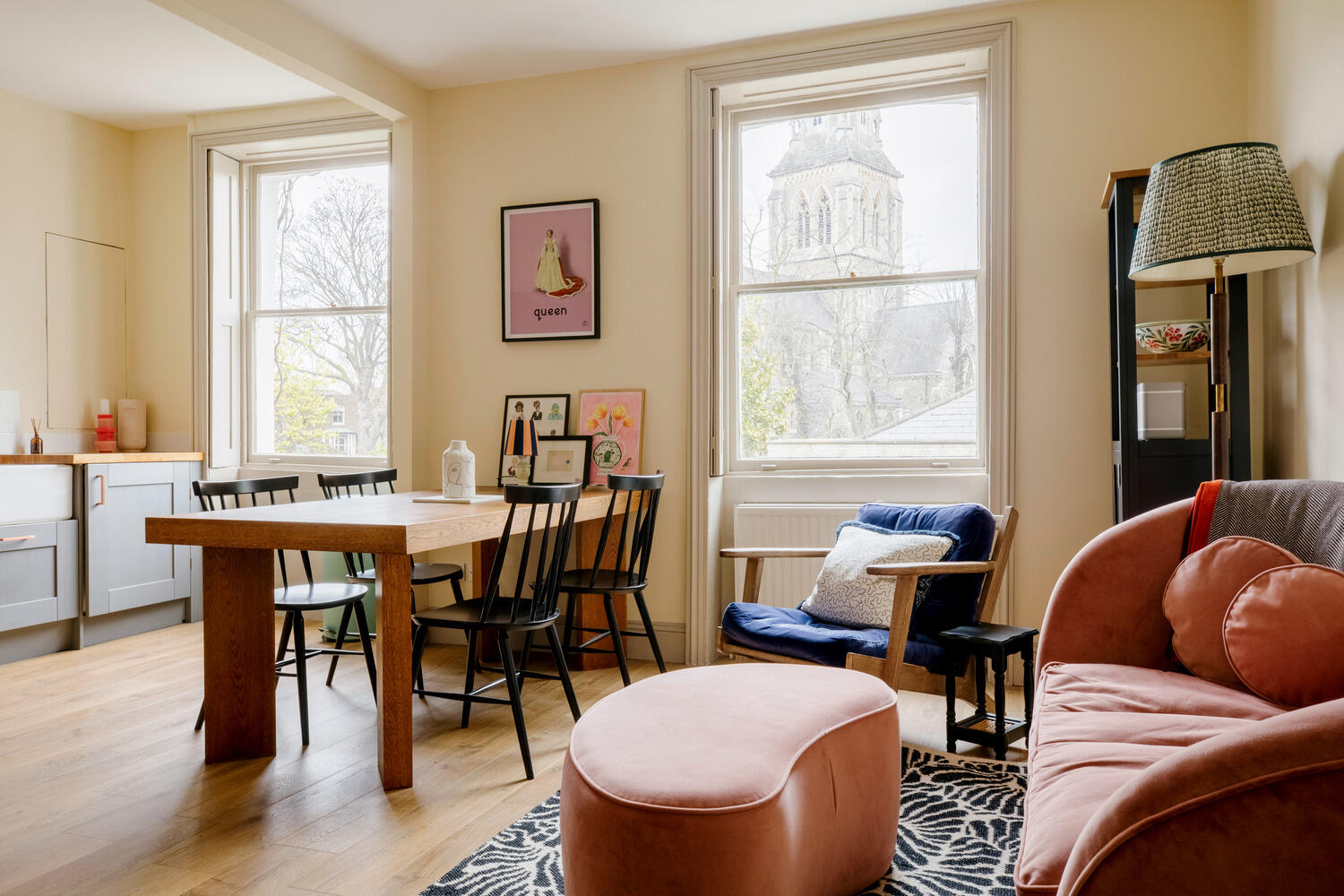
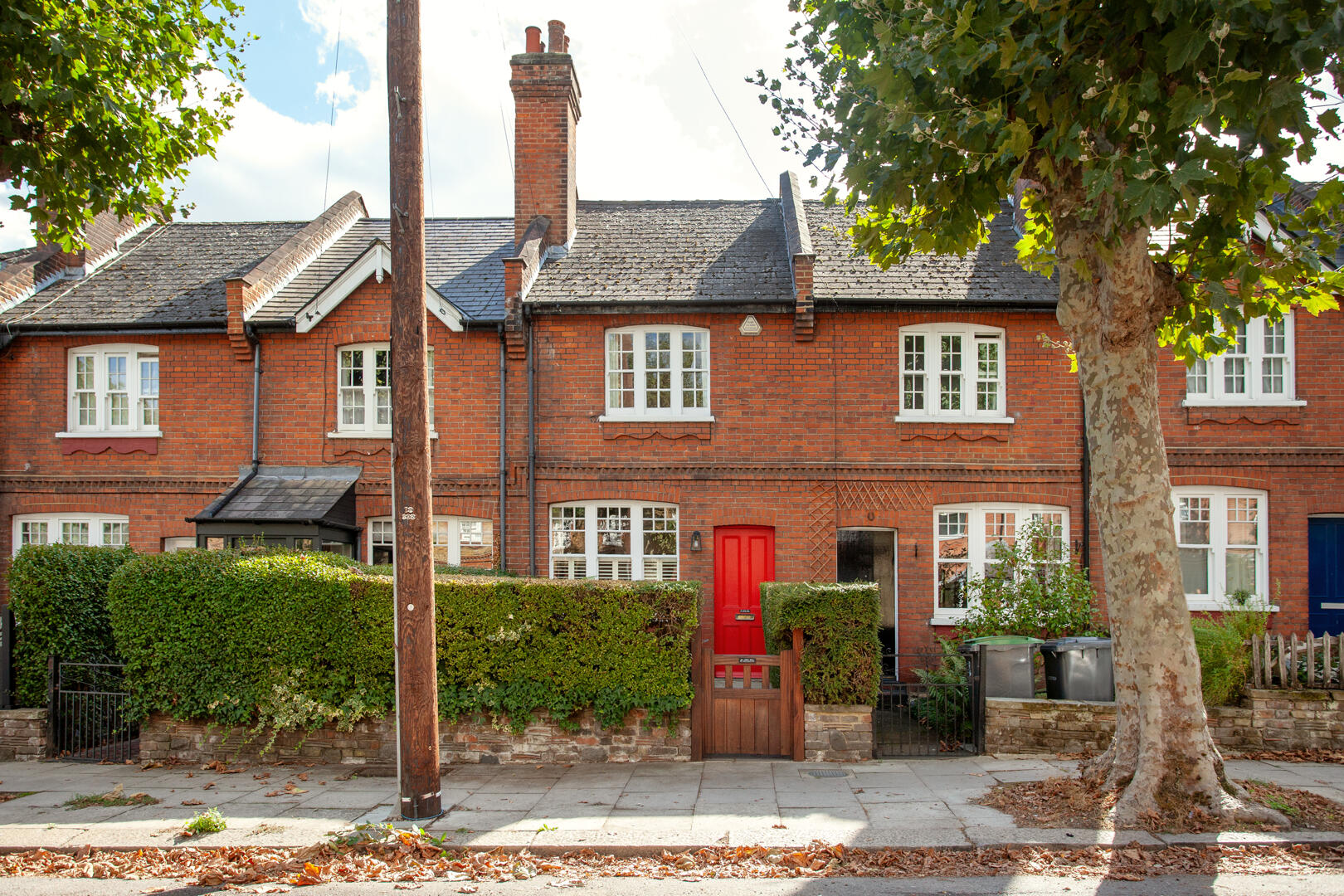
With a private entrance at street level, the apartment is accessed via a smart set of internal stairs. Opening up on the second floor, and with voluminous ceiling heights, is the open-plan entertaining space. To the front, a charming reception room is flooded with natural light from two sash windows, flanked by working shutters. Finished in neutral shades of paint by Farrow and Ball, the room has natural wood flooring underfoot and bespoke shelving flanking a Stovax marble fireplace.
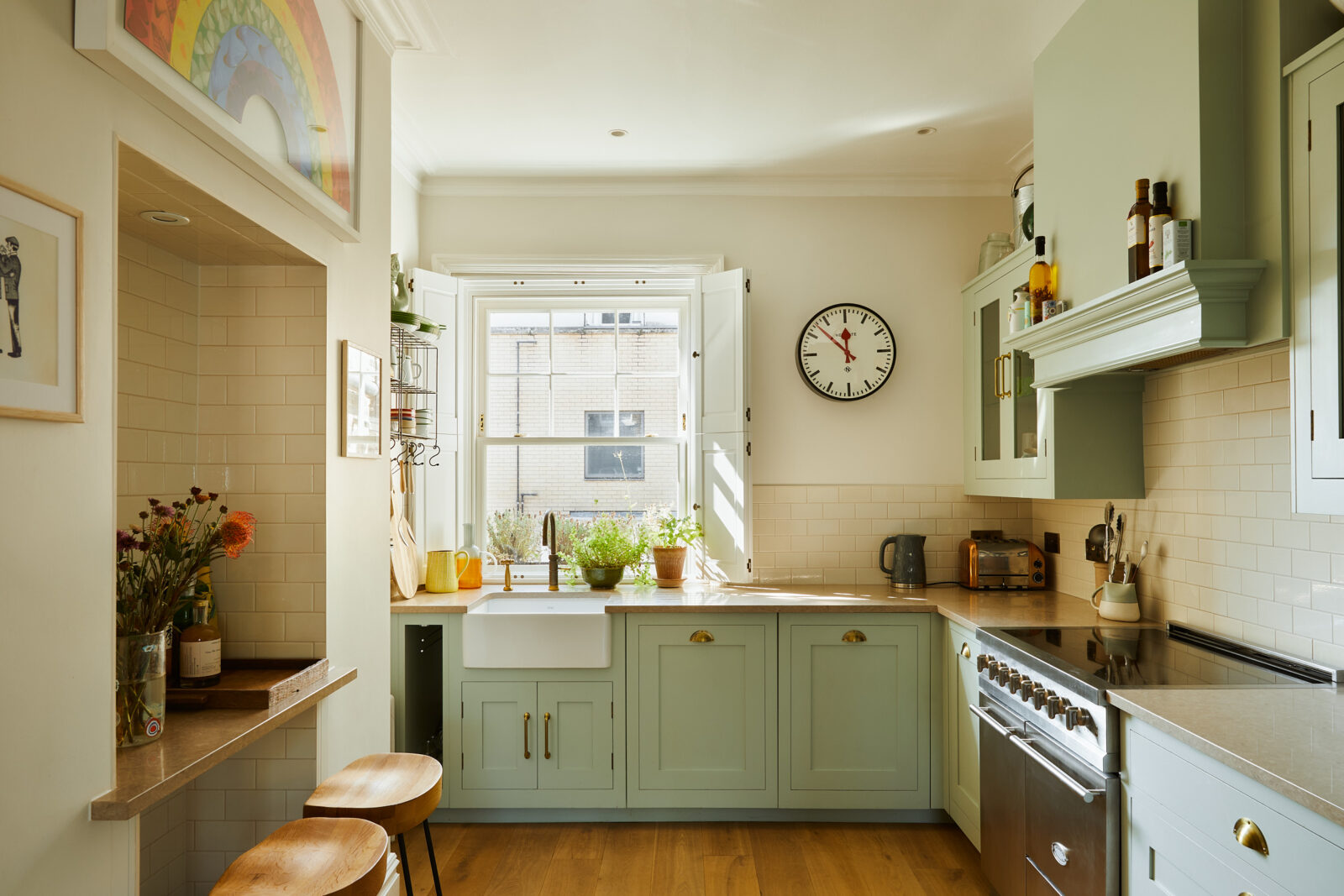
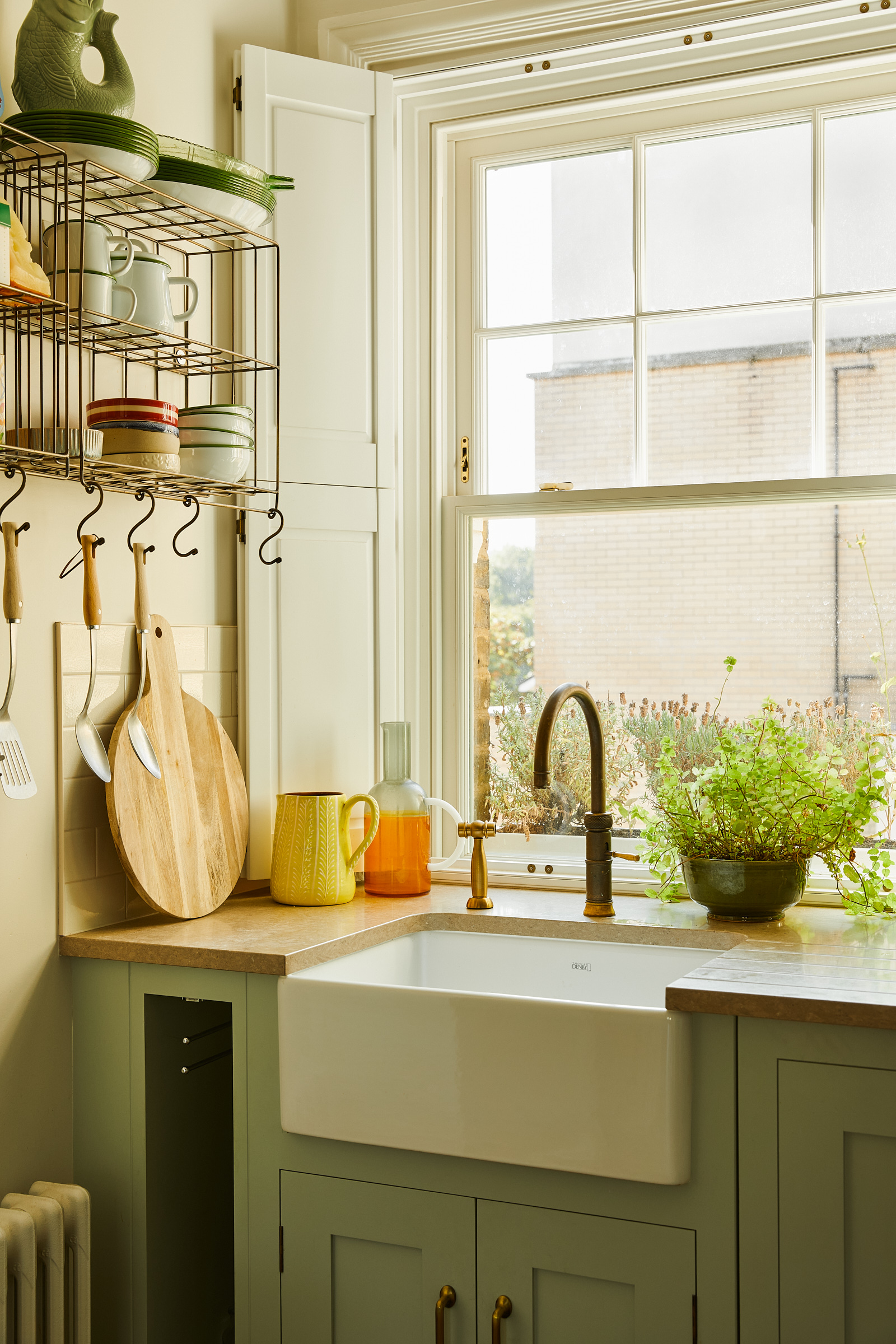
Leading on from the reception room is the kitchen; bespoke wooden cabinetry is painted in a soothing pale green and topped with hardy Caesar stone countertops. Subway tiles provide a practical splashback for the counters, and the original chimney breast has been opened to make way for a breakfast bar. The room has views over the quiet rear of the building, form a double-glazed sash window.
At the rear of the second floor is a handy shower room and utility. Clad with white subway tiles and bespoke cabinetry, the room has wonderful Fired Earth tiling underfoot, with a geometric design.
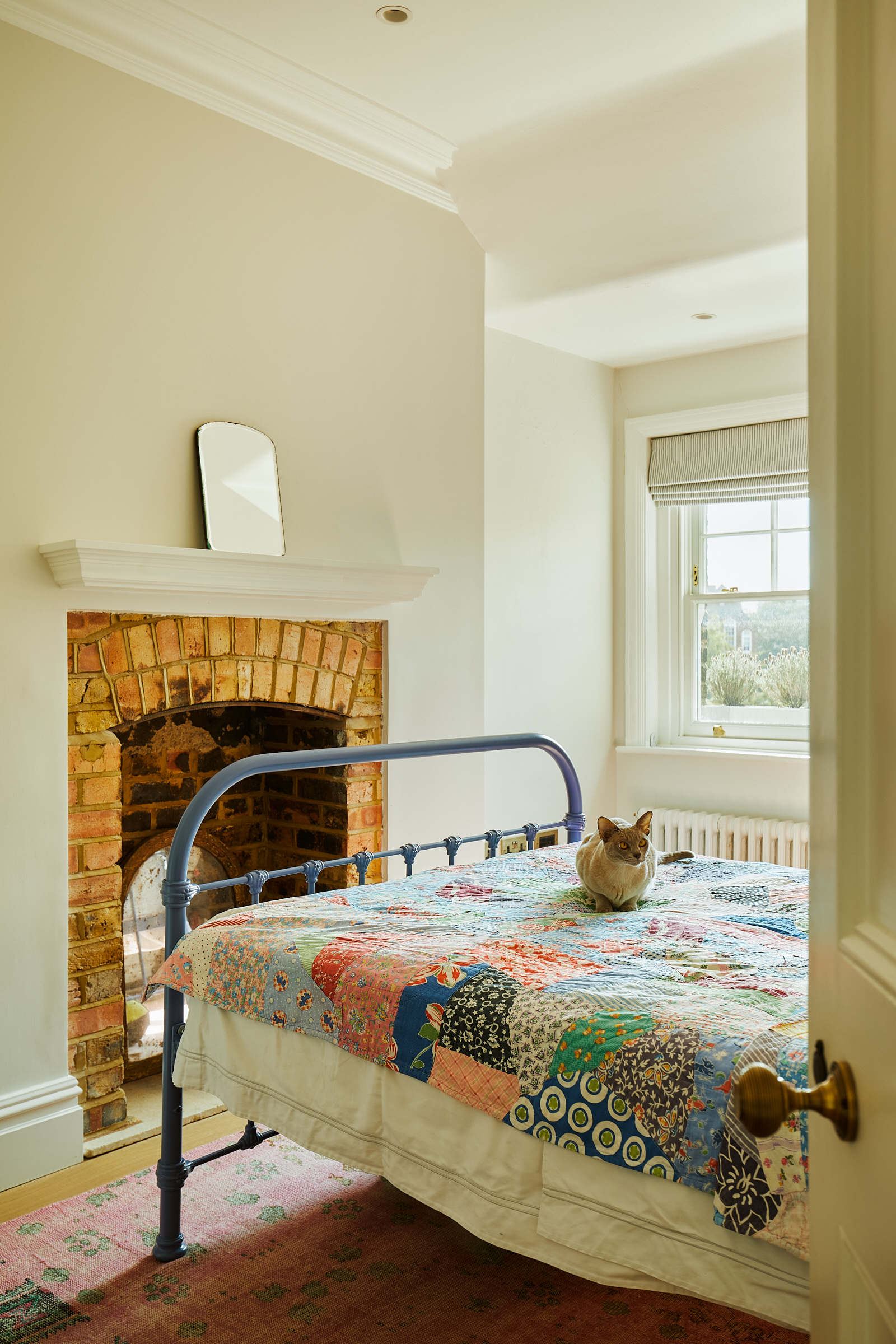
Ascending to the top floor, the primary bedroom occupies the front of the plan. With neutral, wood flooring underfoot and a neutral palette of paints, the space is lit by a glazed door and windows leading to a small terrace. Bespoke wardrobes line one wall and an original fireplace has been revealed. Adjacent the primary bedroom is a secondary bed, overlooking the rear; the space has bespoke cabinetry and a second, exposed fireplace provides a focal point for the room.
The primary bathroom sits on the third floor, and has been opened up into the eaves to create emphasis of the vertical space. Two marble basins by C. P. Hart sit atop a vanity, and a bath with overhead shower is adjacent. The room has been clad in white tiles, which are complemented by black fixtures.
There is a sizeable loft with Velux windows and bespoke storage.
Out and About
It lies within easy reach of the lively Upper Street but offers a sense of seclusion and tranquility more akin to country village living. The fields contain tennis courts, a playground, and a swimming pool within Highbury Leisure Centre. Upper Street is home to an abundance of amenities, from Gail’s and Ottolenghi to The Almeida Theatre and The Old Red Lion Theatre & Pub. Towards Barnsbury, Southpaw Coffee is the perfect spot for a morning coffee, and SUNDAY is the best brunch spot in town. Highbury Barn is just over the other side of the park, with its wonderful selection of independents, including Godfrey’s Butchers, Bourne’s Fishmonger, Da Mario Deli, and the excellent flagship of La Fromagerie.
There are further amenities at Angel to the south and Newington Green to the east, including bakeries, greengrocers, florists, health-food shops, bookshops, a shopping centre, as well as some of London’s best restaurants. King’s Cross and Coal Drops Yard are both within walking distance, and the path along Regent’s Canal makes for a picturesque route to get there.
Highbury Corner benefits from excellent access to public transport. The Victoria Line and Overground at Highbury & Islington are less than a minute’s walk away; there is a fast train into the City from nearby Drayton Park station, and there are plenty of bus routes both into and out of the city.
Tenure: Leasehold
Underlying Lease Length: approx. 128 years remaining
Service Charge: approx. £1,000 pa
Ground Rent: n/a
Council Tax Band: D

 Related Stories