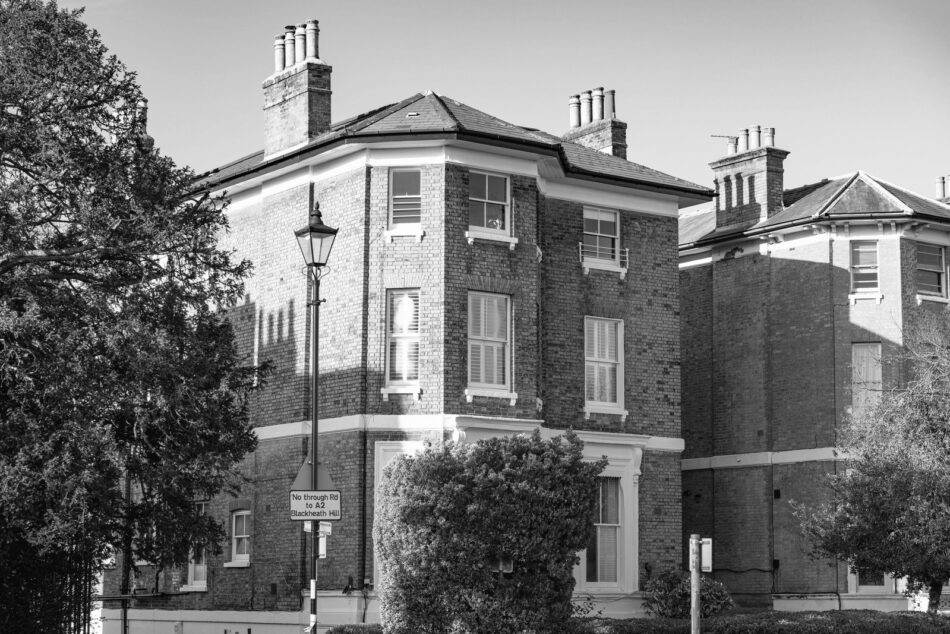
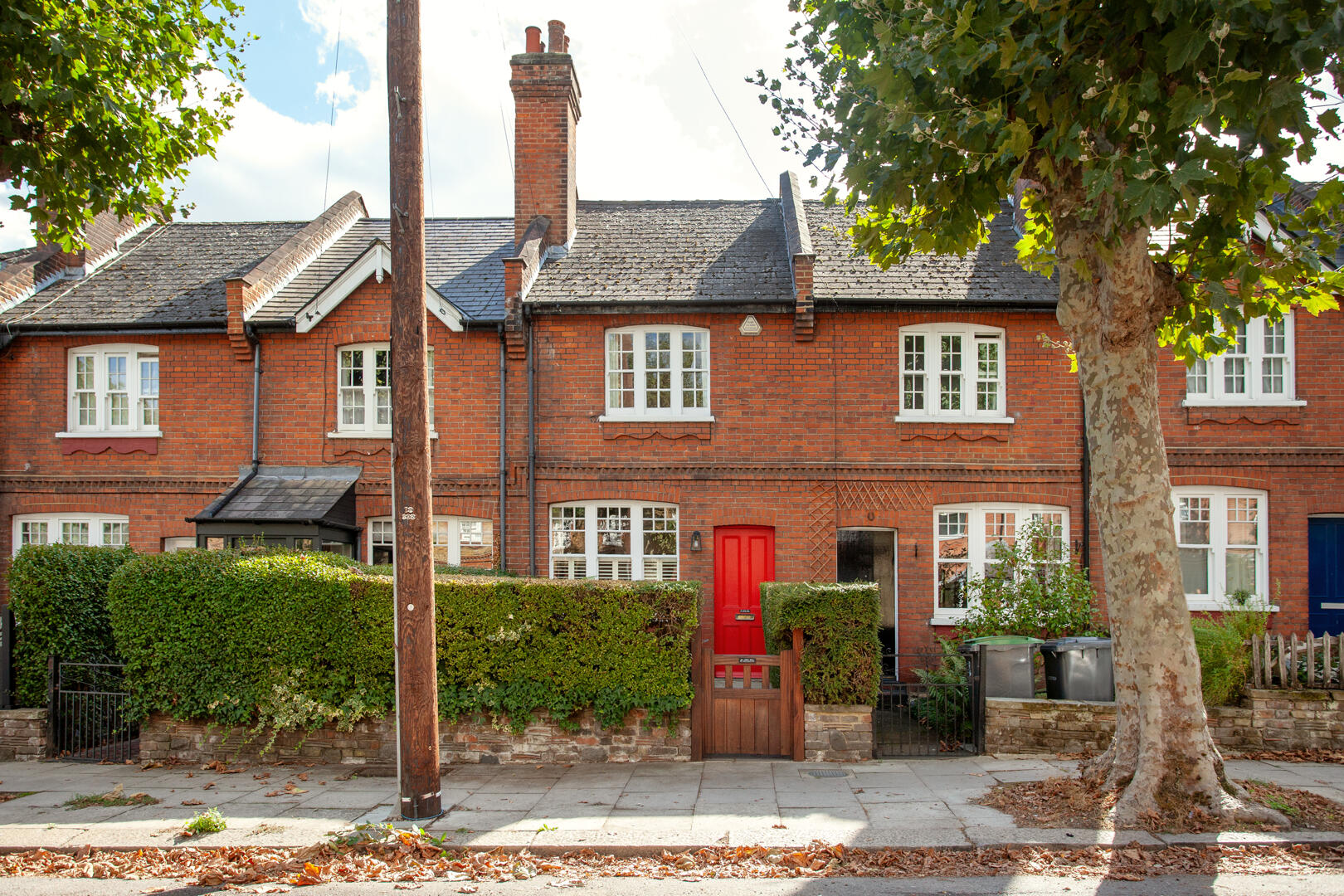
The heavy panelled door on the front of the building is flanked by pilaster jambs and topped with dentil cornicing. This opens to a communal hall, with stairs leading to this apartment’s private front door. Inside, a bright central hallway has oak floors running underfoot and walls painted in ‘Strong White’ by Farrow & Ball.
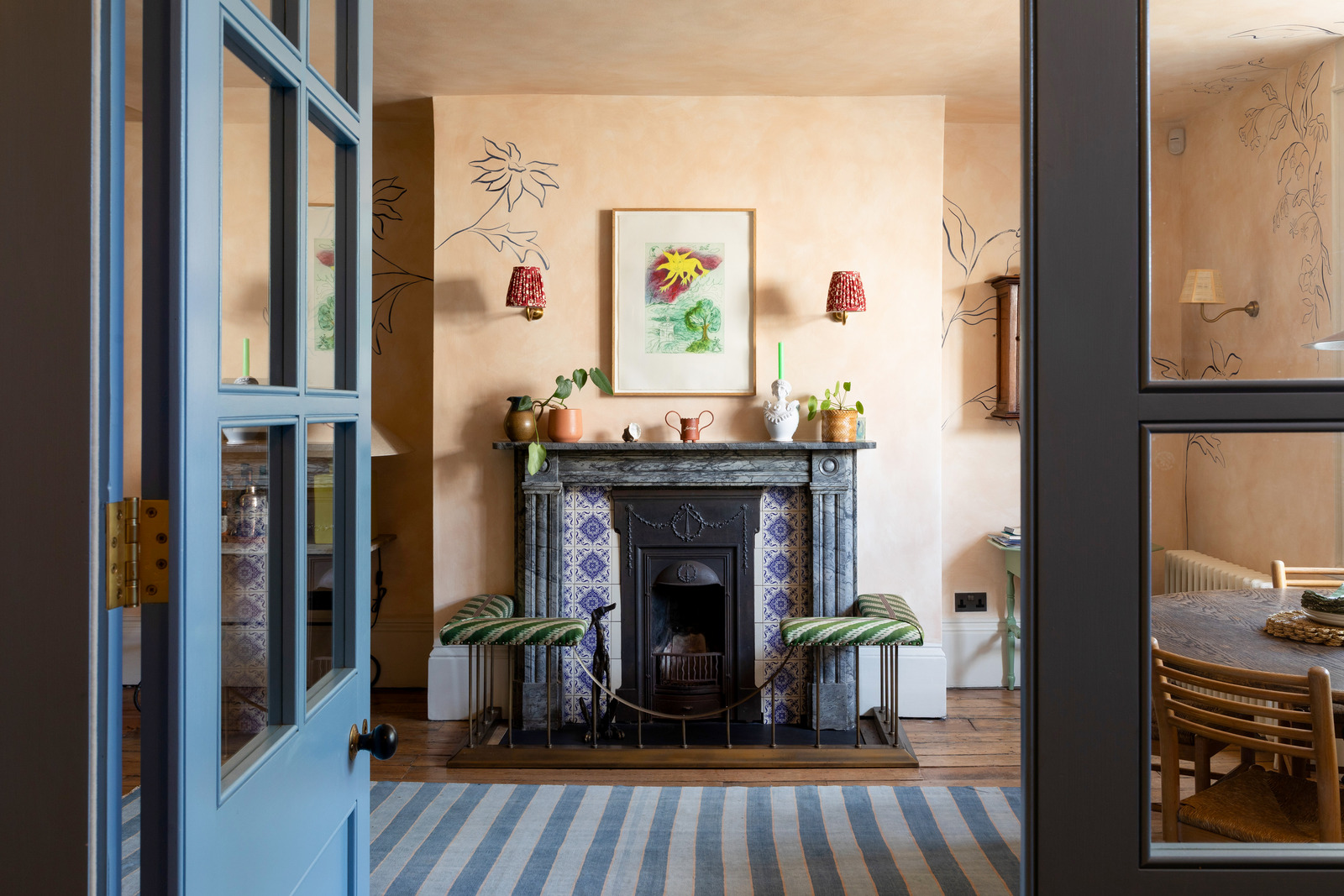
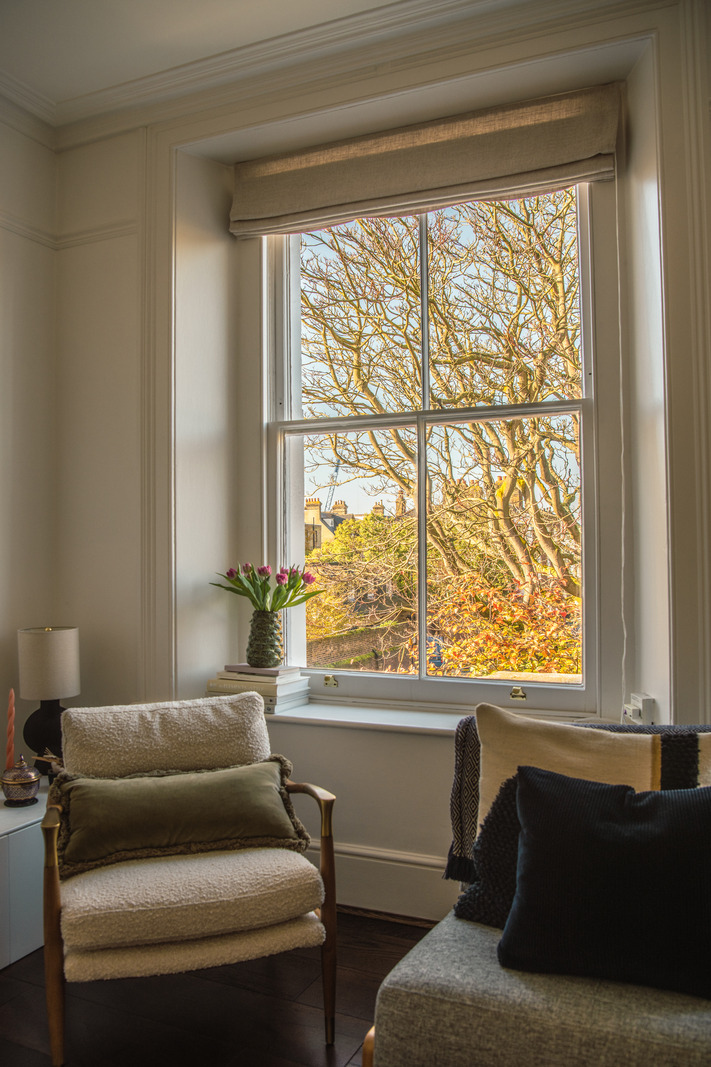
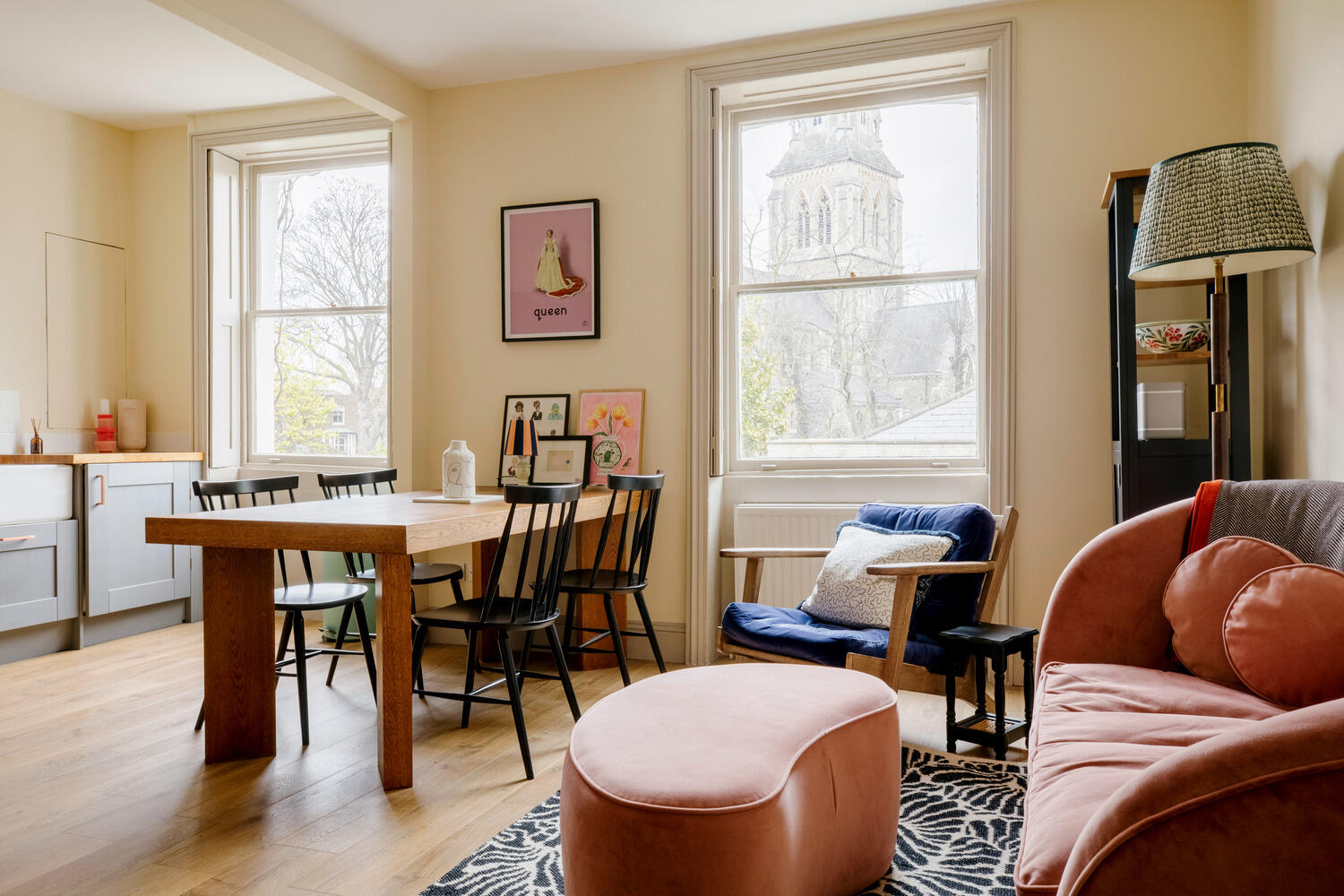
To the left of the plan is the reception room, where the dark-toned floorboards continue. The room is crowned with moulded cornicing and an original picture rail. Evening light filters through the leaves of the trees outside and enters the room through a pair of west-facing two-over-two sash windows at the front, making for a bright and warm atmosphere, with their deep sills perfect for placing a vase of flowers or a stack of books. The current owners have arranged a sitting area at one end of the room around a fireplace surround, with a hearth of Raku glazed porcelain tiles laid in a basketweave pattern. The other side of the room is used as a dining area.
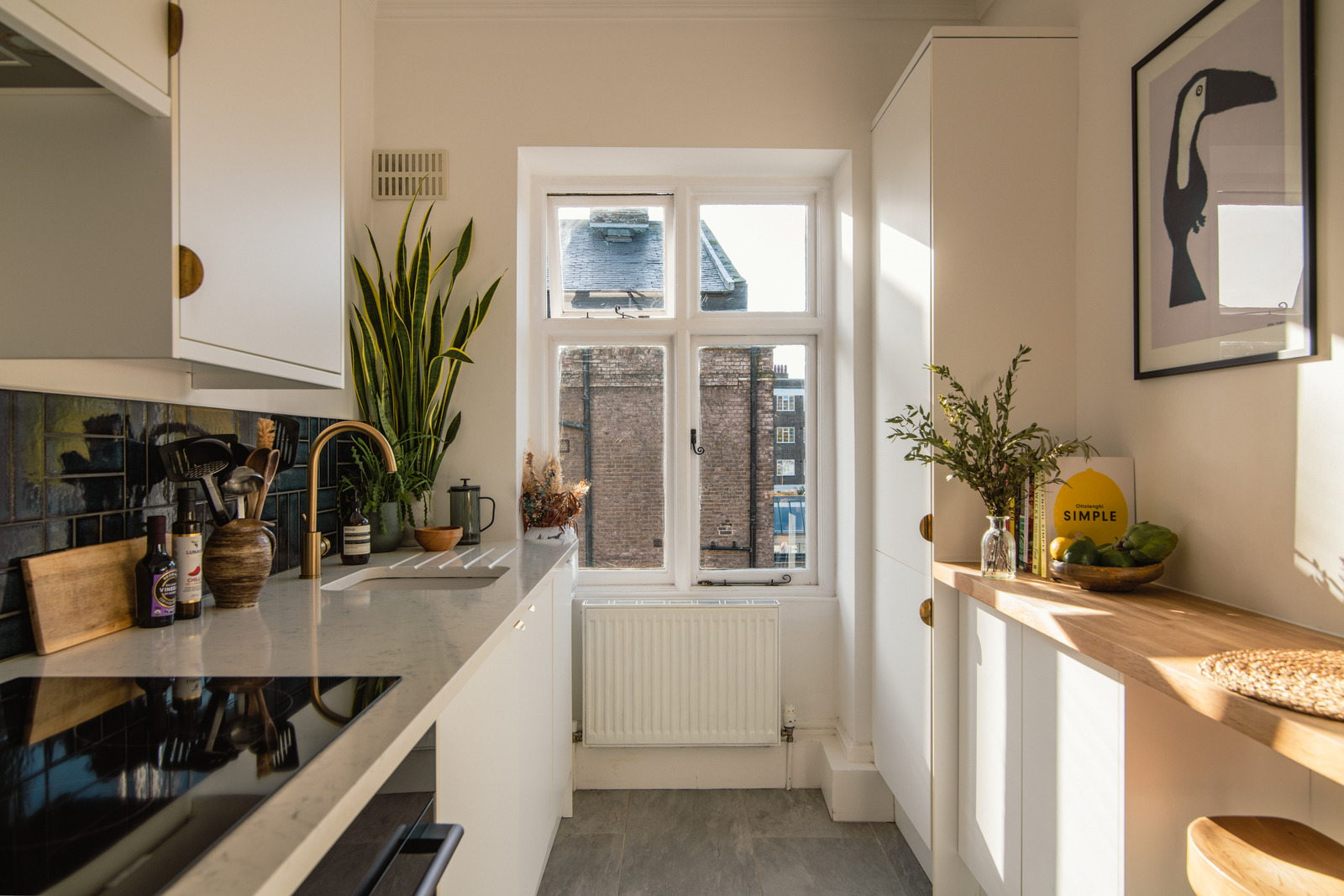
Behind the reception room is the kitchen, composed of white cabinetry with brass furniture fitted with a four-ring induction hob and a deep ceramic sink. A bar counter at one side of the room provides additional surface space for preparing a lavish meal, or a lovely spot for relaxing with a cup of coffee in the morning.
A double bedroom and a bathroom are also arranged around the central hallway. Victorian-style details continue in the bedroom with cornicing and a ceiling rose, as well as a large sash window overlooking the communal garden to the rear of the villa. A tranquil palette of soft green and white characterises the bathroom. Walls are painted in ‘Cromarty’ by Farrow & Ball and the bathtub and shower are surrounded by vertically laid porcelain tiles from Bert & May.
The Great Outdoors
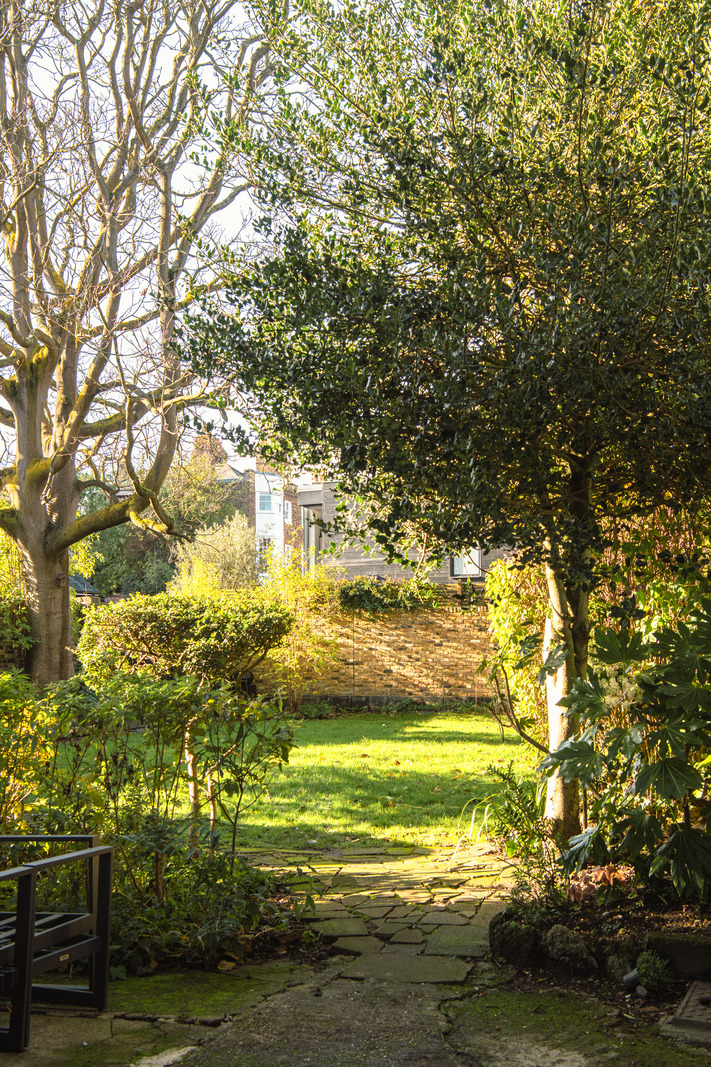
At the rear of the building is a leafy communal garden. Enclosed by a wall of London stock brick and planted with mature shrubs and trees, the central lawn feels wonderfully private. A spot next to the flower beds would make a lovely spot to enjoy an alfresco lunch.
Parking is available on Dartmouth Terrace, and spaces are reserved for residents.
Out and About
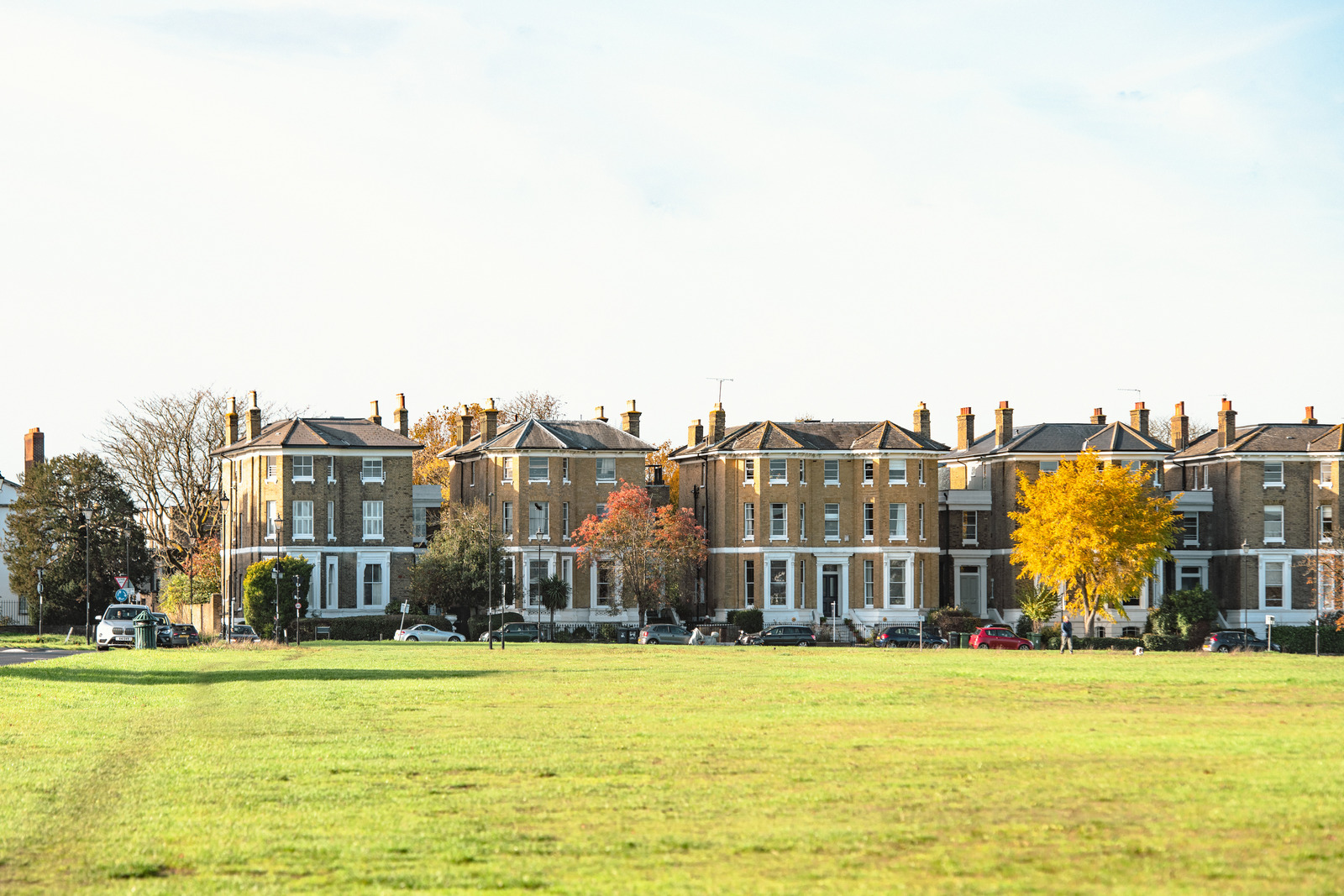
Dartmouth Terrace is positioned on the edge of Blackheath Common. The Heath is one of the largest parcels of common land in London, and its relatively flat ground lends it as a perfect spot for running or a game of tennis. Greenwich Park is a five-minute walk east, where a stroll through the Queen’s Orchard or the Herb Garden is particularly lovely on a sunny day – as is a trip to the astounding Greenwich Observatory. A walk along the nearby banks of the Thames will bring you past the much-loved riverside pubs The Trafalgar and The Cutty Sark.
The apartment is brilliantly served by a plethora of local high-end artisanal shops. The Creaky Shed greengrocers, Drings butchers, the self-explanatory shop Cheeseboard, Royal Teas café, Greenwich Natural Health and Maritime Books are all within a 10-minute walk. Two excellent pubs, Richard the First and Prince of Greenwich, are also within easy distance of the flat.
Dartmouth Terrace is also located within minutes of the multitude that Greenwich has to offer. The pretty old town, famous for its maritime history, has an excellent selection of restaurants, pubs and shops, as well as a Picturehouse cinema and a theatre. The Old Royal Naval College, designed by Sir Christopher Wren in the 18th century, hosts a popular programme of events in the gardens, including concerts, an open-air theatre and a jazz festival.
The delights of Blackheath are a 15-minute walk from the flat. A myriad of independent restaurants, cafés and bars line the high street, including Le Bar a Vin, which serves a selection of cheese and charcuterie boards alongside its excellent cellar offerings, and Home Made Food, with its seasonal fare sourced from local businesses. Blackheath farmers’ market runs every Sunday, offering an array of vegetables, fruits and freshly baked pastries.
Deptford, which is slightly further afield, has a myriad of dining choices including Marcella, Watergate, Stockton and KiliG.
Greenwich Station is just over a 10-minute walk away, running services to Canary Wharf and Bank on the DLR and rail services to London Bridge and London Cannon Street (taking eight minutes and 12 minutes respectively), as well as to Blackfriars and London St Pancras on the Thameslink. Blackheath Station and Lewisham Station, with links to London Bridge, Waterloo East Charing Cross and Victoria, are also within walking distance.
Tenure: Share of Freehold
Lease Length: approx. 189 years remaining
Service Charge: approx. £2,500/annum
Council Tax Band: D


 Related Stories