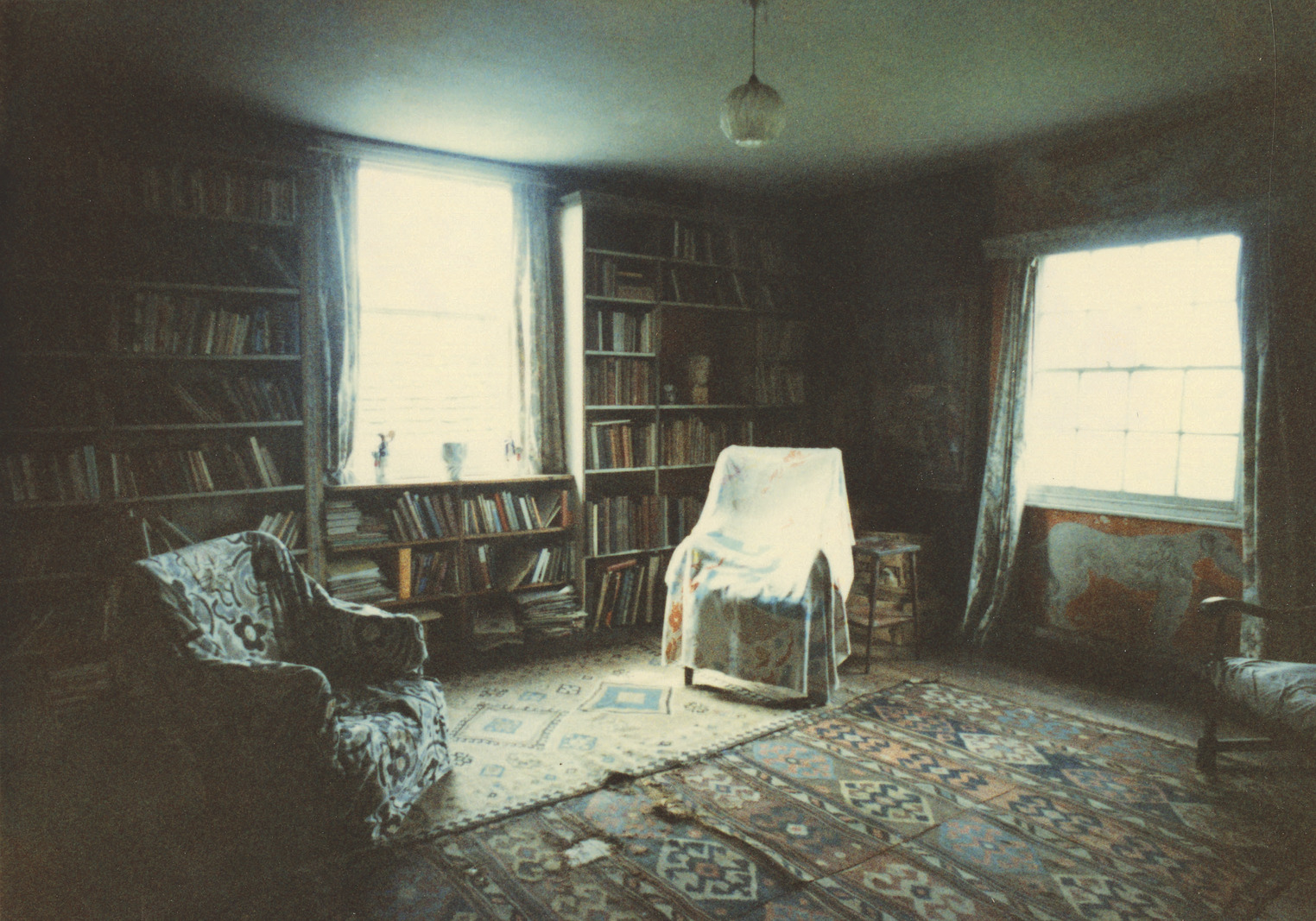
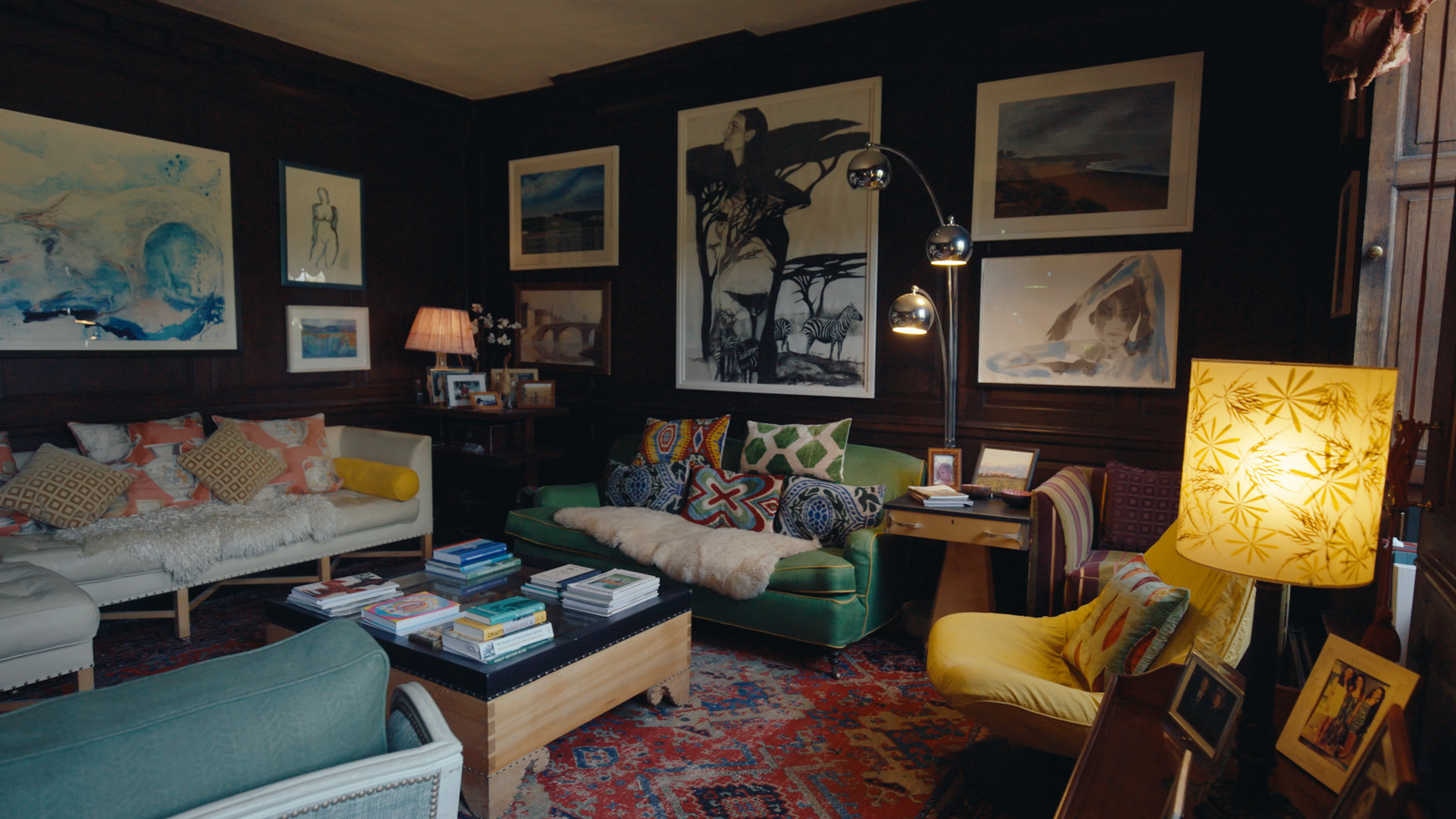
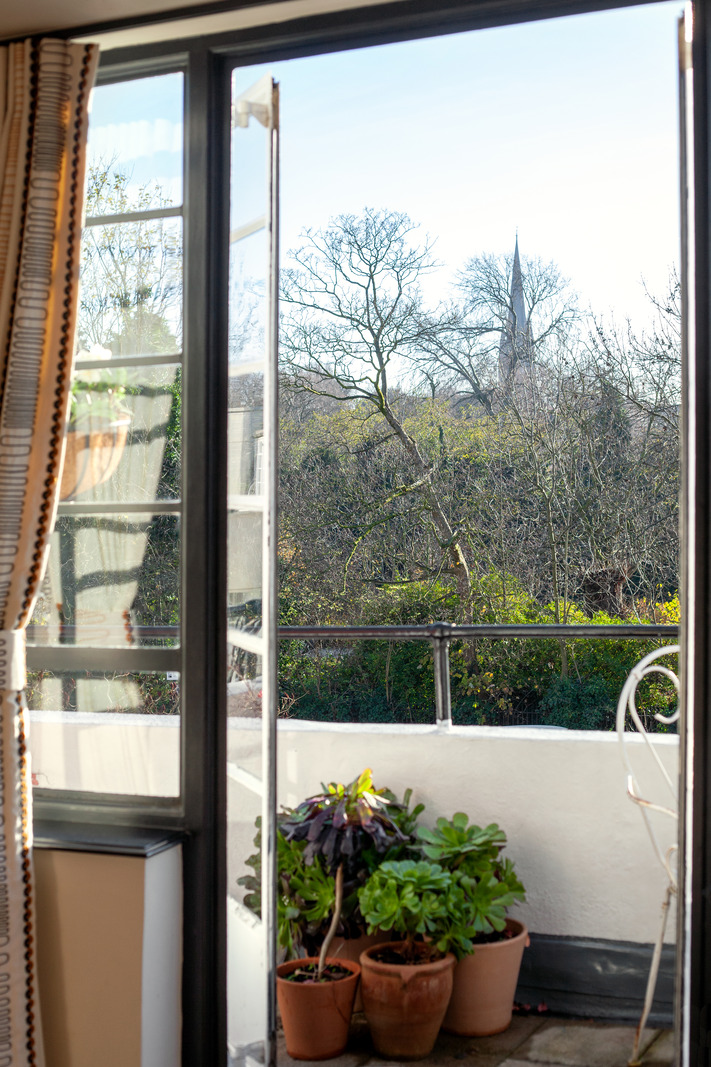
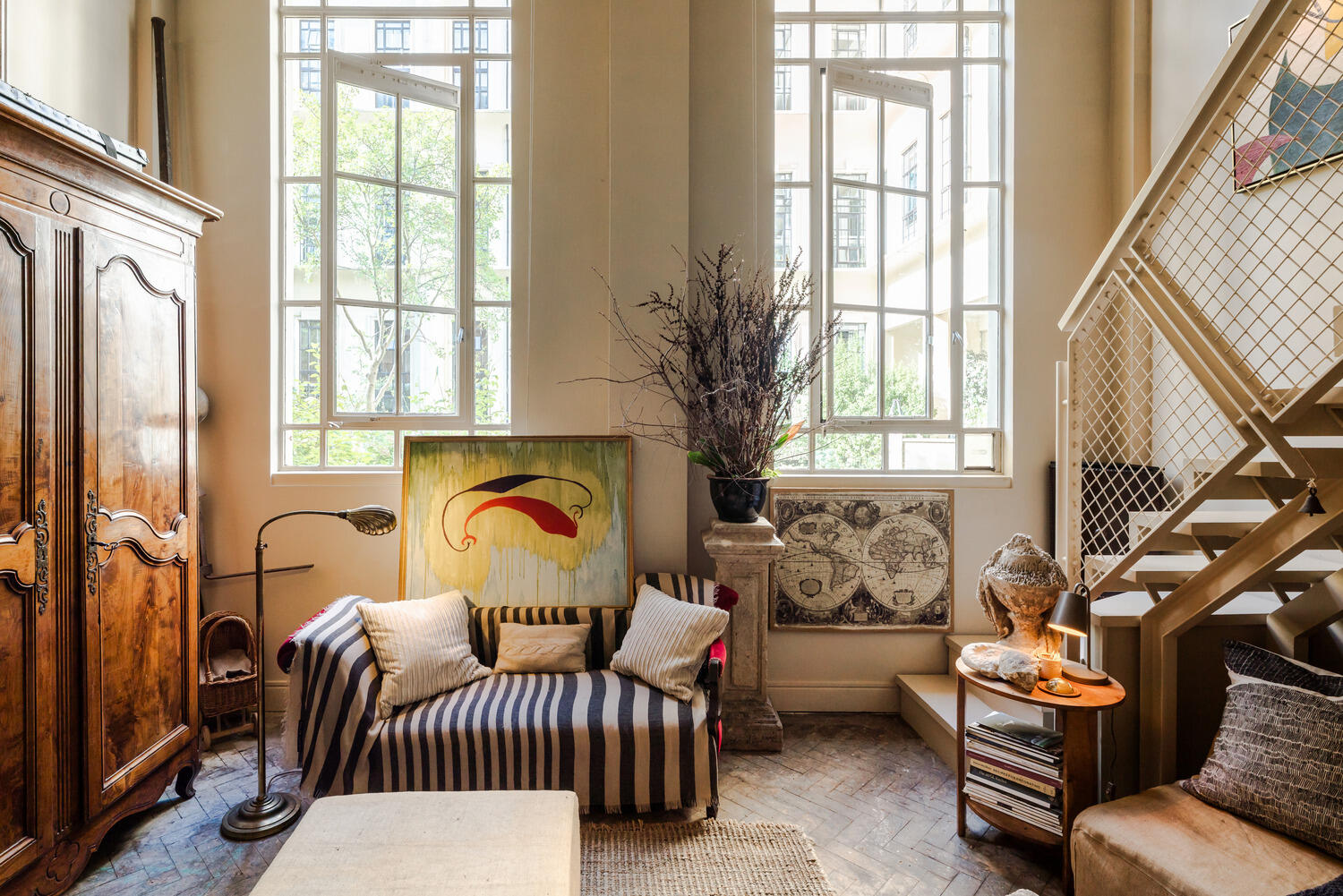
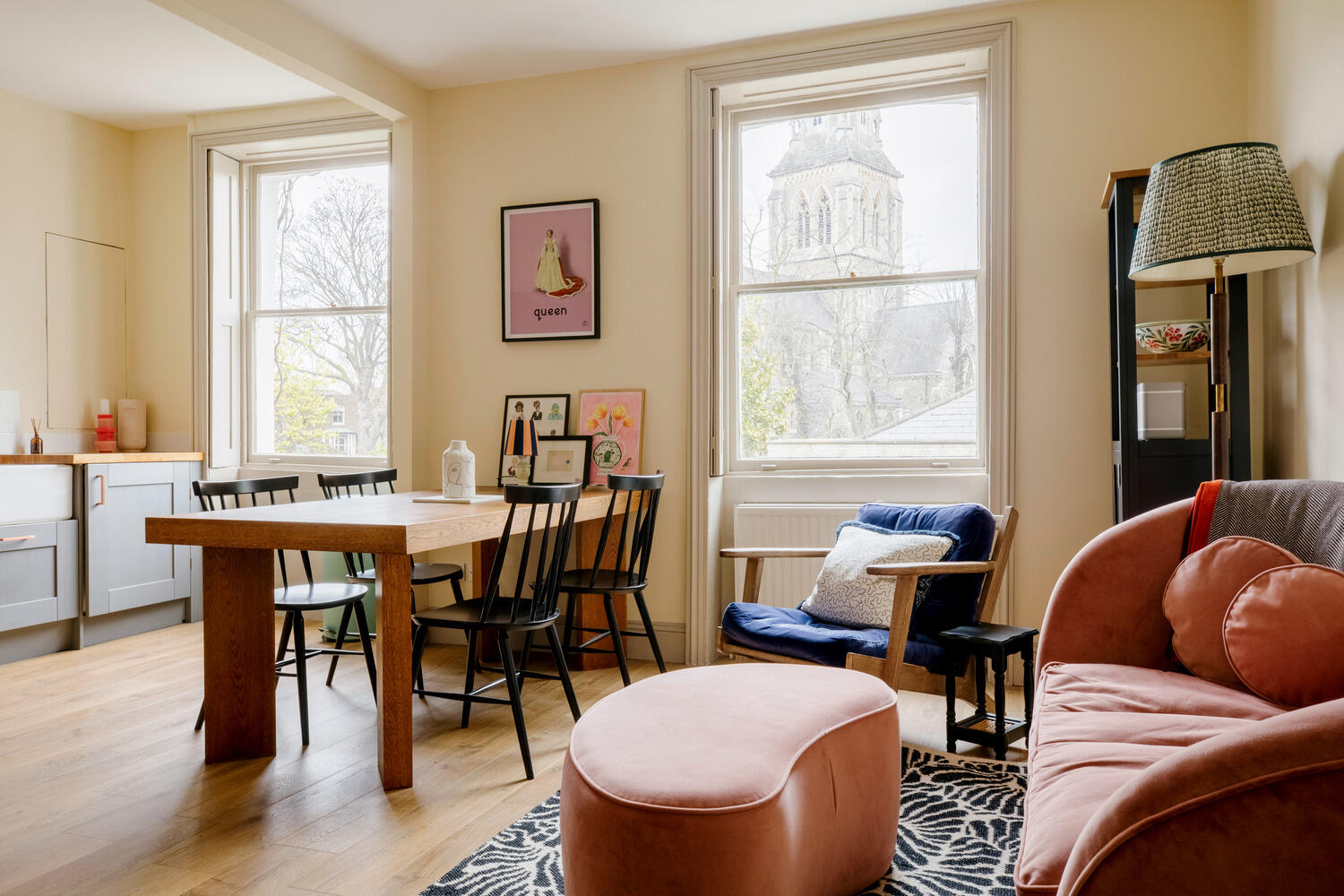
Entry is on the second floor, via an impressive curved communal staircase. Accommodation is set over one level, composed of well-proportioned and light-filled rooms with beautiful reclaimed parquet floors that bounce honeyed-toned light throughout. The original steel-framed Crittall-style windows remain in each room, with a particularly impressive curved length of glazing in the living room opening onto a pretty balcony overlooking the communal front gardens, the park beyond and the soaring steeple of St Mary’s Church in the distance.
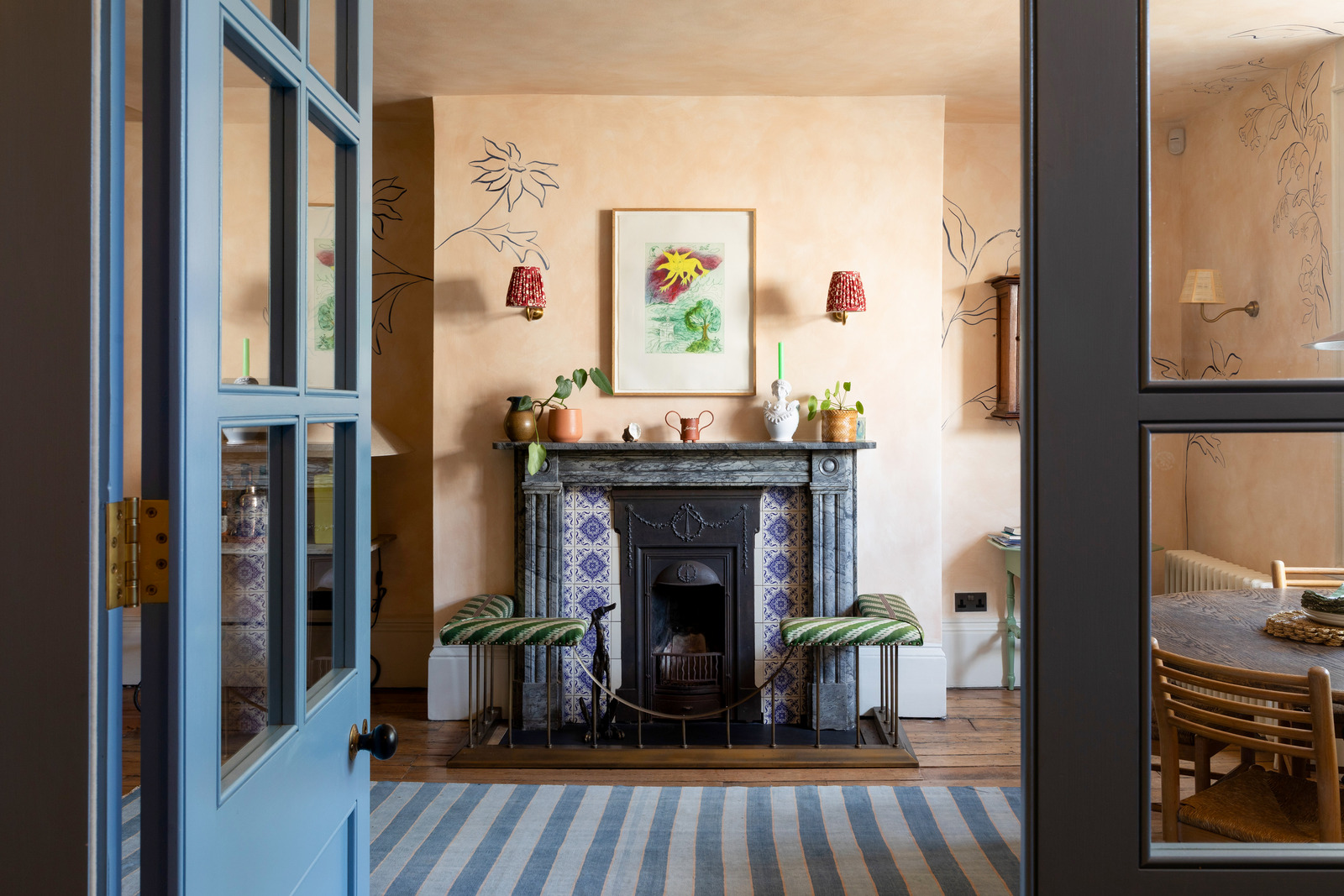
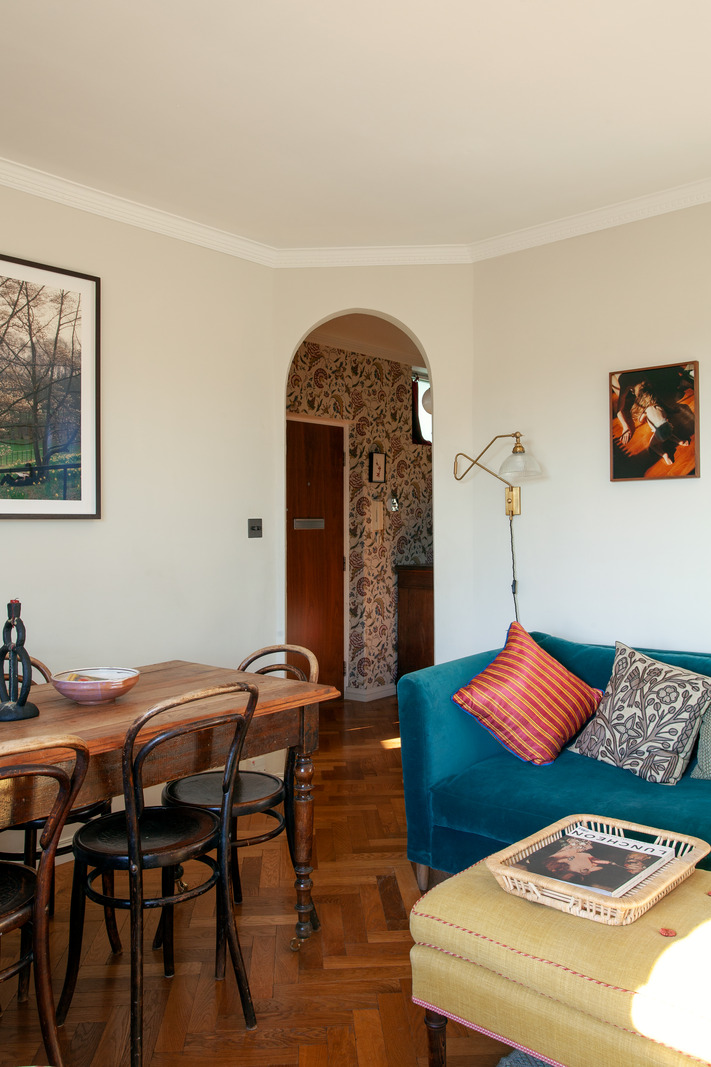
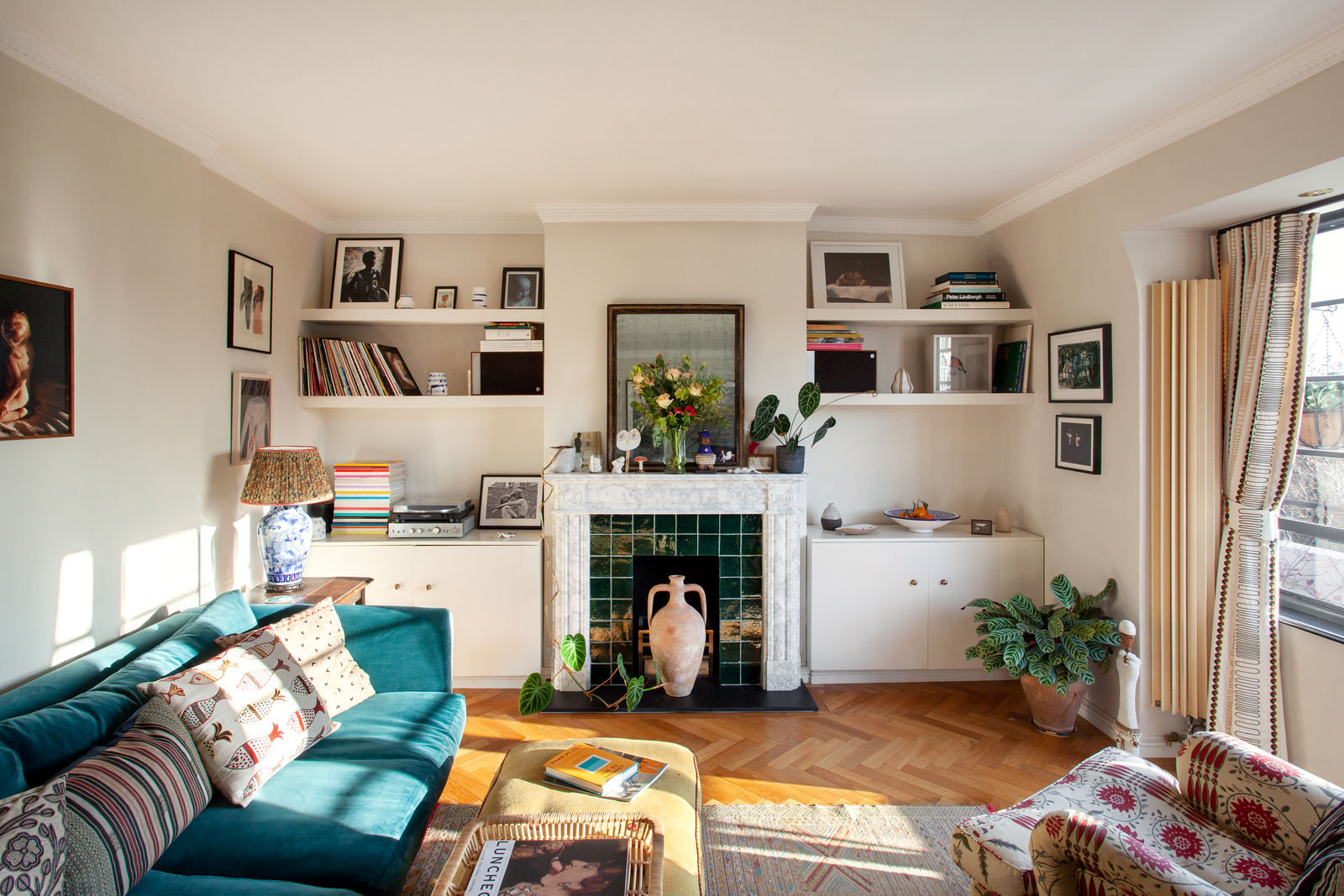
Entering through an arched internal door, the front room forms an open-plan living and dining space, easily housing a sprawling sofa and a large dining table. A marble fireplace with a bullseye motif adorns the original breast and provides a focal point for the room. Washed in neutral tones of Portland Stone by Little Greene, inbuilt storage is fitted in the opposing alcove spaces. The sweet galley kitchen has a Carrara marble worktop with cabinetry painted in moody tones of dark blue.
Along the hallway (which is papered in Antoinette Poisson’s ‘Jaipur’), there are three bedrooms and a family bathroom. The quiet principal bedroom is situated at the back of the plan and has views over the rear tree-lined communal garden, where residents tend to dry laundry. Here, a row of bespoke fitted cupboards line one wall. One of the two further double rooms is used as a cosy bedroom, while the other is currently configured as a bright study. There is a large bathroom along the corridor, equipped with a luxurious clawfoot cast iron bath, mosaic-tiled floor and steel windows.
The Great Outdoors
The flat and surrounding estate is ensconced in manicured communal garden, where roses planted in knot garden formations sit alongside water features and herbaceous borders. Criss-crossed with paved paths, the space is dotted with benches that create seating areas in the pretty space. To the rear of the building is a communal green space bordered by established trees, providing a wonderful space for children to play and adults to chat.
Out and About
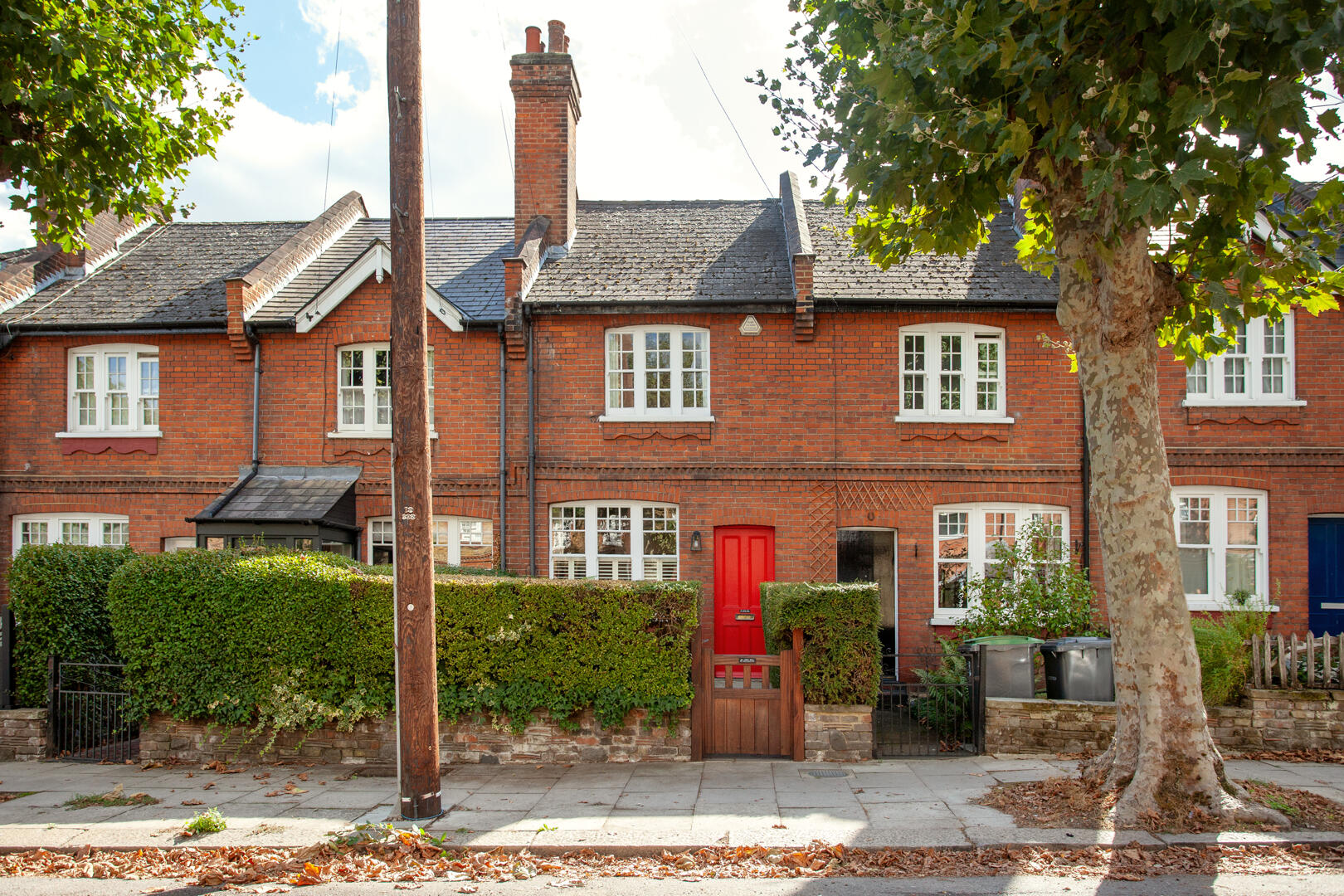
The house is wonderfully positioned just off historic Clissold Park, a short walk from Stoke Newington’s much-loved Church Street, home to The Spence Bakery, Escocesa, Rubedo, AUN and The Good Egg among others; Whole Foods Market and Newington Green Fruit and Vegetables are also close by for a variety of fresh produce within easy reach. The house is near the numerous independent shops, cafés, restaurants and pubs around Newington Green; neighbourhood favourites include The Clarence Tavern, Esters, Mangal 1, Jolene, Perilla and Cadet. A short walk away, on Petherton Road, is Primeur; recently described as “the perfect neighbourhood restaurant,” it serves modern European cuisine and natural wine. On Saturday mornings, a farmers’ market takes place in St Paul’s churchyard on Stoke Newington High Street.
We recently wrote about some of our top spots in Stoke Newington and Newington Green in more depth.
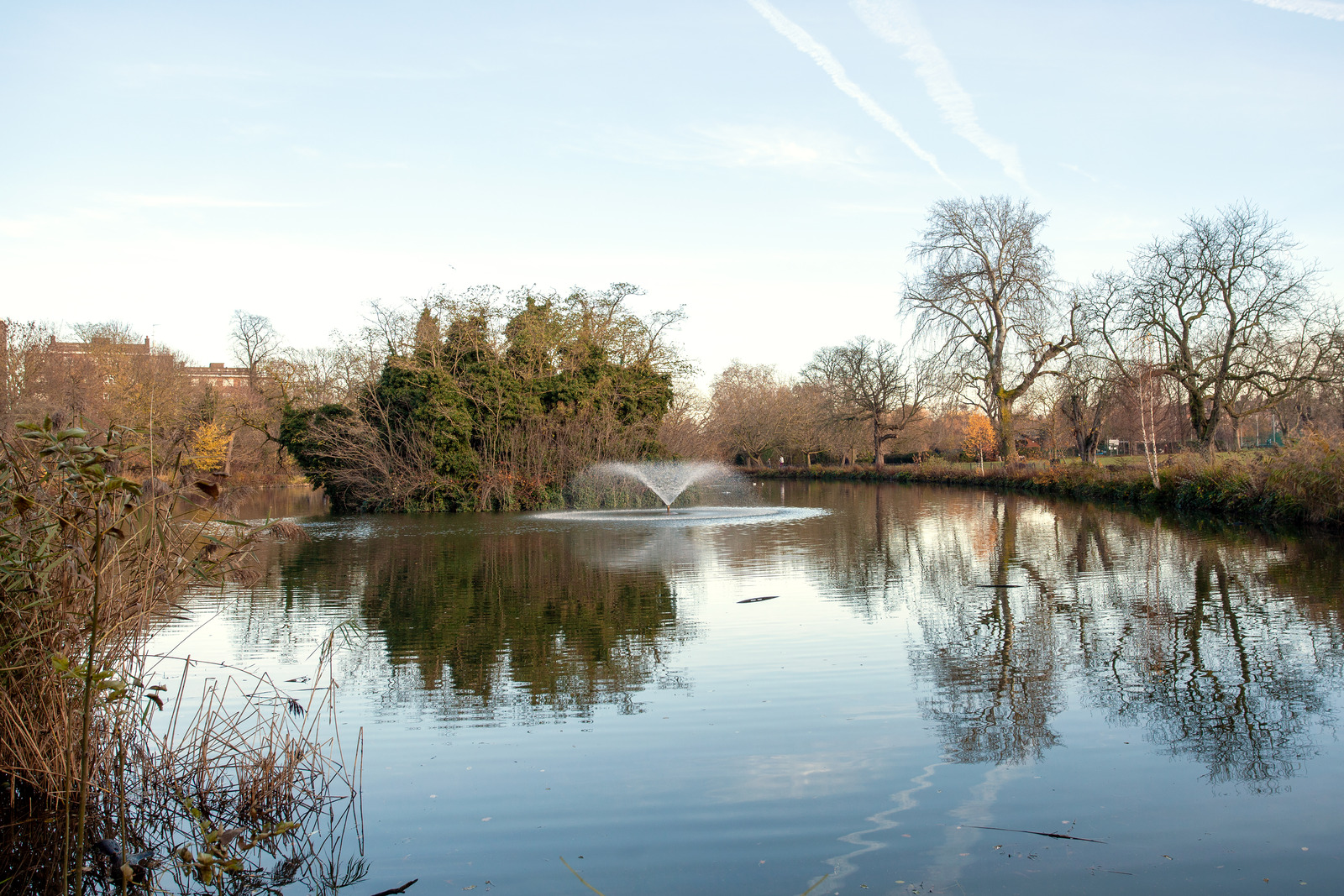
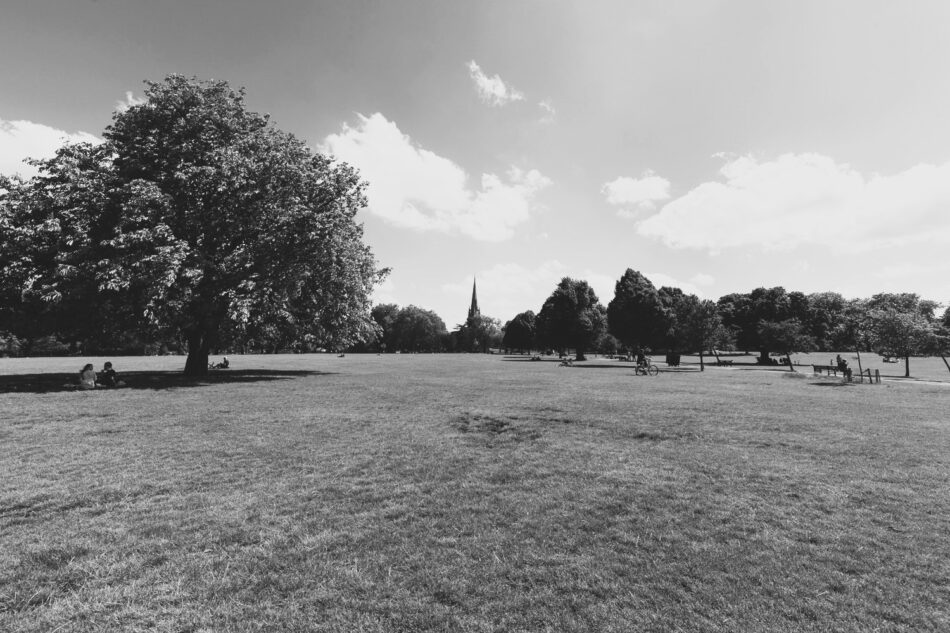
The house is also near several popular green spaces. Clissold Park – a compact park that packs a punch – is just off the house’s doorstep. It’s home to an aviary, beautiful lakes, a café, tennis courts, a skate park, a children’s playground and paddling pool, as well as a few resident deer. Within the park is the Grade II-listed colonnaded Clissold Mansion, built in the 1790s for a local Quaker. Abney Park & Cemetery is about a 20-minute walk, and is one of the ‘Magnificent Seven’, an unofficial designation given to 19th-century private cemeteries in London. It is also a private nature reserve, with more than 2,500 varieties of plants. Also nearby is the Parkland Walk, a disused railway line which has been transformed into a verdant pedestrian thoroughfare which runs from Finsbury Park to Highgate.
For further adventures in nature, visit the Woodberry Wetlands, a 12-hectare conservation site, formerly a working reservoir, which is now a thriving habitat for migratory birds. Opened by Sir David Attenborough in 2016, you can see waterfowl, grey heron, tufted duck and kingfisher, among others, from the boardwalk around the East Reservoir, and enjoy spectacular views from the Coal House Café’s roof terrace. The West Reservoir of the wetlands has been converted into an outdoor swimming spot and sports centre, with year-round open-water swimming, sailing and kayaking.
Transport connections are excellent. Canonbury’s station, a 15-minute walk away, runs Overground trains to Highbury & Islington, Shoreditch High Street, Stratford, Camden and Hampstead. Dalston Kingsland and Dalston Junction Overground are also within easy reach, while nearby stations in Stoke Newington and Rectory Road run Overground services to Liverpool Street in around 10 minutes or to Seven Sisters, for connections to the Victoria Line (Underground), in around four minutes. There are plenty of good bus connections to the centre of the city, including to London Bridge, Victoria, Waterloo and King’s Cross.
Tenure: Leasehold
Lease length: approx. 140 years remaining
Service charge: approx. £2489 per annum
Council Tax Band: D


 Related Stories