InigoInigo Logo

A Private View: A Cornish chapel of significant artistic importance

In the summer of 1959, Mark Rothko decided to go on a jolly. Tired of toiling over what would become known as his Seagram murals and eager for new vistas to lift his spirits, he and his family boarded the USS Constitution for an eight-day journey to Italy, Paris and England, where they would stay with painters he knew: William Scott in Somerset, and Peter Lanyon in St Ives. And that is how this most famous of New York artists found himself enjoying lunch one day, in the front garden of a former Methodist chapel in west Cornwall. This was Kerris Old Chapel, the former home of the celebrated painter, Paul Feiler, which is now for sale ...

Homes / Interiors
words
Dale Berning Sawa
photography
Paul Whitbread
A Private View: A Cornish chapel of significant artistic importance

While teaching art at the West of England College of Art in Bristol a few years earlier, Feiler had travelled to Cornwall with students on a plein-air painting trip. He saw the roof of the chapel from a distance and included it in a composition, then went down to see what it was that he had painted. “He saw it was a chapel, and that it was available,” says Hugo Feiler, one of Feiler’s sons with his second wife, Catharine Armitage.

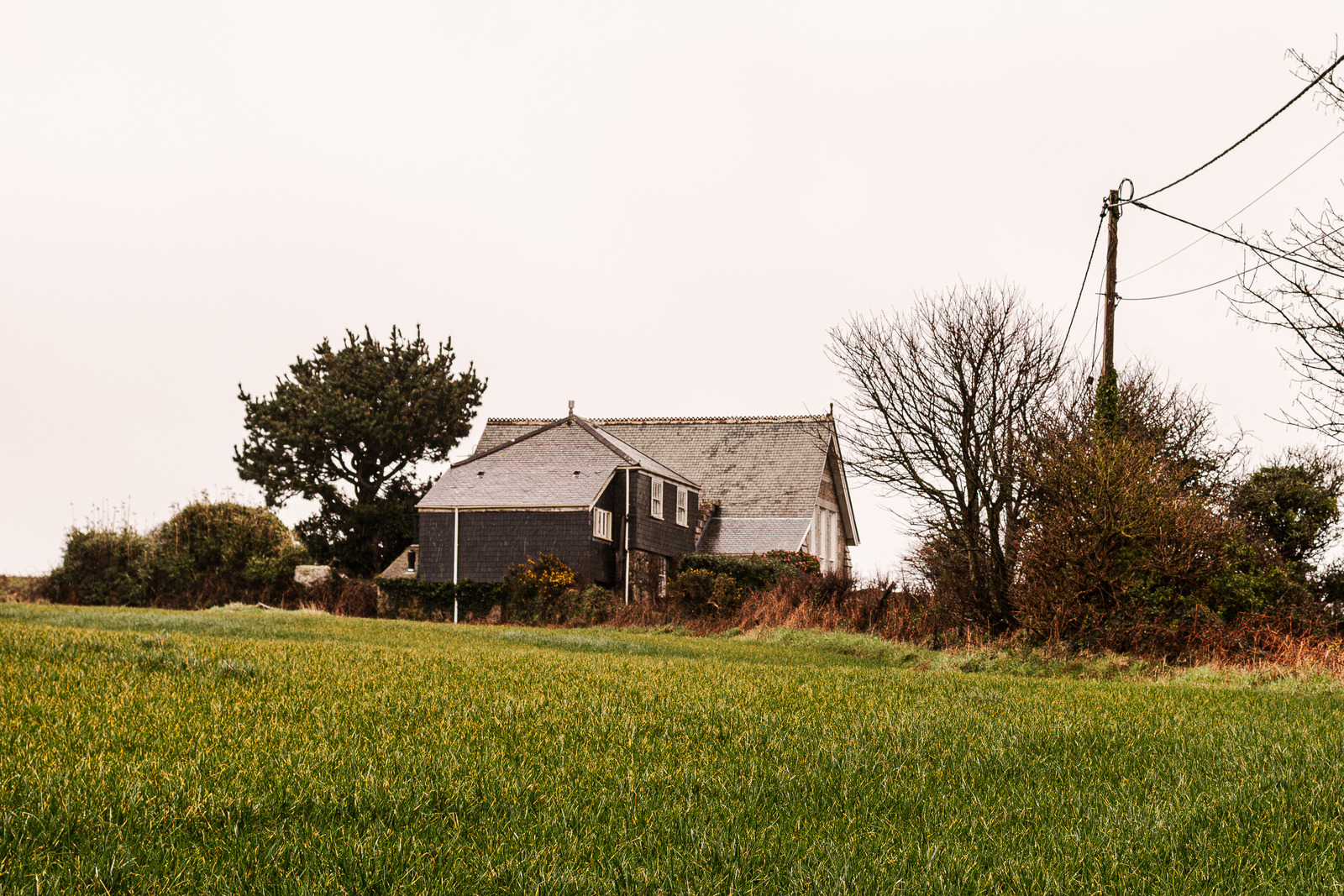
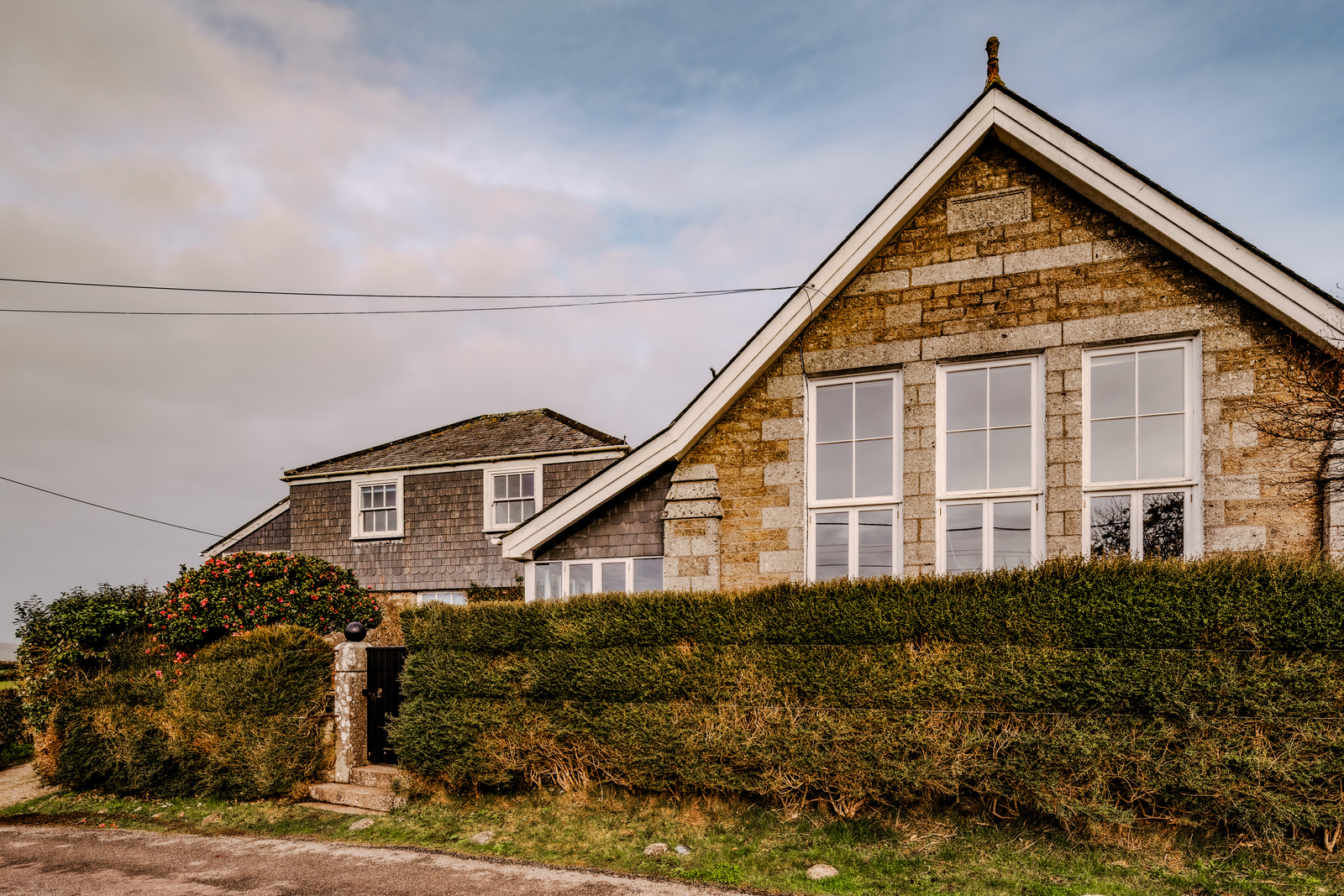
The diminutive church and Sunday school hall proffered 360 degree views of the north coast, the south coast and Land’s End. Mostly it was a place that let the light in. With the proceeds of his first sellout solo show, Feiler bought the chapel in 1952.

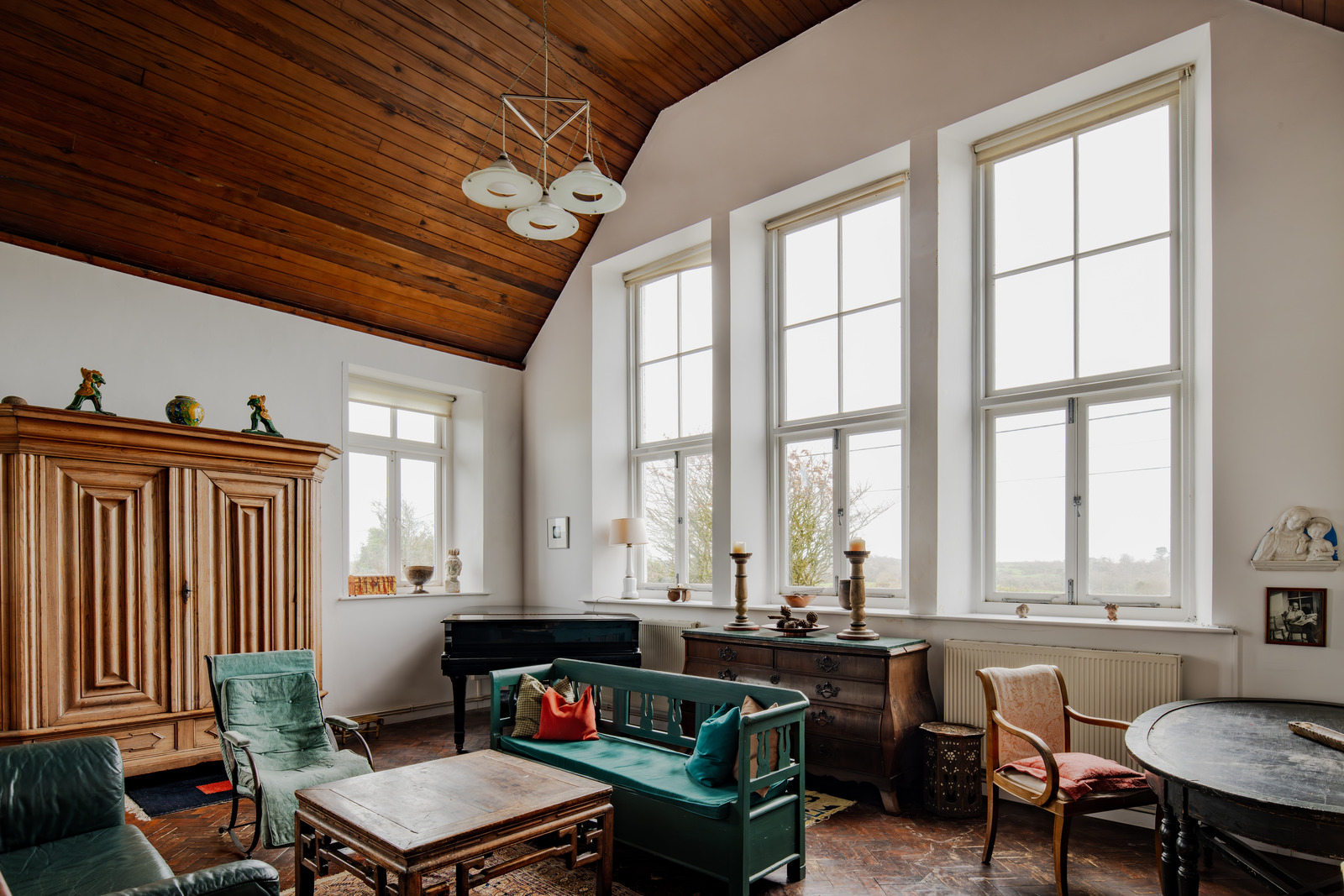
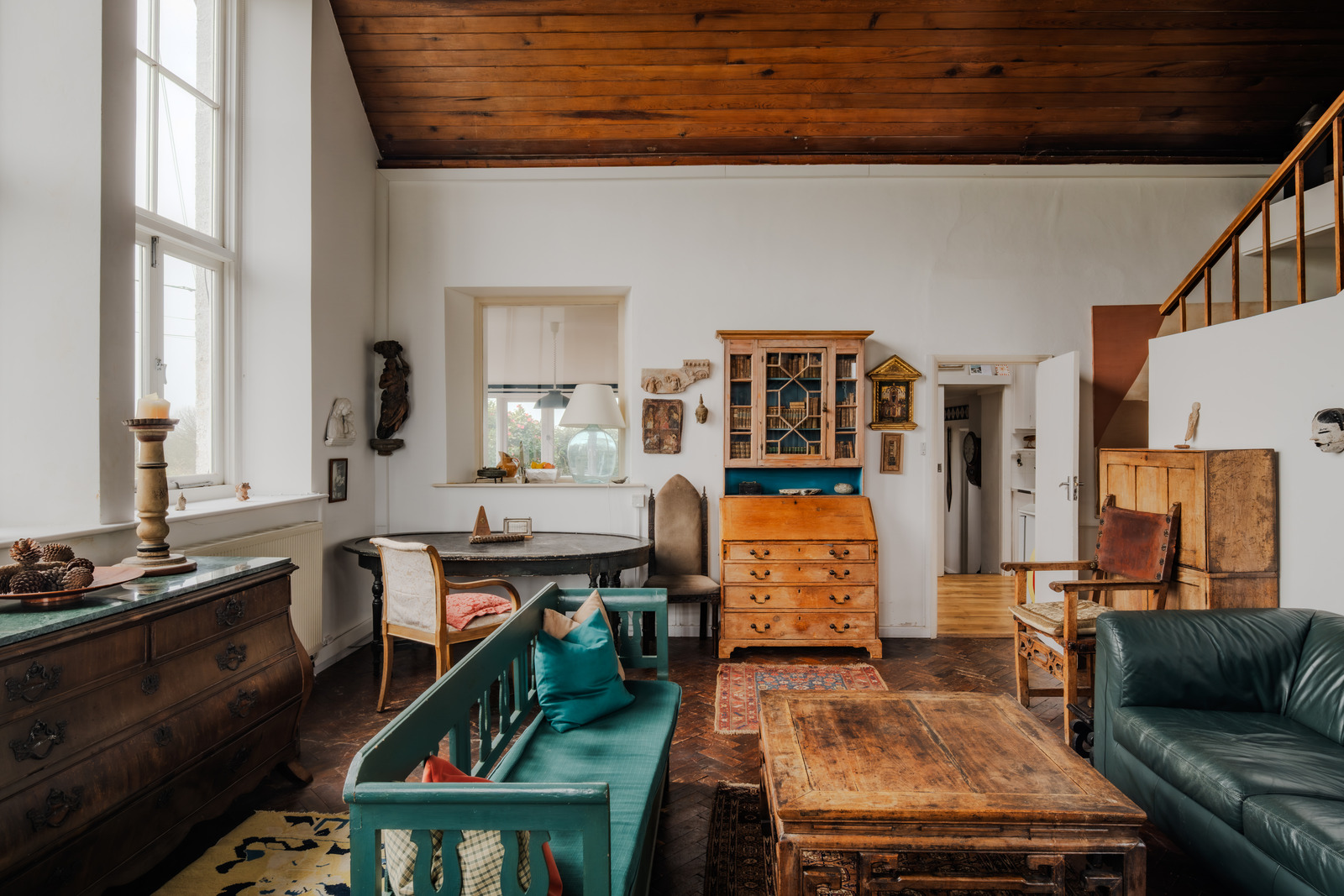
When Feiler got the keys, the building’s ecclesiastical functions were still intact. He and his friend Eugene Rosenburg, a renowned architect, reworked the interiors to turn it into a family home. The Sunday school hall, housed in the original 1903 chapel, became the main bedroom. In the chapel, they dropped the raised portion of the parquet floor, which had been a stage for the minister’s pulpit, and created a mezzanine level at one end with an additional bedroom. Elsewhere, the double-height ceiling and beautifully tall windows were retained. (The Feilers, who made it their permanent residence in 1970, forever referred to their home “the chapel”.)
Feiler was born in Frankfurt am Main, in 1918. As a child he had spent time in the Bavarian town of Garmisch, near the Austrian border. “He loved the division of space by vertical mountains and the horizontal valleys, and saw the same representation with the cliffs and the sea,” says Hugo. “And that translated into his work, both in the ‘50s and ‘60s and in his later work, which is much more structured, all about verticals and horizontals and colours and light.”

With its baby grand and beautiful furnishings, the chapel became a handsome and malleable space for this creative household. On big occasions, with extended family, chairs could be trooped in to facilitate seating a crowd. If a ball game needed playing and outdoors wasn’t an option, the chapel would do. The boys at one point put a snooker cue through “what we thought was a Titian,” says Hugo, “but luckily it turned out wasn’t a Titian – just a very good copy of a detail of a Titian.”

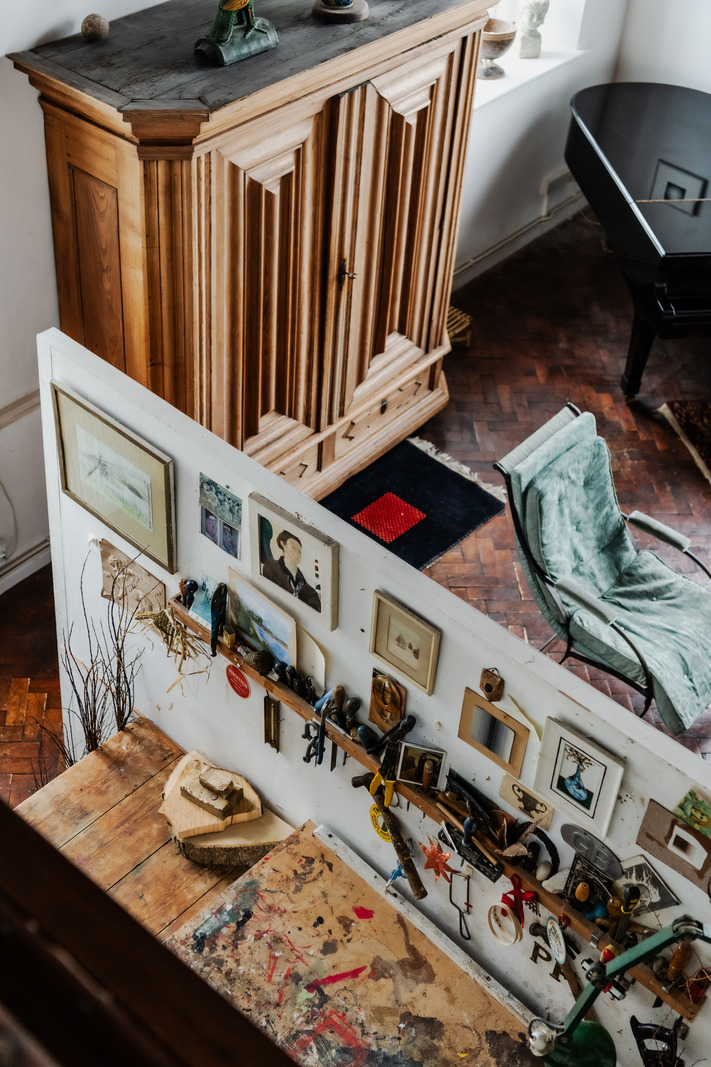
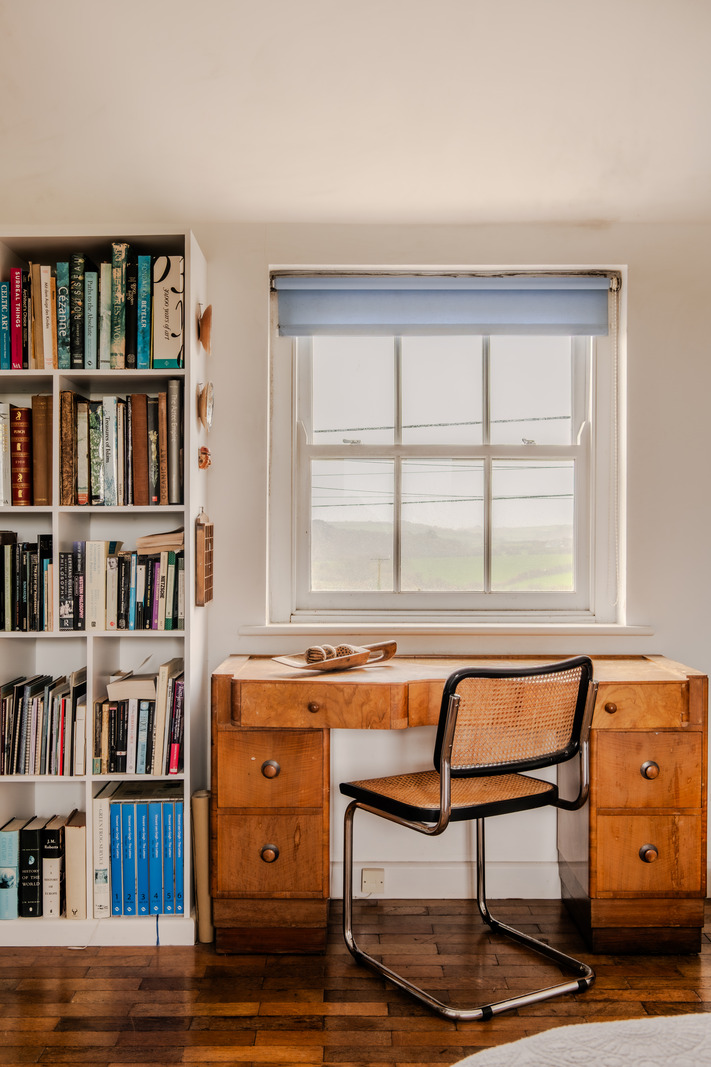
The dividing wall below the mezzanine hides a workspace for all to use. “Our father was always mending things,” says Hugo. "He’d just pop behind the living room and would be banging away at whatever he needed to be doing.” A large worksurface, stained with paint and ink, stretches out beneath a wall-mounted tool rack and a green architect’s lamp affixed to the wall. There's a woodworker’s vice bolted to the dresser beneath it. And the wall opposite it features floor-to-ceiling shelving with a hundred tiny drawers filled with “screws, bolts, catches for jewellery, springs, buttons, everything you can imagine, really,” says Hugo.

“Our father was very diligent with his work as an artist,” Hugo recalls. “He used to leave at nine o’ clock to go to his studio [a rented space at the top of nearby Newlyn Hill], come back for lunch for an hour, then go back to the studio until six, every weekday. He loved it but he treated it as a job. He was present at doing his work when he was there, very organised with that. Then he’d come back and be at home.”

Catharine Armitage became an artist after meeting Feiler in 1966, and studied painting and etching at the Slade School of Fine Art. She would talk about how open-minded a place it was. That sustained a career which evolved and expanded in unexpected ways, from collage and modernist abstraction to, in later years, organic forms inspired by nano-photography.

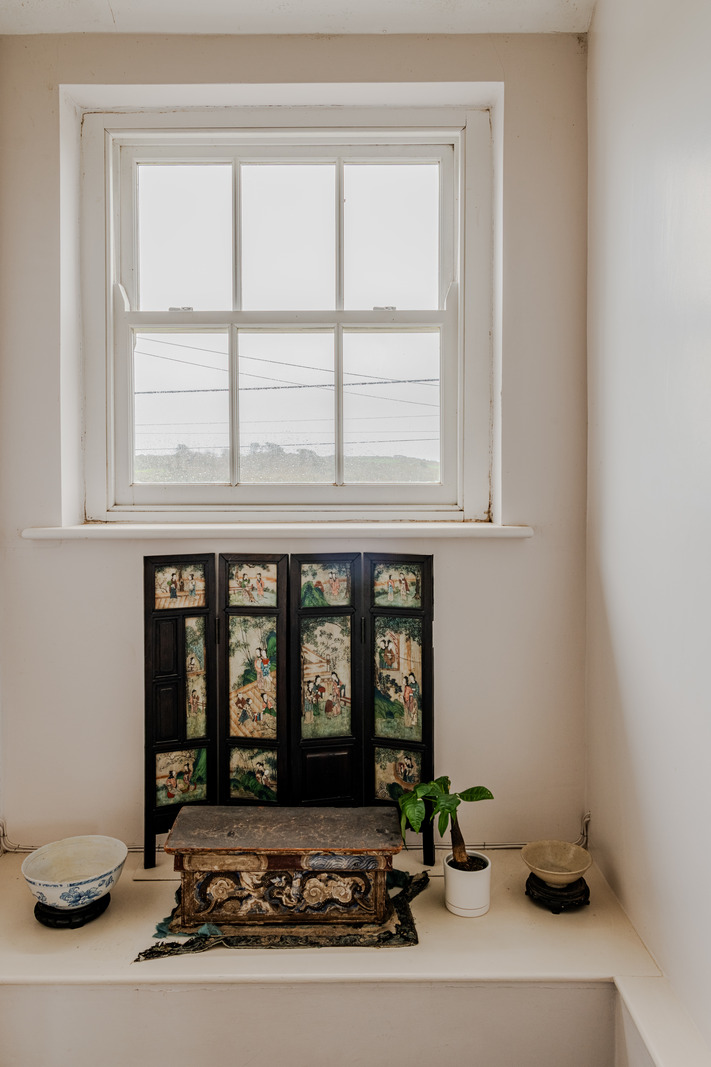
The couple shared a great love of beautiful things and the chapel’s furnishings attest to a keen eye for a good colour and a refined sense of what made something worth keeping. “Paul was well known with the local auctioneer for spotting good bargains,” says Hugo. “He was always looking for wonderful things — not necessarily for their value. It was for the joy of it, really.” He saw mending as a way of giving beautiful things life again.

While Armitage and Feiler both cleaved to various forms of abstraction, the Cornish light and the local landscape were a constant source of inspiration. Spending time in the garden was another love they shared. “You’d have sun in the morning in the front garden,” says Hugo, “and sun in the evening, in the back garden.”

The back hedge abuts part of an ancient iron-age stone circle. “It was a Celtic place of worship long before it became a chapel. And growing up, we knew about it,” Hugo says. In 2000, during the summer solstice, 12 druids came and stood in the back garden and prayed to their gods.” (Feiler and Armitage were not religious, but traces of spirituality weave through Feiler’s work.)

Quite what caught Feiler's eye back in 1952 clearly found a resonance within Rothko, too. During that same trip to Cornwall, Rothko visited – and almost purchased – another former Methodist chapel near Lelant, a dozen or so miles to the north-east. The New Yorker yearned for a place where “the traveller or the wanderer, could come for an hour to meditate on a single painting.” Feiler, and Armitage too, would no doubt have nodded in agreement. This precious bit of Cornwall, where England crumbles into the blue, is exactly that.

Further Reading

Paul Feiler
Catharine Armitage

Kerris Old Chapel, Kerris, Cornwall

view listing