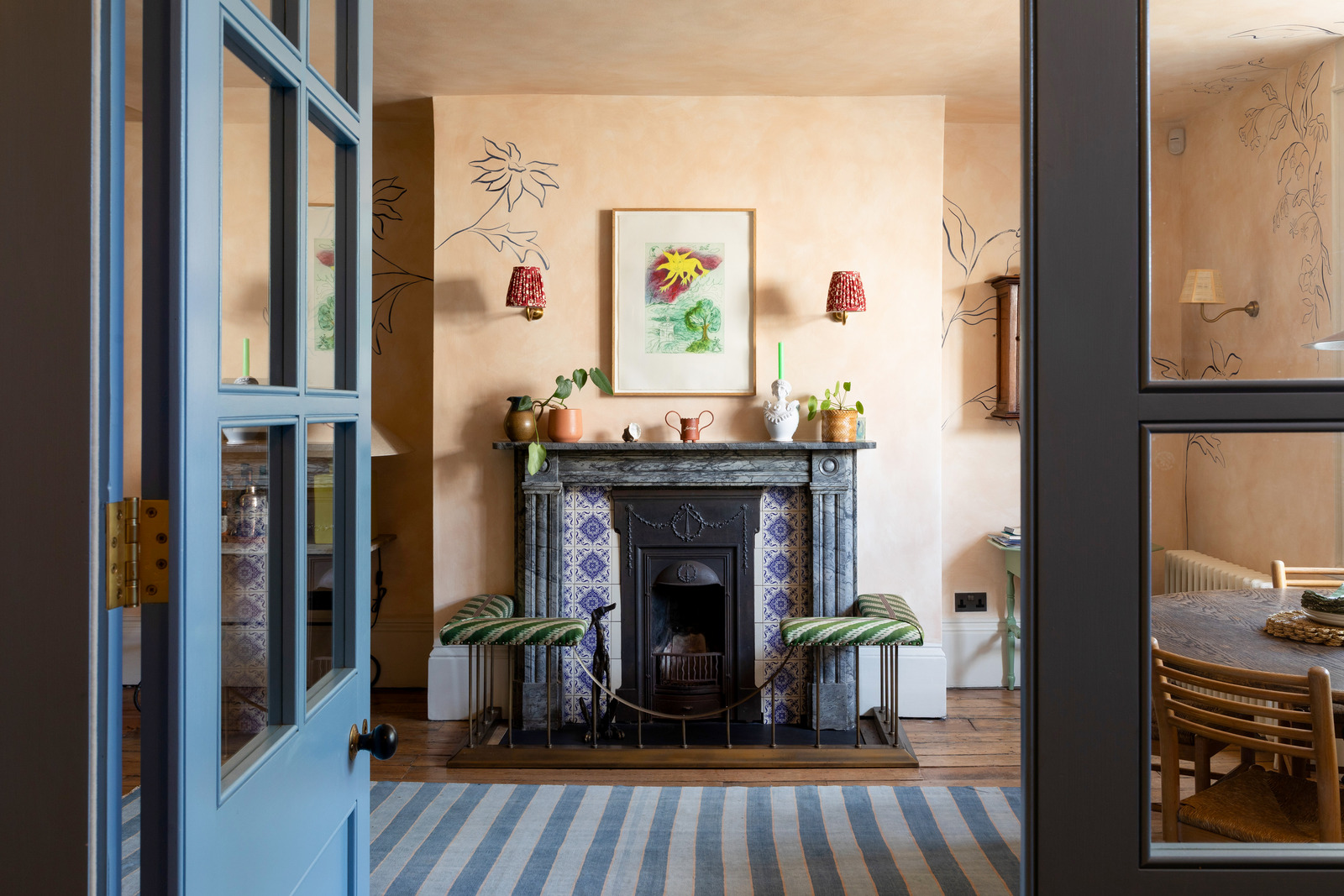
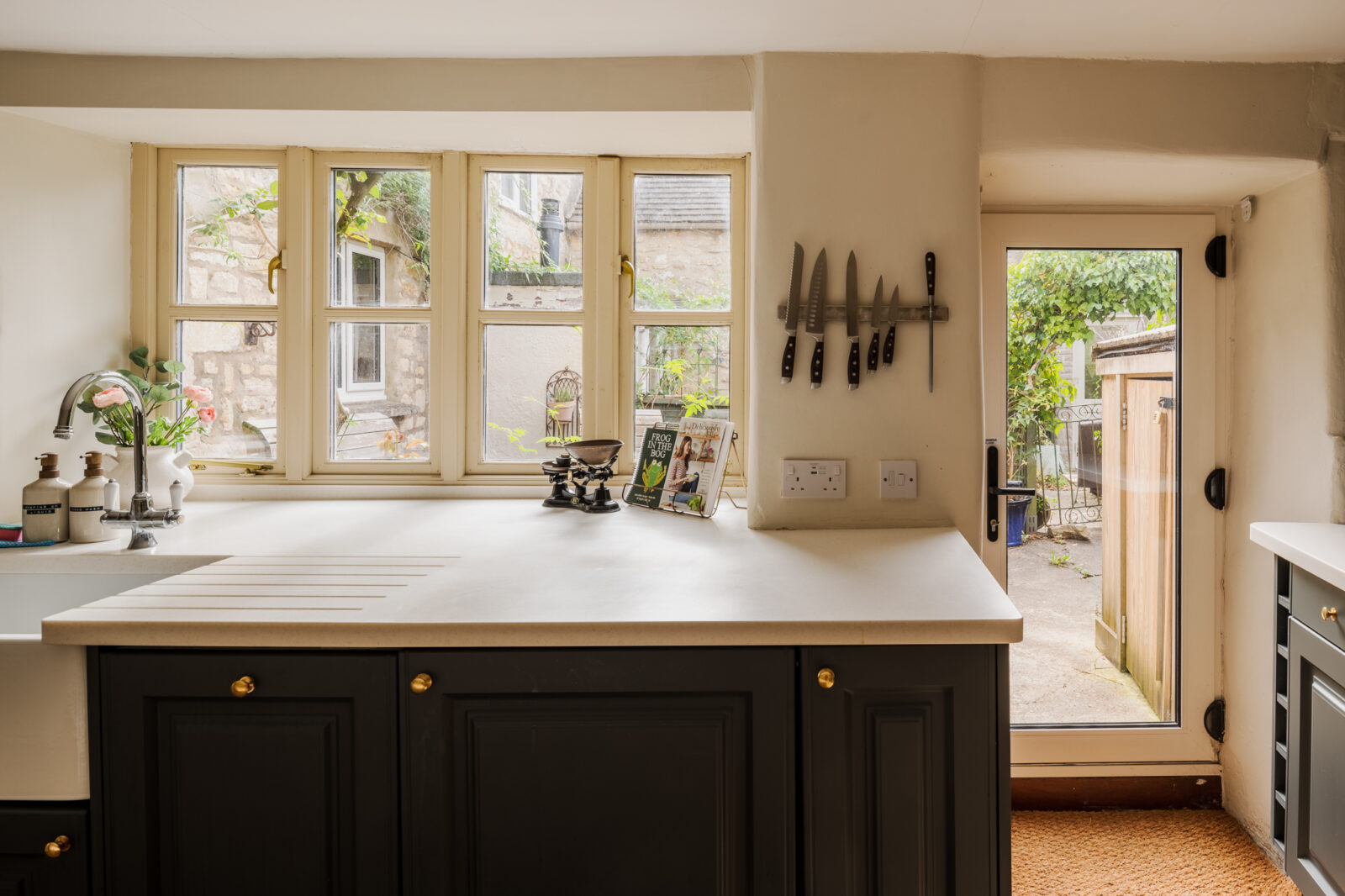
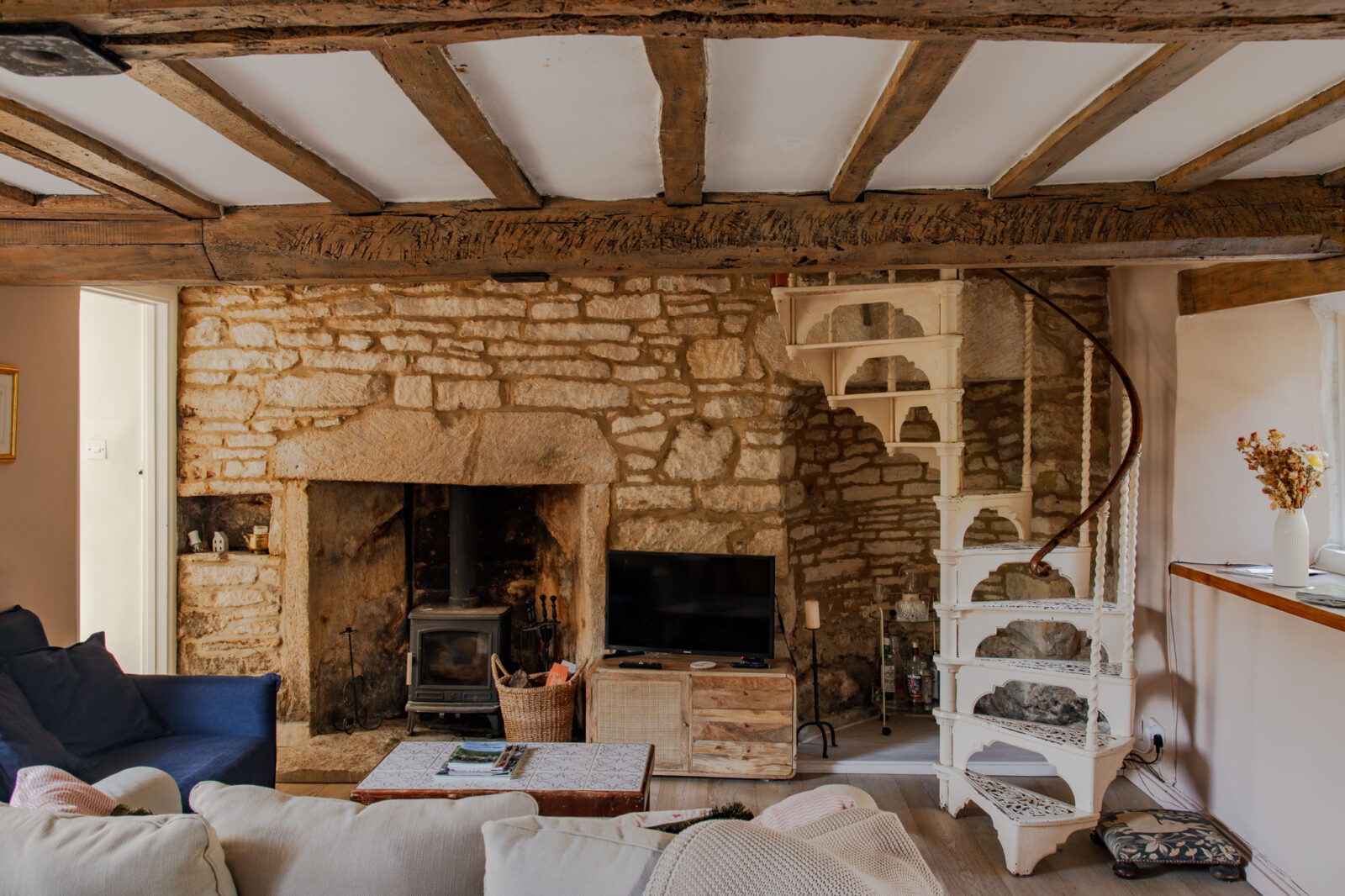
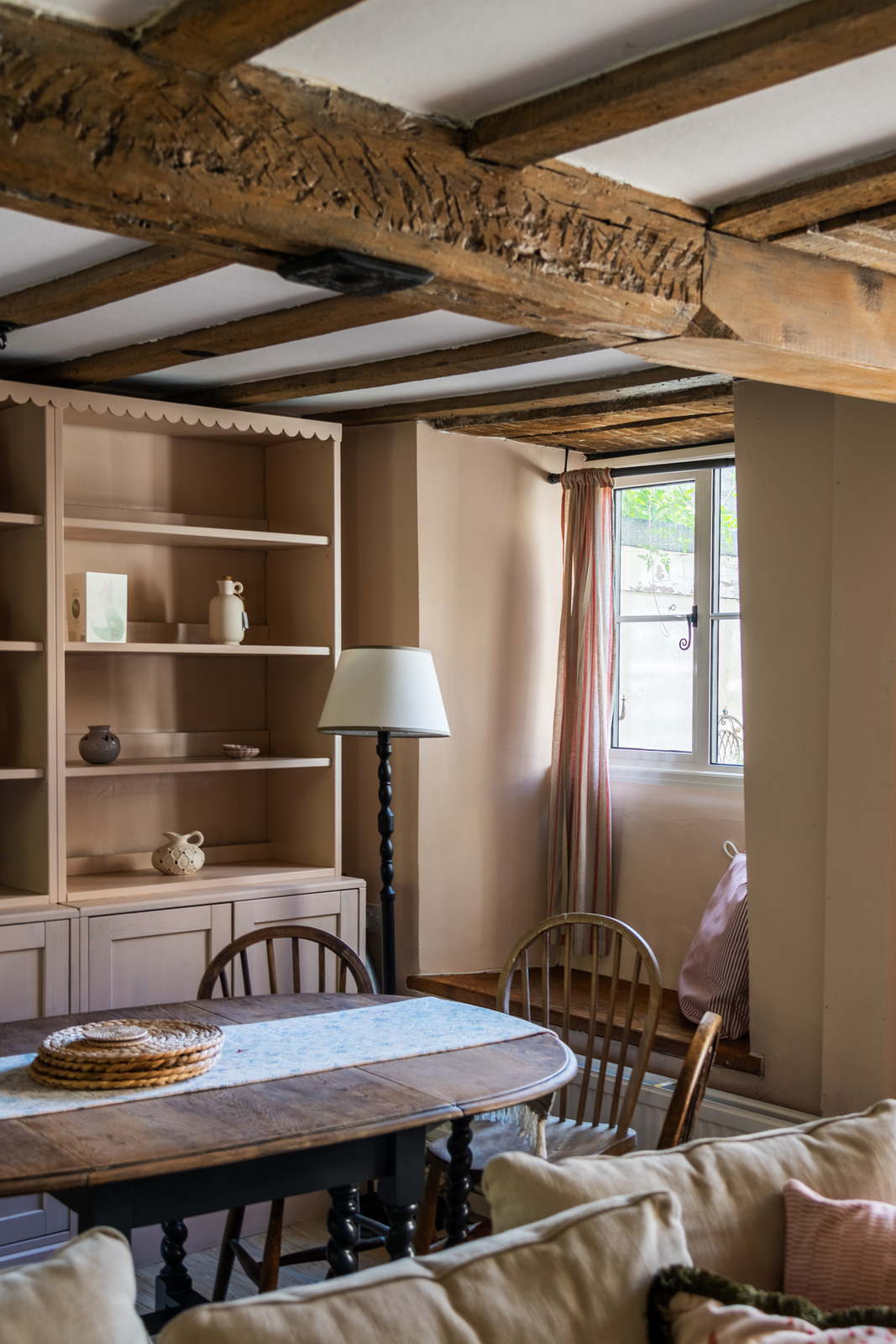
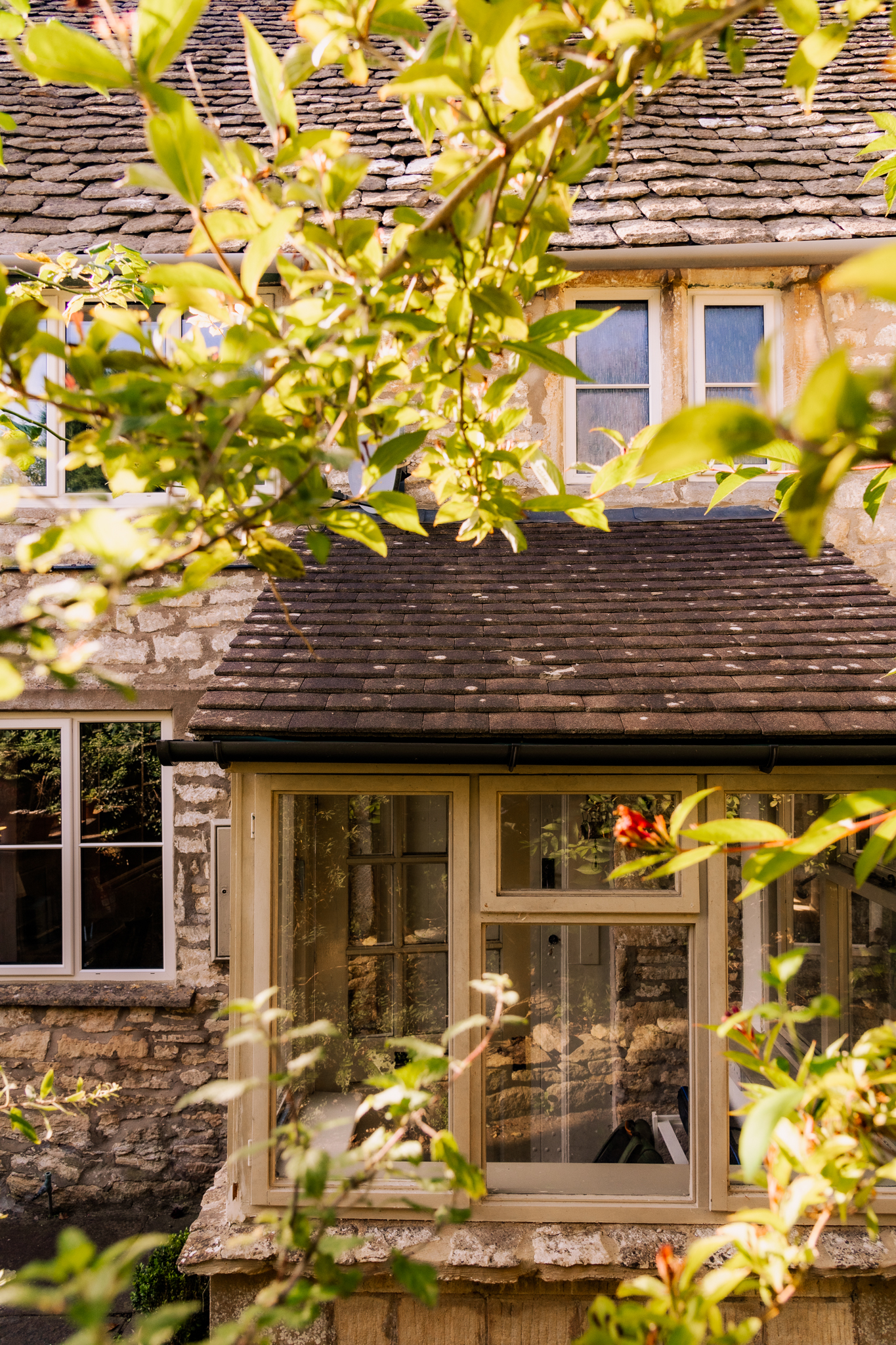
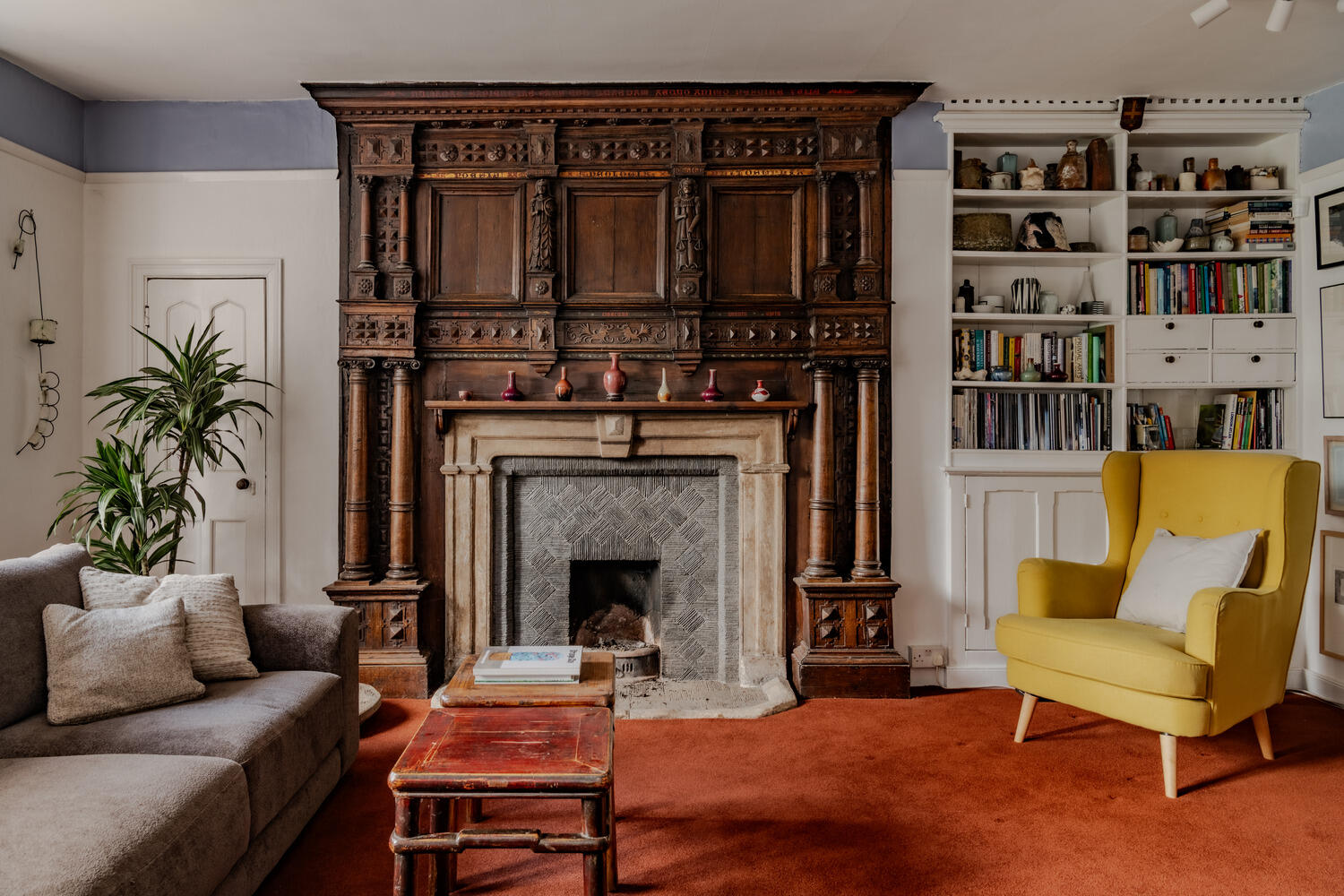
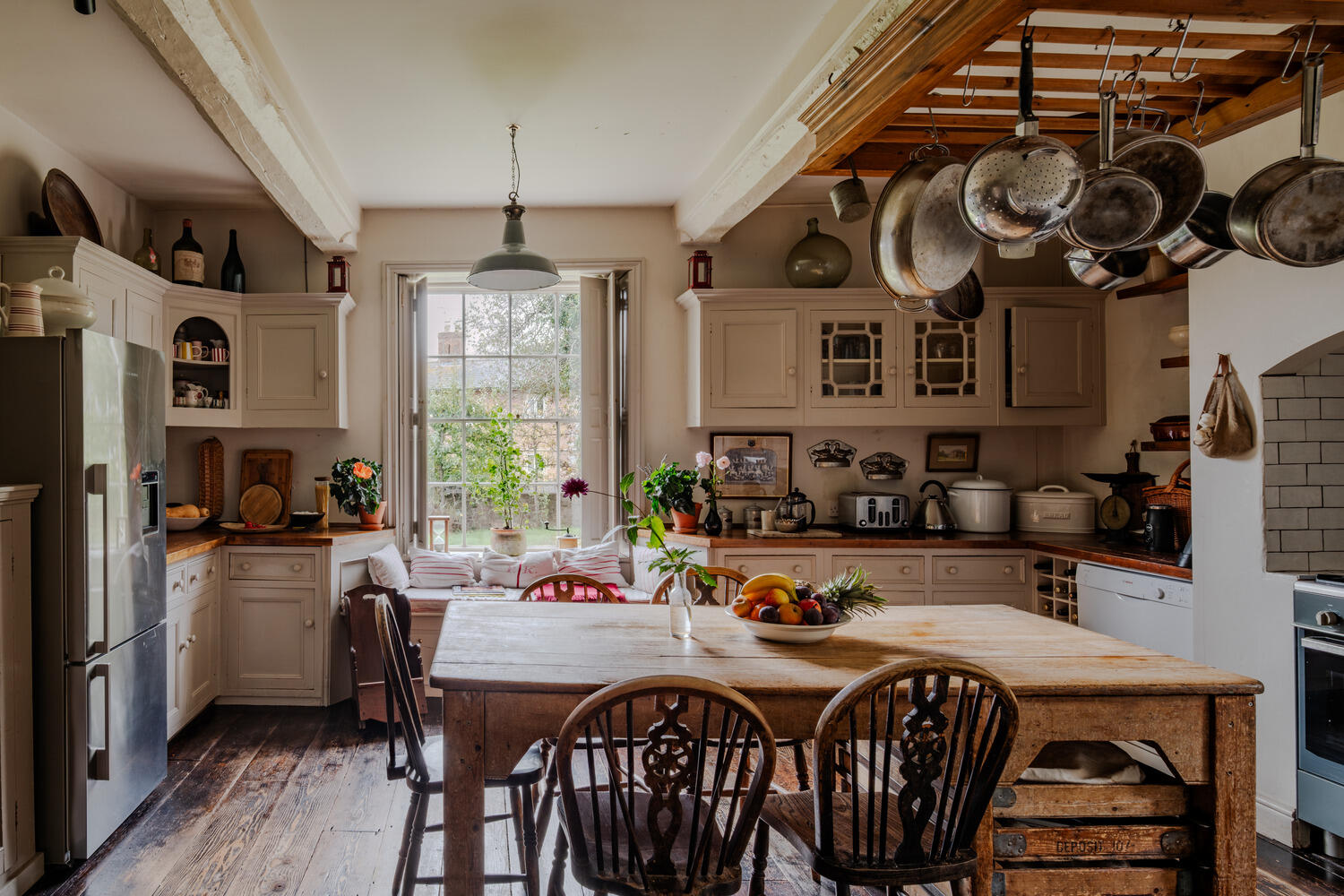
The cottage sits as one of a row of Cotswold stone houses built into a dingle on the cusp of a gentle hill. A path from a quiet country lane leads past thoughtfully planted gardens to a gate that opens onto the cottage’s paved terrace. The stone porch is a useful miniature boot room perfect for stashing wellies, dog leads and a supply of coats ready to equip any walk. From here, the open-plan sitting room and dining unfolds; with original exposed beams running overhead and a fireplace with a stone lintel intact, its period features are gently complemented by walls in cosy pink tones. Built-in shelving runs the length of one wall, accented with a playful scalloped motif. A deep-set stone mullion window overlooks the front patio, while similarly deep casements take in the pretty rear terrace, all providing a choice of window seats for curling up with a book. A kitchen lies to the rear of the plan, with joinery in chic dark blue tones. A backdoor opens to the rear terrace.
A cast iron spiral stair painted in creamy tones leads to a central landing around which two bedrooms and a family bathroom are arranged. The principal bedroom lies to the front of the plan, home to a striking original three-light stone mullion window. Built-in joinery provides ample storage. The bedroom to the rear of the plan has currently been configured with two twin beds, making for a perfect children’s or guest room. A substantial pull-down stair accesses the large attic space in the eaves.
The Great Outdoors
Paved terraces lie to the front and rear of the plan. Secluded on one side by the rising hill, both provide wonderful spaces for outdoor dining or a quiet cup of tea. A large wisteria climbs the rear facade of the house, bathing the terrace in scent and blossom in spring. A private garden space is a few minutes away, a result of the portioning-off of ancient commons in more recent times. Shaded by an ash tree, this large green space is perfect for a generous vegetable plot, with additional space to keep a few chickens if a miniature smallholding is desired.
Out and About
The popular town of Nailsworth, with its celebrated football club, Forest Green Rovers, and wonderful array of independent shops, restaurants and pubs is a short drive by car. William’s Kitchen is a perennial local favourite for an excellent meal, or to pick up the ingredients for one at home. Minchinhampton, with its wonderful common famous now for the roving heritage cattle, is also home to many superb amenities.
Just over 10 minutes away, Stroud stands at the meeting point of the Five Valleys and is surrounded by the Cotswold Area of Outstanding Natural Beauty in all directions. As well as its choice of shops and cafés, a Waitrose, and a cinema, Stroud is also known for its national award-winning farmers’ market and numerous highly-regarded schools. The music scene is vibrant in this artistic town, with several venues supporting a variety of performances year-round.
Nearby Westonbirt Arboretum holds one of the most important plant collections in the world. With 15,000 specimens and 2,500 species of tree from around the globe, it plays a vital part in research and conservation, as well as being a stunningly beautiful place to visit and explore rare, exciting and beautiful plants.
There are a number of very good grammar, private and state schools in the local area, including Pate’s Grammar School and Wycliffe and Westonbirt private schools.
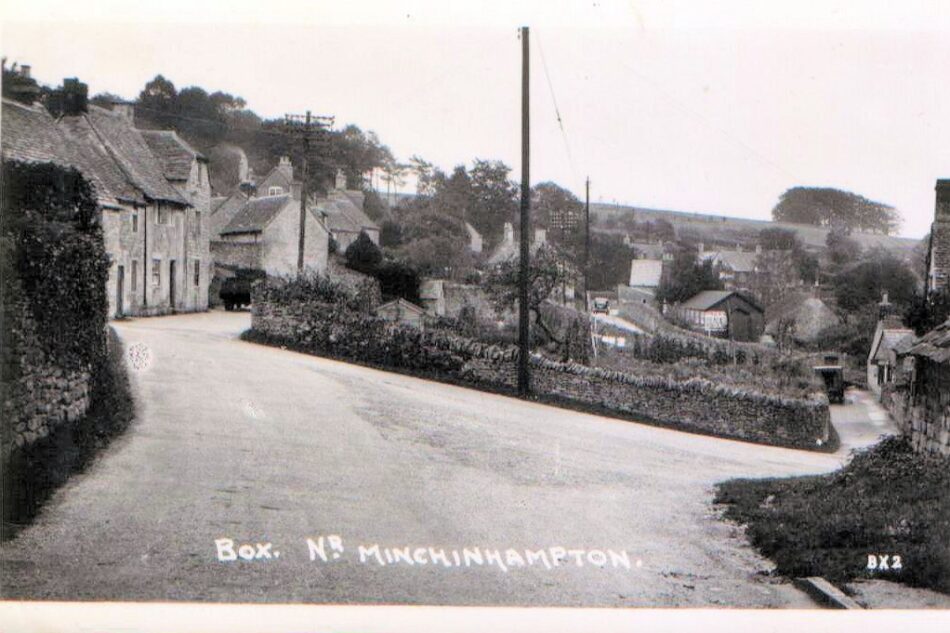
Both Bristol and Cheltenham, with their excellent amenities, are slightly further afield, around a 40-minute drive away via the M5 motorway. A journey to London takes approximately two hours and thirty minutes by car. Alternatively, there are excellent rail links from Stroud Station, a 15-minute drive from Box, where trains run directly to London Paddington station in less than an hour and a half. Bristol Airport is an hour’s drive for international travel; Heathrow Airport can be reached in less than two hours by car.
Council Tax Band: C


 Related Stories