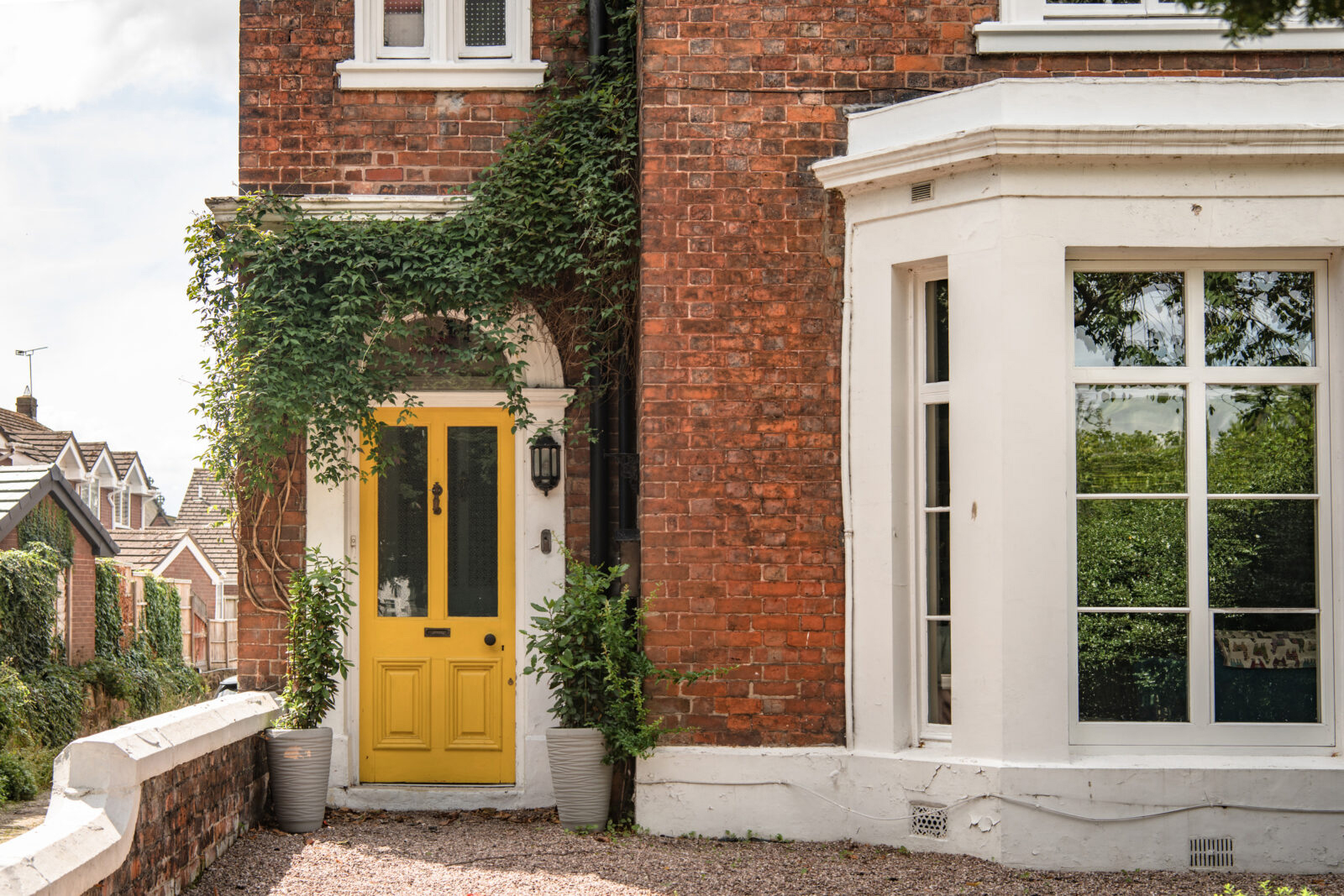
The house’s grand red brick and stucco-adorned façade peeks out from behind a mature yew tree that fosters a sense of privacy. The canary yellow door is set beneath a half-circle fanlight and characterful climbing clematis.
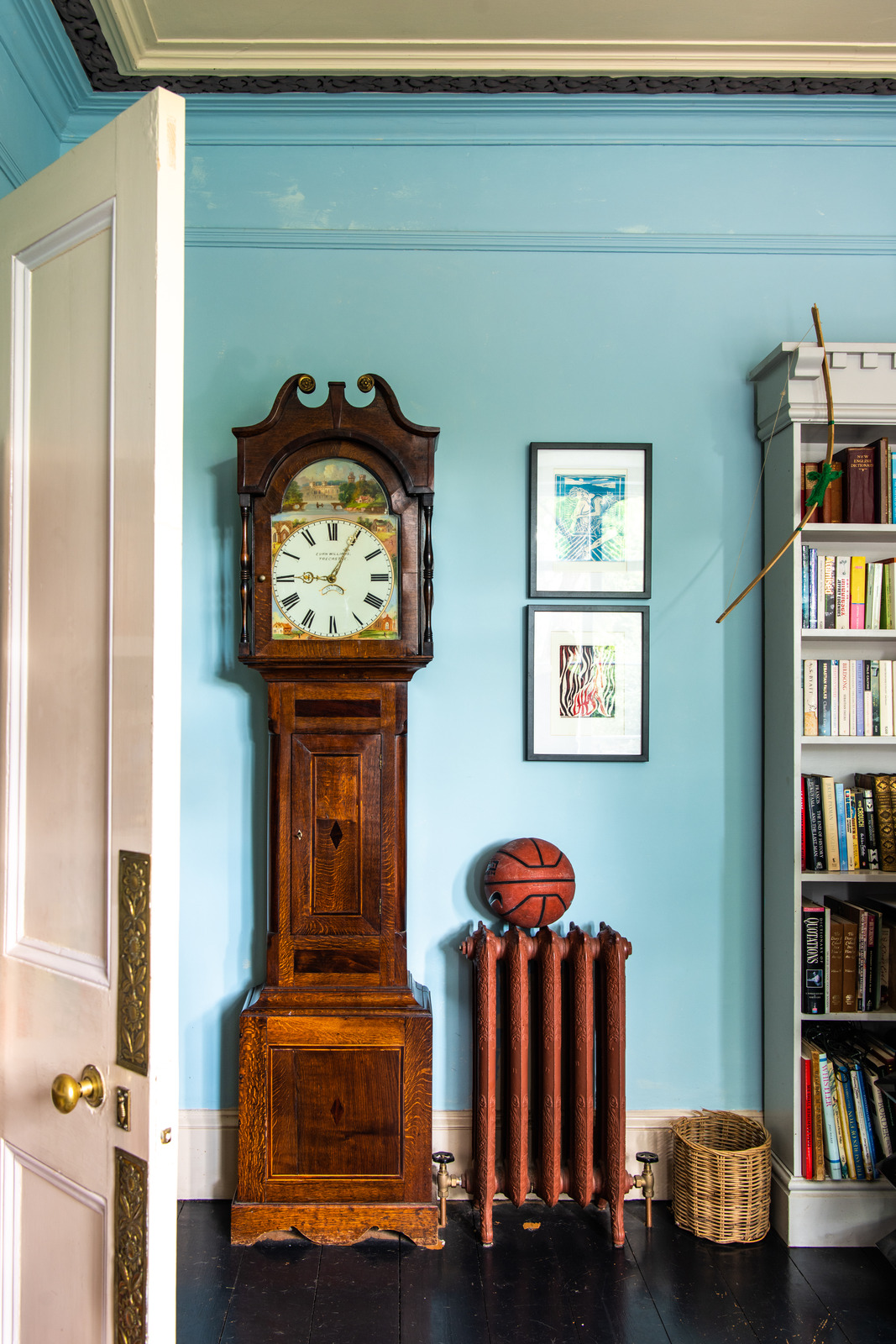
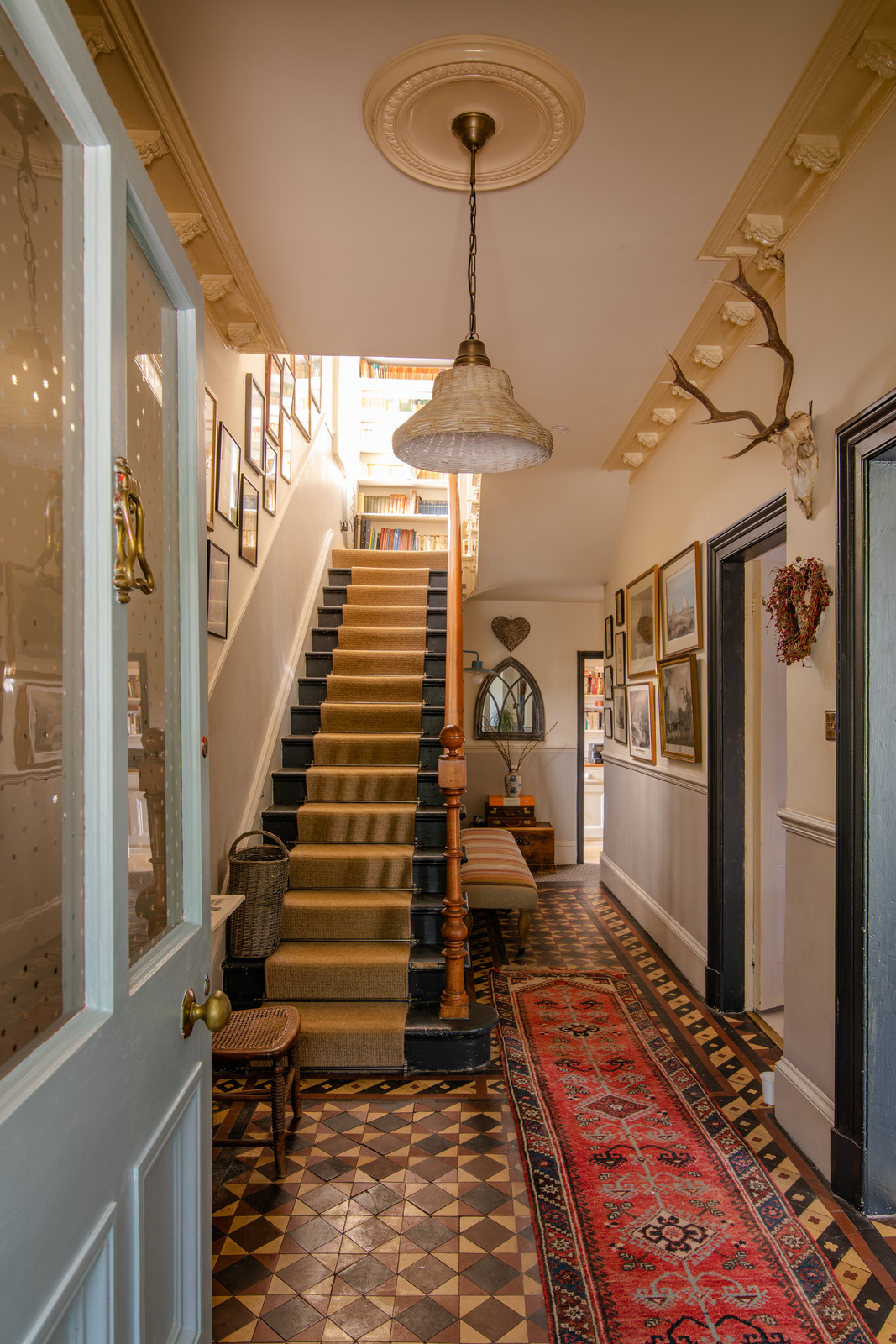
Behind the door is a fittingly impressive hallway that joins the front and back parts of the ground floor. Ornate Minton tiling runs underfoot here, while bracketed cornicing and an original rose adorn the ceiling above. The first of two sitting rooms is at the front of the plan and is lit by a huge floor-to-ceiling bay window. Walls are finished in ‘Notting Hill’ blue by Mylands and extend up to the soaring ceiling, where there is more original cornicing. Checkerboard tiling and an ashy blue surround frame the fireplace, which is flanked on either side by shelving and cupboards. The floorboards here have been finished in a glossy, black stain.
Along the hallway is the second sitting room, painted ‘Threadneedle’ pink, with a reddish marble fire surround, black-painted chimney breast and more shelving. Natural light enters through the back aspect, where there are double doors out to the garden beyond.
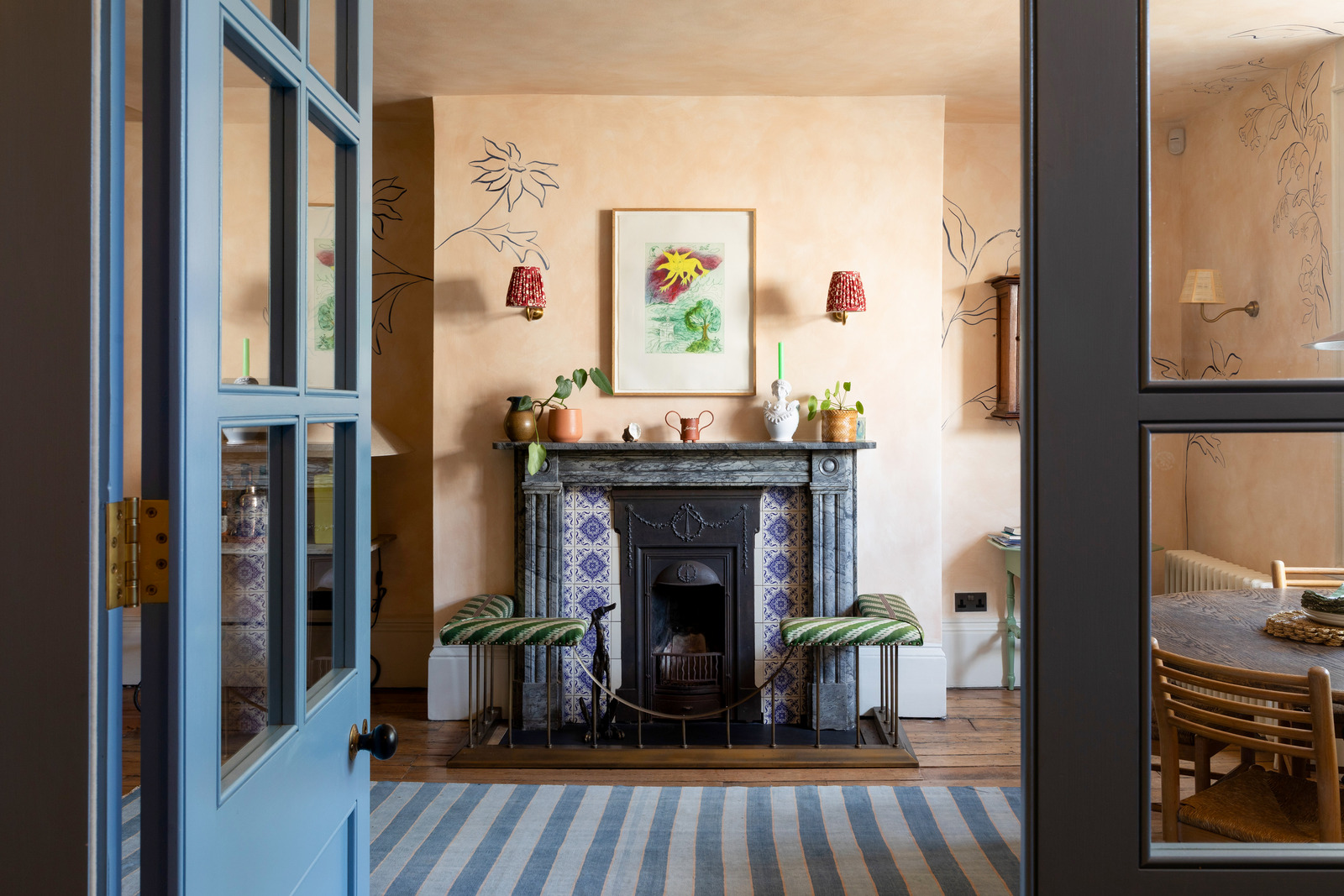
In the middle of the ground-floor plan is a study, followed by a dining room, the kitchen, a utility room and a handy WC. Cabinetry in the kitchen is bespoke and topped with solid wood worktops. Dual-aspect windows above the countertops usher in plenty of light and frame lovely garden views to admire while cooking. While rosy pink walls in both the kitchen and adjacent dining room create a sense of flow between the two, an original chimney breast with a passageway on one side acts as a clever delineation between the spaces.
An impressive original staircase connects the ground to the cellars below, and to the first floor above. Here, there are three similarly generous bedrooms: the front bedroom has plenty of fitted storage and an en suite bathroom; the middle looks out over the rear garden; and the back, the principal bedroom, has cosy pink-painted butt-and-bead panelling. The rear bedroom also has a substantial en suite, with both a freestanding bathtub and a walk-in shower. There is also a spacious family bathroom with a shower on this level.
The stairs curve round again to the second floor, where there are two further bedrooms. Both are lit from above by skylights, while the back room has a useful inbuilt cupboard.
The Great Outdoors
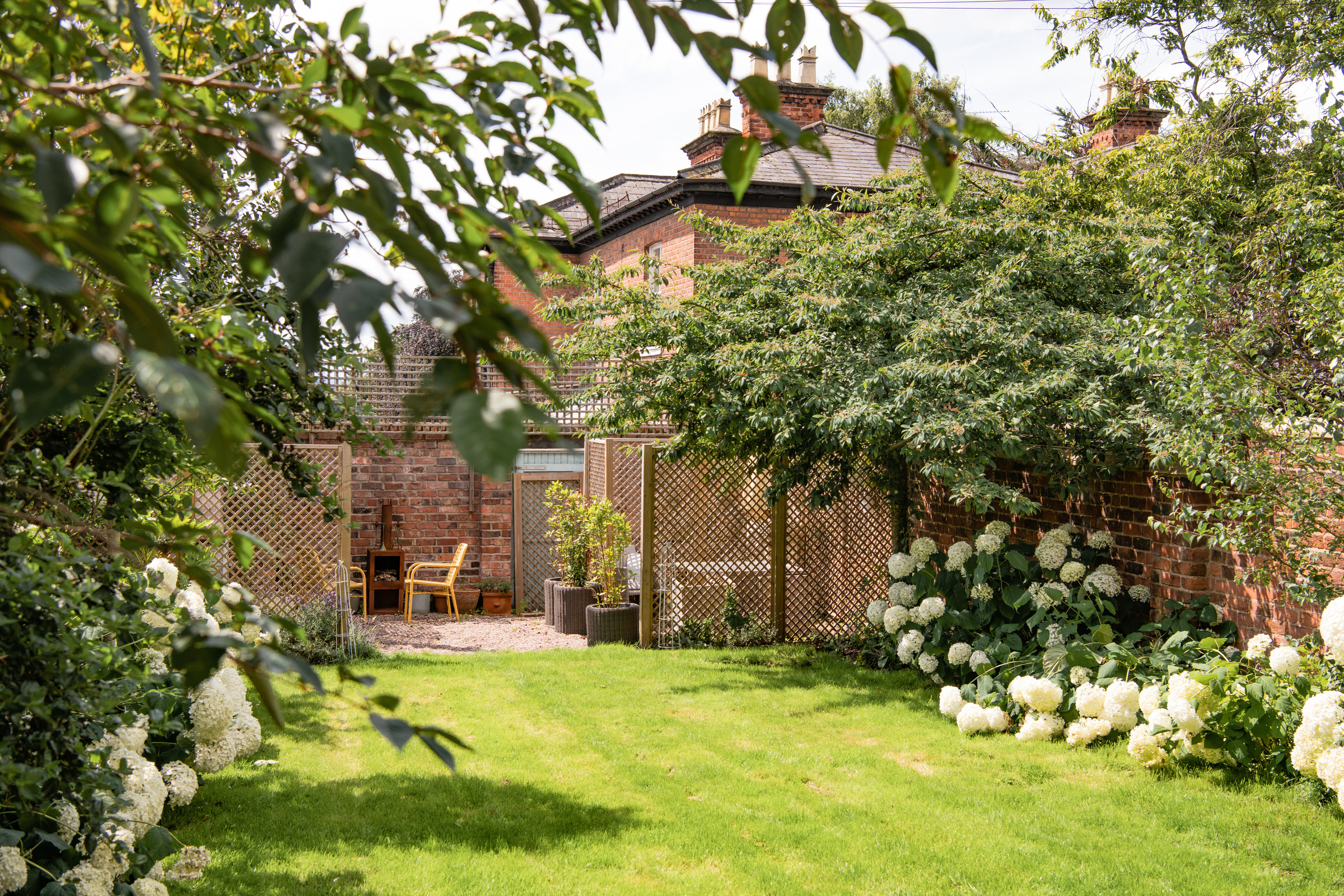
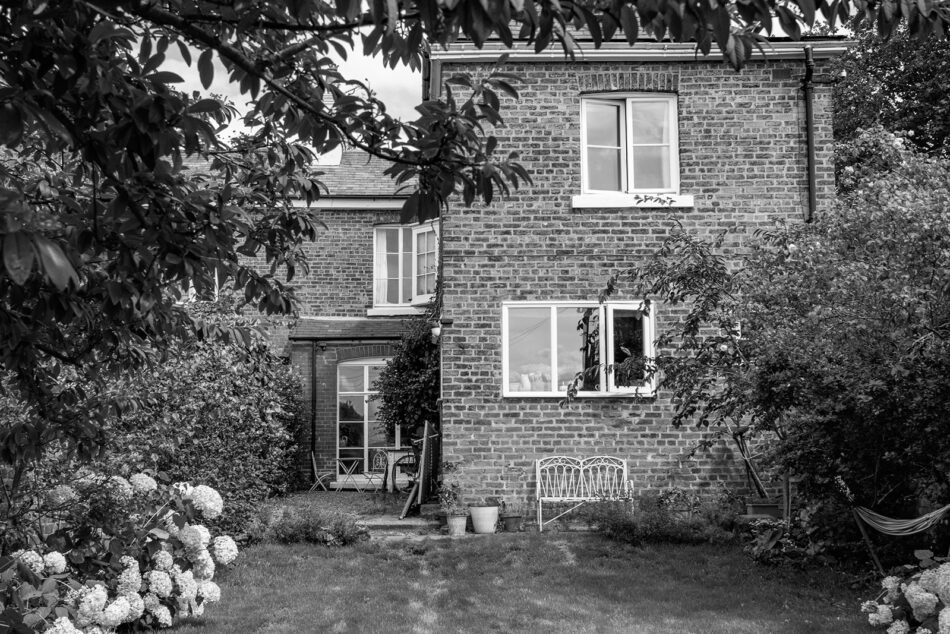
The house’s tranquil garden has expansive views over Chester and the Welsh hills beyond. Wonderfully landscaped with established hydrangeas, roses, honeysuckle, hellebores and fruit trees, there is a stretch of manicured lawn leading down to an intimate gravelled area bordered by latticed fencing. Perfect for al fresco dining, the space gets sun throughout the day and is an ideal spot for entertaining.
Out and About
Despite its compact historic city centre, Chester packs a punch when it comes to shops, restaurants, and cafés that cater to all appetites. Some of the best brunch and coffee can be found outside of the city walls at Short and Stout across Hoole Bridge, or at the wonderful Garden Social tucked away in the Garden Quarter. In the centre of town, Storyhouse is a well-preserved art deco cultural stalwart housing an independent theatre, cinema and library. Pre-theatre sustenance is at hand at nearby Porta Tapas or The Forge, while those looking for a glass of wine or respectively coffee, will be more than satisfied with the offering at Covino and the Jaunty Goat.
A short drive west is the Hawarden Estate and its impeccably stocked farm shop, campsite and pub The Glynne Arms, with an ever-changing seasonal and local menu.
Outdoor adventures abound in this area; the rugged wilderness of Eryri (Snowdonia) National Park, peerless beaches of Anglesey and the expansive moorlands of the Peak District are all within an hour and a half’s drive away, whilst the Clwydian AONB is on Chester’s doorstep. The River Dee carves its way through the city centre and can be followed on foot to join the Wales Coastal Path, while the Chester Millennium Greenway follows a disused train line and gives incredibly easy, traffic-free access to the surrounding countryside for cyclists. Within the city, Northgate Ponds are less than 10 minutes’ walk away, whilst the Countess of Chester Country Park is one mile to the north with nature-rich wetlands beyond.
There are a range of excellent independent and state schools in the area, including the highly regarded King’s and Queen’s schools.
Chester is incredibly well connected, with direct trains running to London (two hours), Liverpool (40 minutes) and Manchester (one hour). Proximity to the motorway network means easy and quick access to Liverpool and Manchester, and London, in around four hours.
Council Tax Band: F


 Related Stories