The Grand Tour
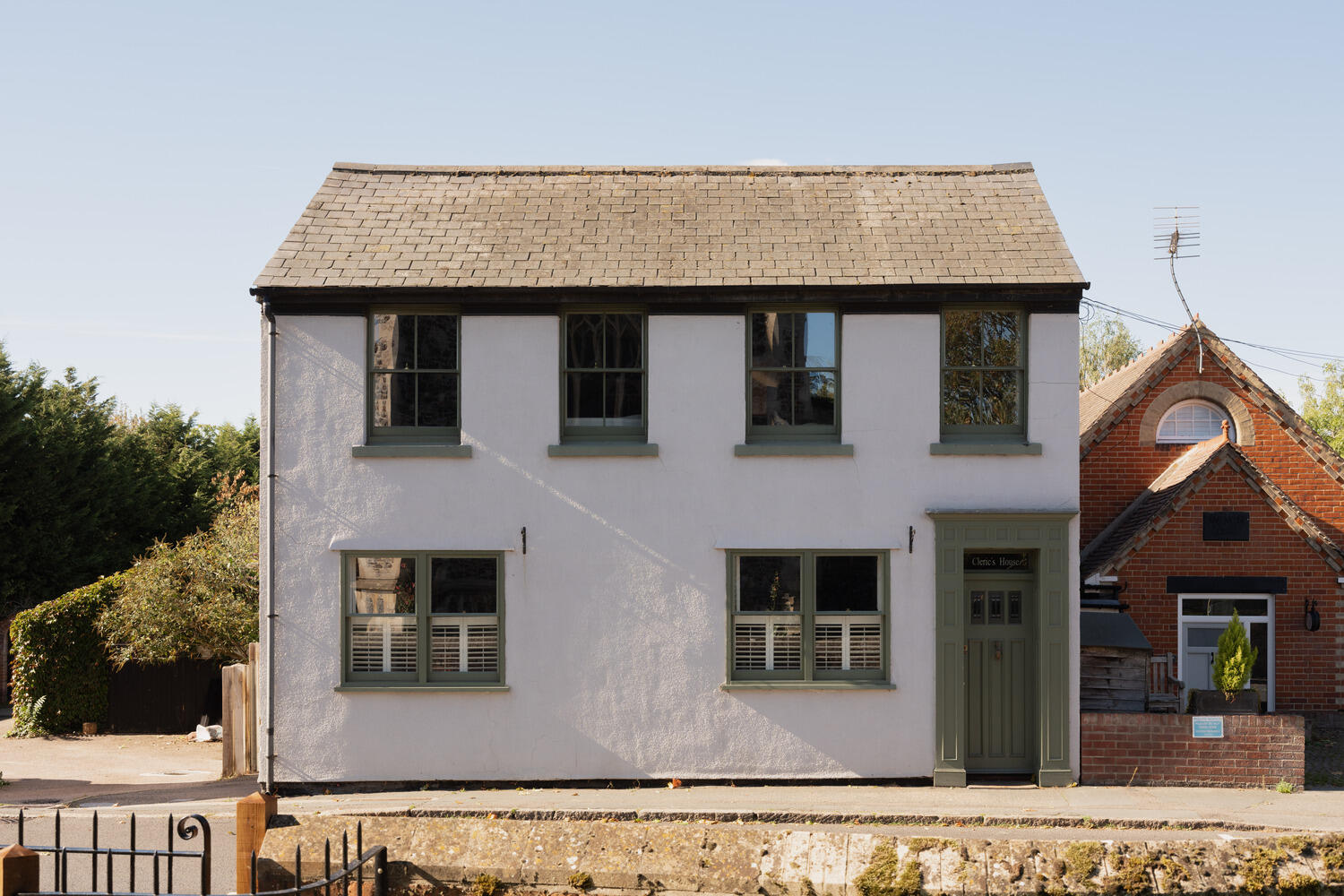
The house is set back from Bures High Street by a neat wall-top juniper hedge. An established rose garden sits behind, with a paved path leading to a front door flanked by panelled pilasters and topped with a corniced hood. Painted in ‘Oxney Olive’ by Sanderson, it contrasts beautifully against the house’s soft grey-washed façade and opens to a central hallway.
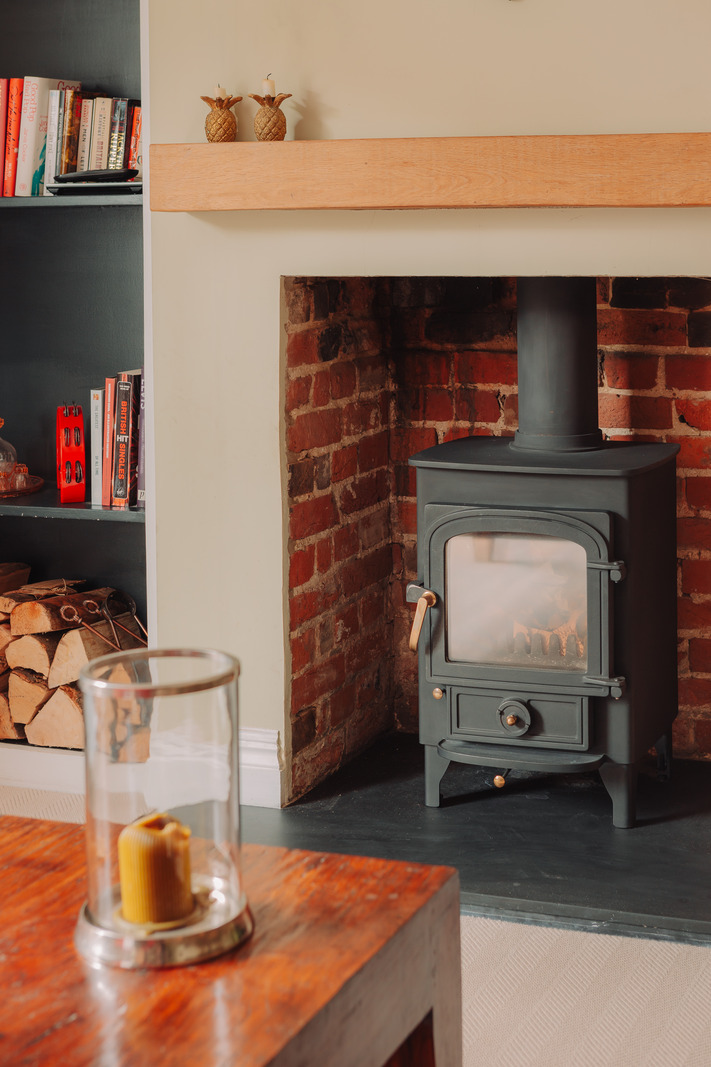
To the right is the living room, with warm herringbone-patterned carpet running underfoot and walls finished in ‘Skimmed Milk White’ by Farrow & Ball. A broad eight-over-eight sash window takes in views of flowers and an acer outside. On one side is a wood-burning stove atop a slate hearth; built-in alcove shelving sits on either side, ideal for storing books, records and logs for the fire.
Across the hall is the dining room, where walls are painted in the same shade of soft white and a parquet-style floor runs underfoot. Finished in shades of green, the kitchen sits at the rear of the plan. Here, bespoke hardwood cabinetry is washed in ‘Sap Green’ and fitted with a deep Belfast sink and copper taps. Glass-fronted cabinets are ideal for keeping crockery and glassware, or jars of dried herbs and spices. A large sash window frames views of the beech trees and flowers in the walled garden.At the rear of the plan is a handy WC and a utility room.
There are three double bedrooms and a shower room upstairs arranged around a central landing. The primary bedroom is painted in ‘Smoked Trout’ by Farrow & Ball and has tall, double-aspect sash windows that usher in plenty of natural light. Cream carpet runs underfoot, offsetting the dark original fireplace surround on one side; there are Georgian surrounds in the other bedrooms too, although both are grounded by original floorboards instead. One of the bedrooms has an en suite with a large bathtub, perfect for a luxuriant soak.
The shower room is finished with neat white tiles and fitted with porcelain from Burlington. On one side is a spacious shower with a rain-style shower head.
The Great Outdoors
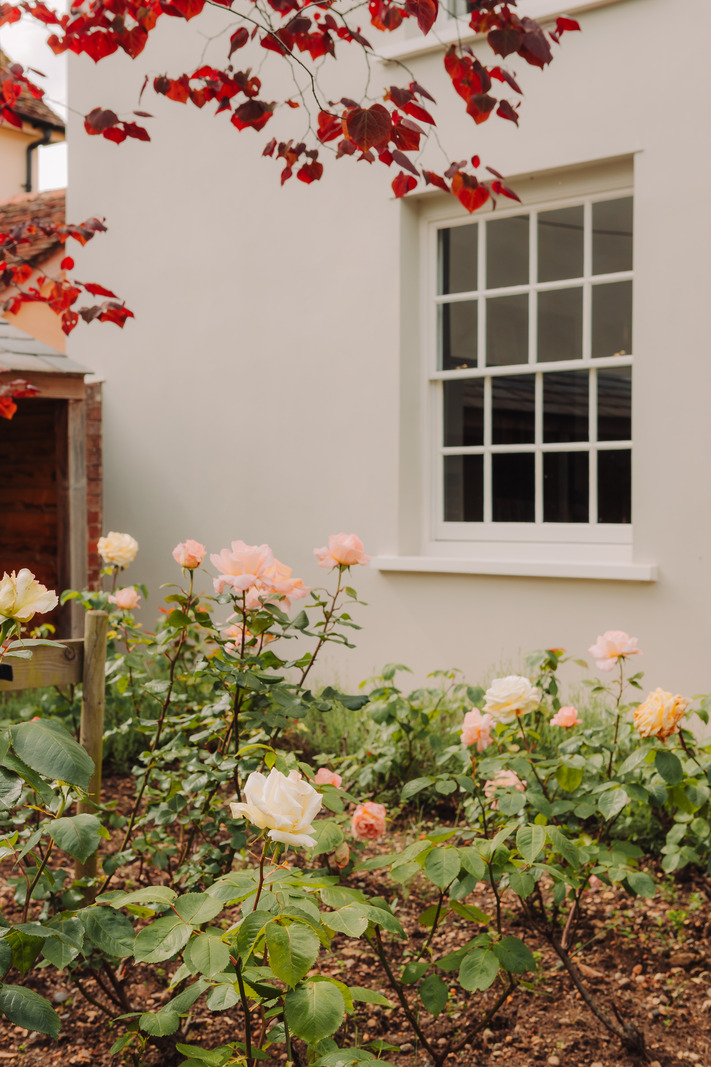
The rose garden at the front of the house flowers in shades of pink, white and peach each year, complemented by the rich red leaves of an acer. There is also a handy log store found here.
At the rear of the house is a walled garden, where mature Fagus Sylvatica pleached beech trees provide leafy privacy. A central patio surrounded by beds of peonies, lilies and irises is an excellent spot for a long garden table and al fresco dining in the summer. A summerhouse on the left of the garden is a useful space for relaxing with a good book, or for keeping pots and seeds.
Out and About
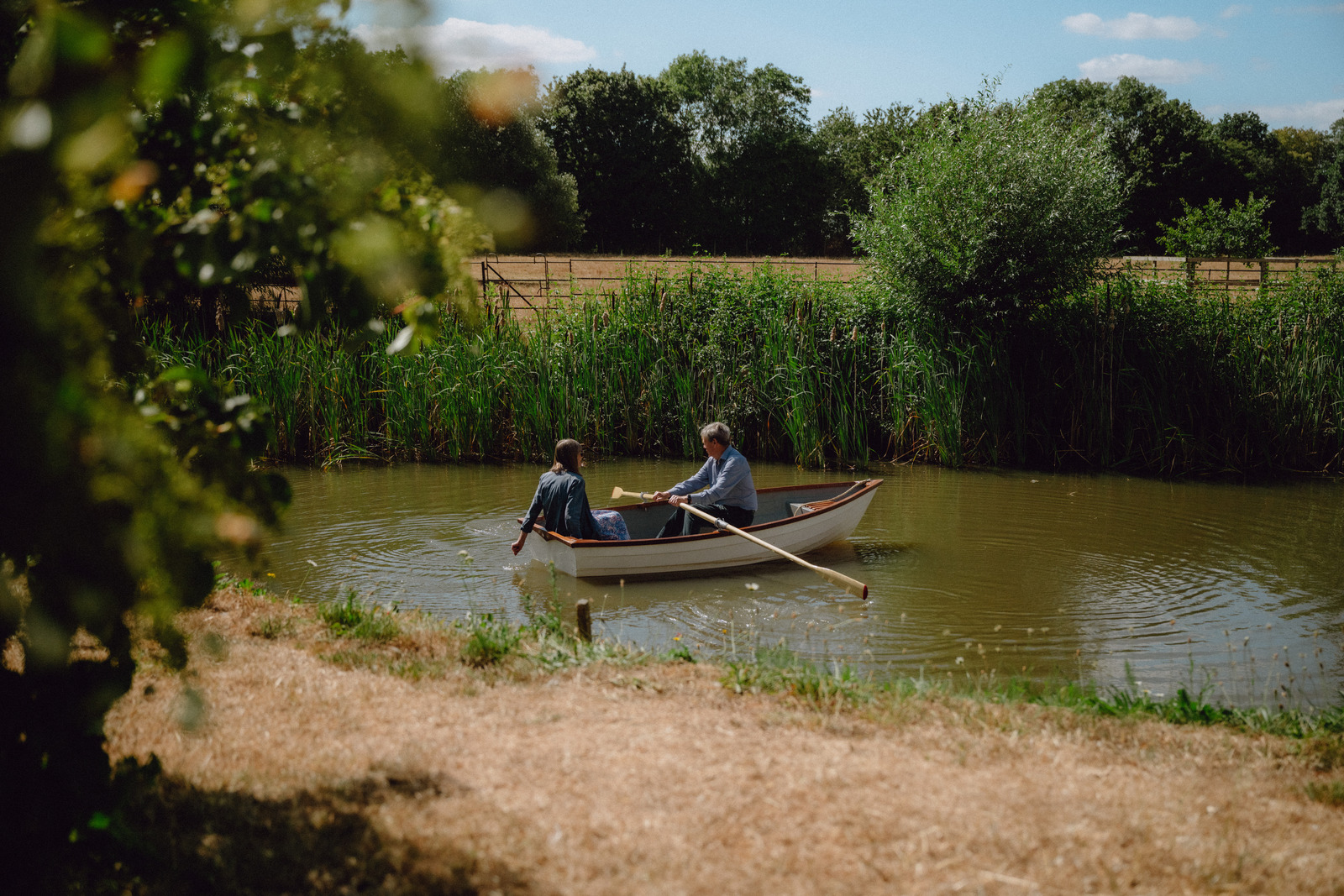
Bures is well-equipped for daily life; there is a general store, a post office, a GP surgery, a primary school and a nursery, as well as several pubs, a café and a deli. For those interested in outdoor pursuits there is a recreation ground, cricket pitch, tennis courts and boat access to the River Stour. Colchester and Bury St Edmunds are both easily accessible by car for work or more serious shopping.
As the former capital of Roman Britain, Colchester is steeped in history, home to the beautiful ruins of Colchester Castle, the Roman Theatre and St Botolph’s Priory. The town has an excellent range of galleries, cafés and restaurants, including the Firstsite Gallery, The Minories and Hollytrees Museum.
The village sits in the Stour Valley just outside of the Dedham Vale AONB, surrounded by the rolling farmland, meadows and ancient woodlands that define the lowlands of the Suffolk-Essex border. Access to the surrounding countryside is immediate; the Stour Valley Path runs through the middle of the village to Dedham, Flatford and the coast beyond. The Guardian recently described the Harwich peninsula as a “revelation” and “like Lymington or Rye, without the price tags”.
The area is well connected; Bures’s train station is less than a 10-minute walk from the house and runs services to Marks Tey Station in approximately 12 minutes, where trains to London Liverpool Street take just under an hour. The A12 is easily accessed from the area and offers access to the M25, London, the Suffolk coastline and the South East.
Council Tax Band: G



 Related Stories