The Grand Tour
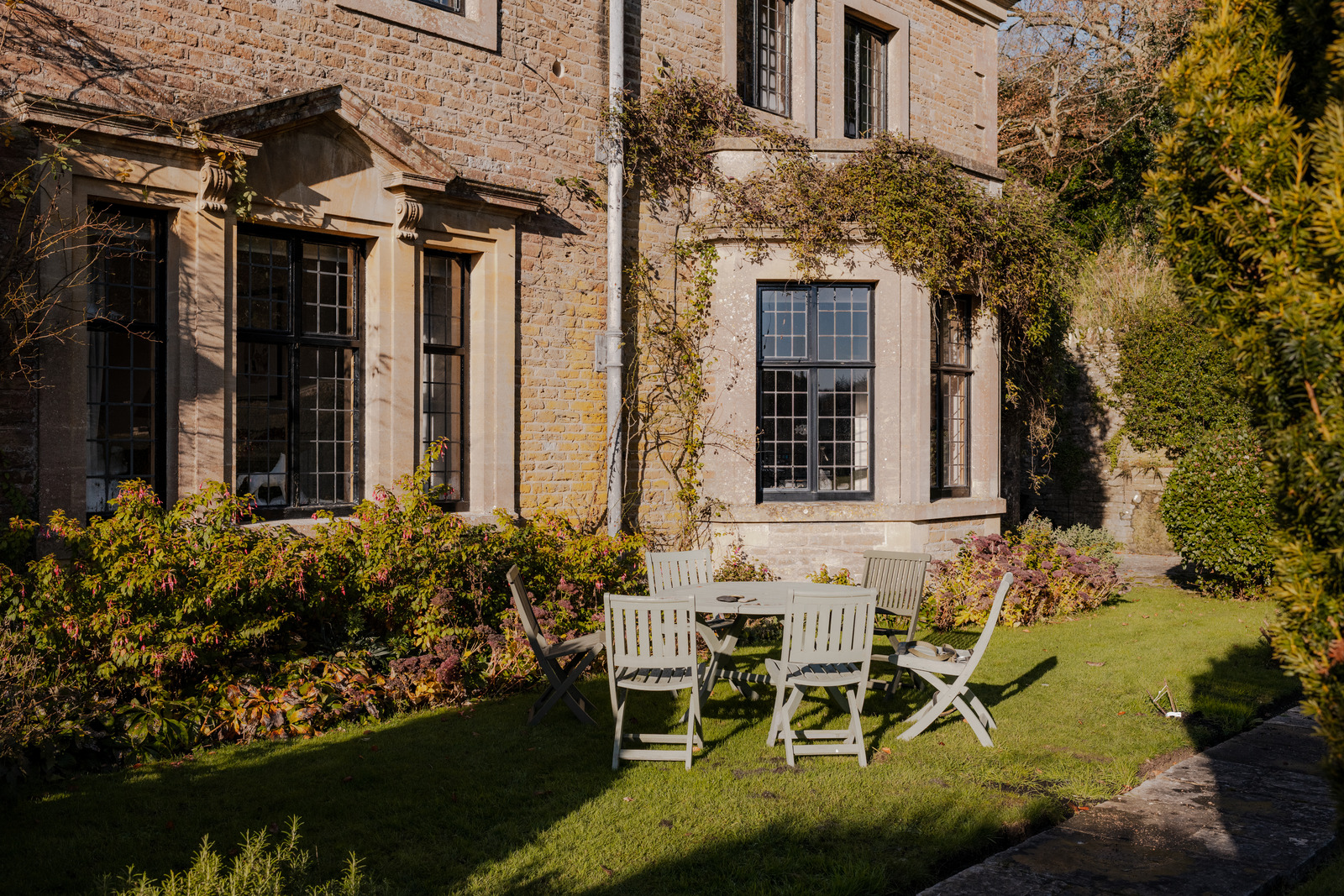
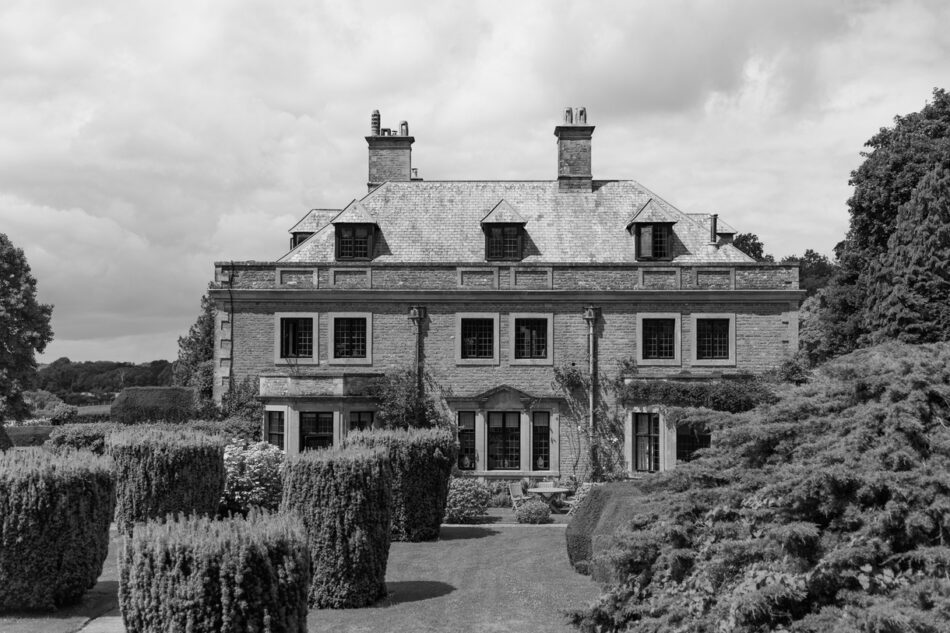
Redlynch House is not visible from the road, but set down in a quiet, private position, marked by 19th-century stone quadrant walls surmounted with elegant metal railings. Flanking a pair of cylindrical stone piers crowned with domed caps, these walls lead to a set of exquisite wrought-iron gates. The driveway gracefully winds its way to a carriage turning circle, unveiling the entrance to Redlynch House itself. An imposing front door opens to the grand oak-panelled hall shared by all the apartments and the private entrance to Glastonbury Apartment.
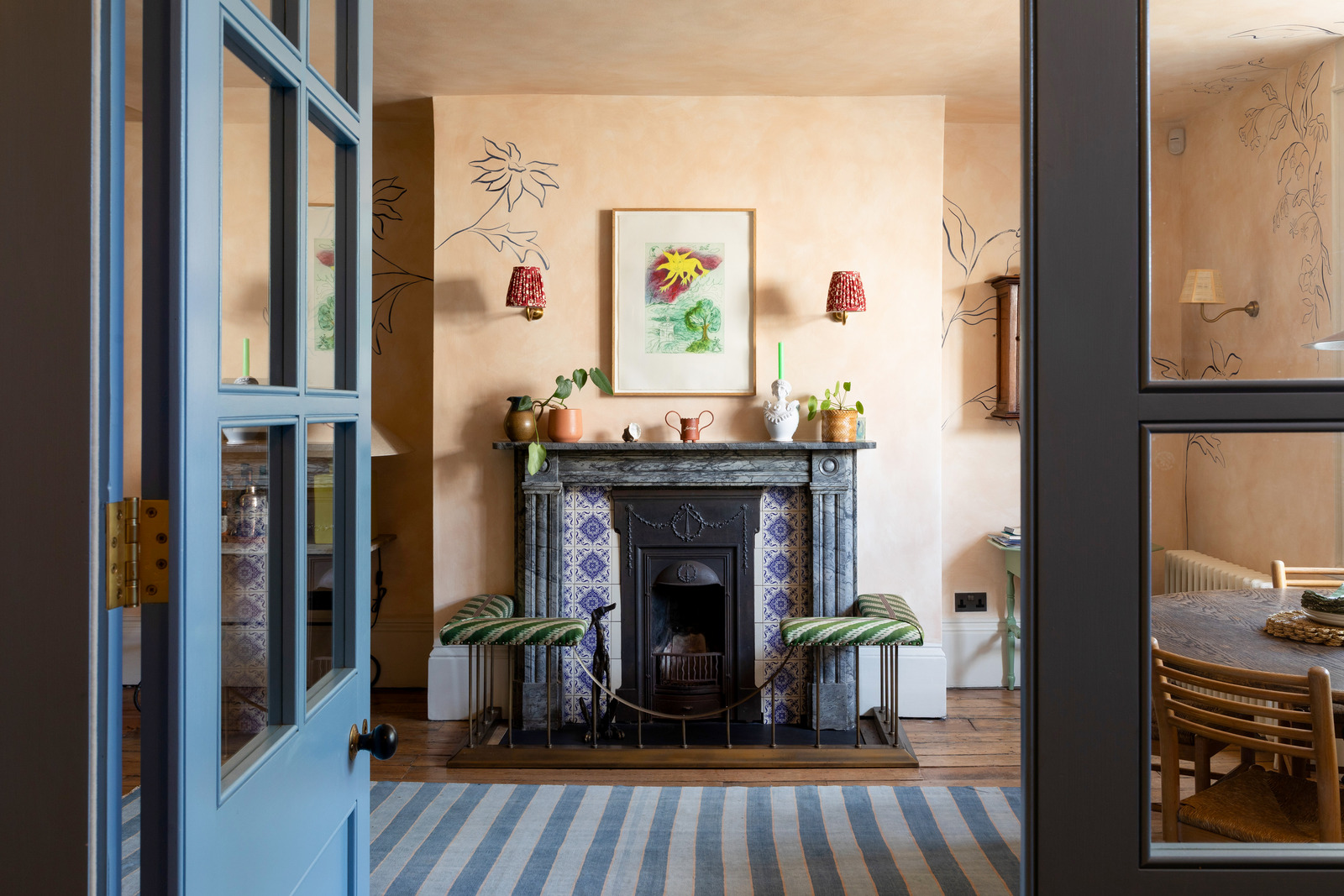
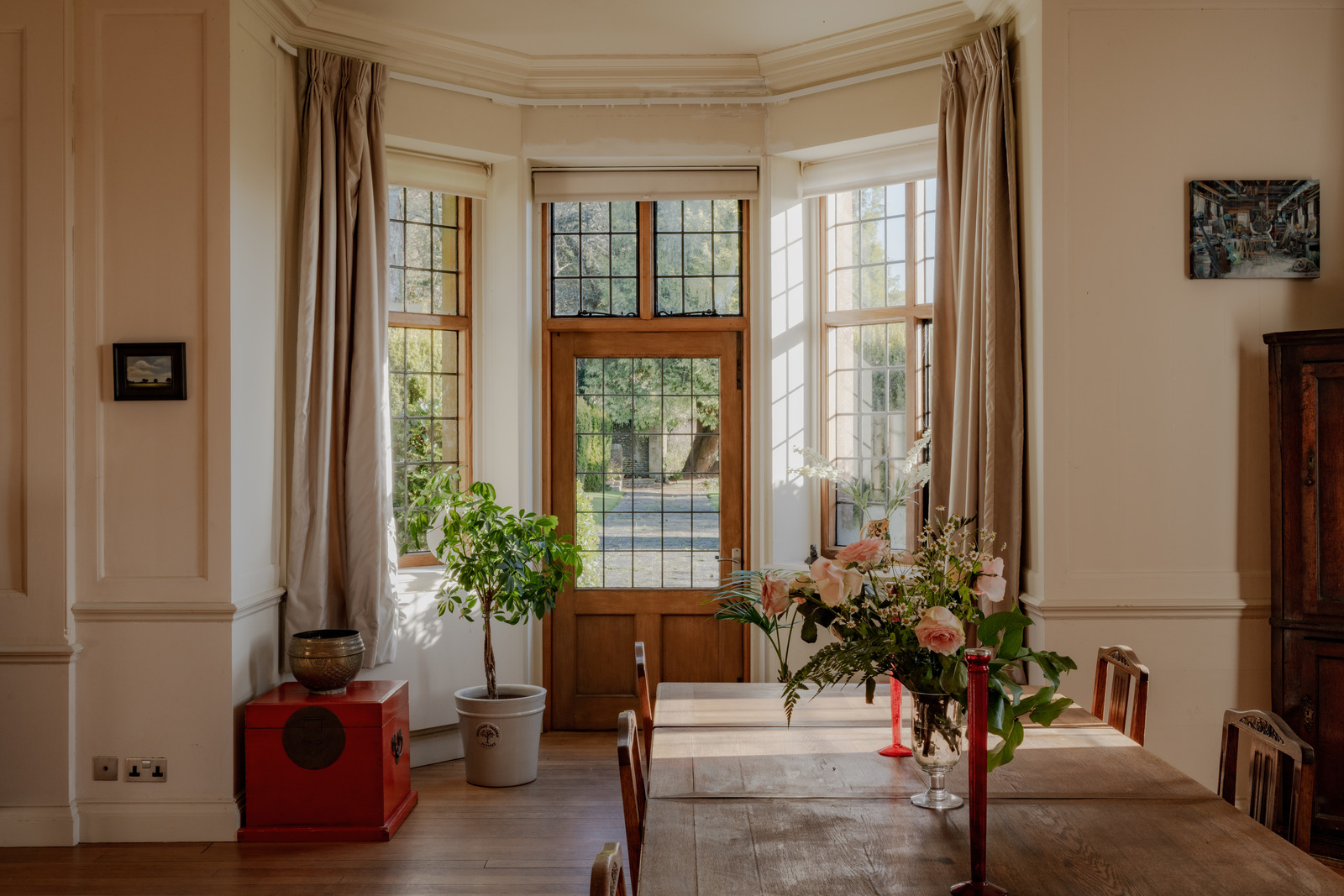
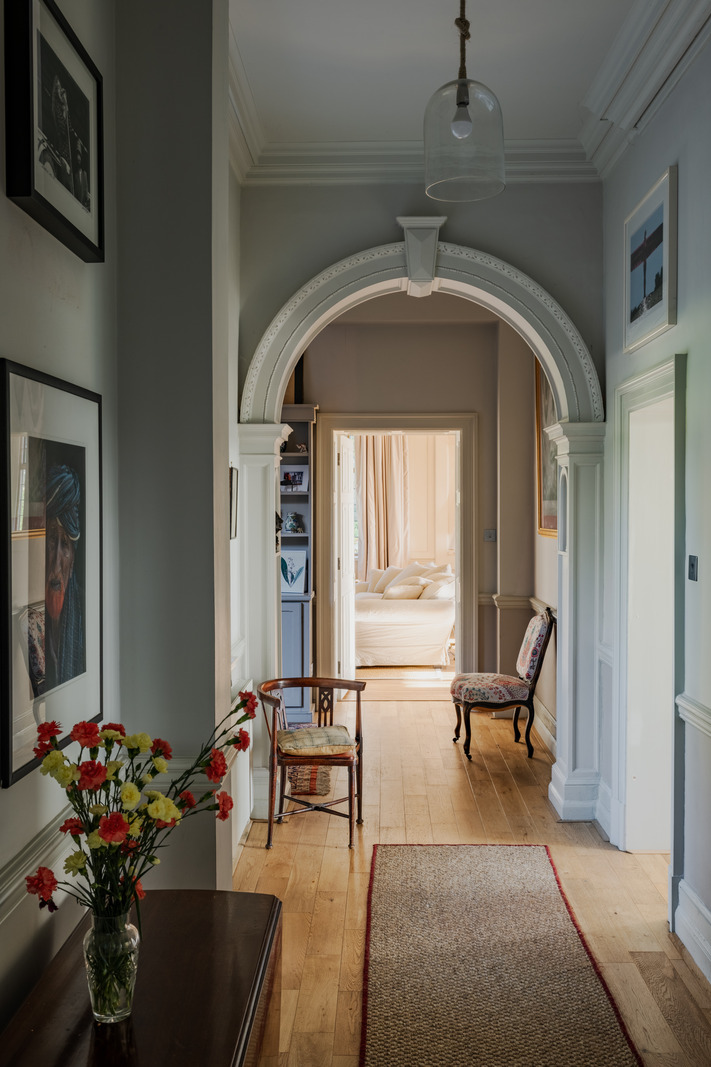
The wide entrance hall has a considered provision of cloakroom storage, opening onto an arterial hallway which in turn leads to each of the well-proportioned reception rooms and bedrooms. To the right is a space currently used as a study, with an adjoining library. A door from the study opens to the drawing room, a spectacular space that, like much of the apartment, is grounded by timber floorboards. The walls are painted in an understated cream colour, which allows the verdant views framed by double-aspect windows (including those set within two wide bays) centre stage. A stately cast-iron fireplace acts as a focal point, the moulded firebox of which bears the Earl of Lichester’s coat of arms.
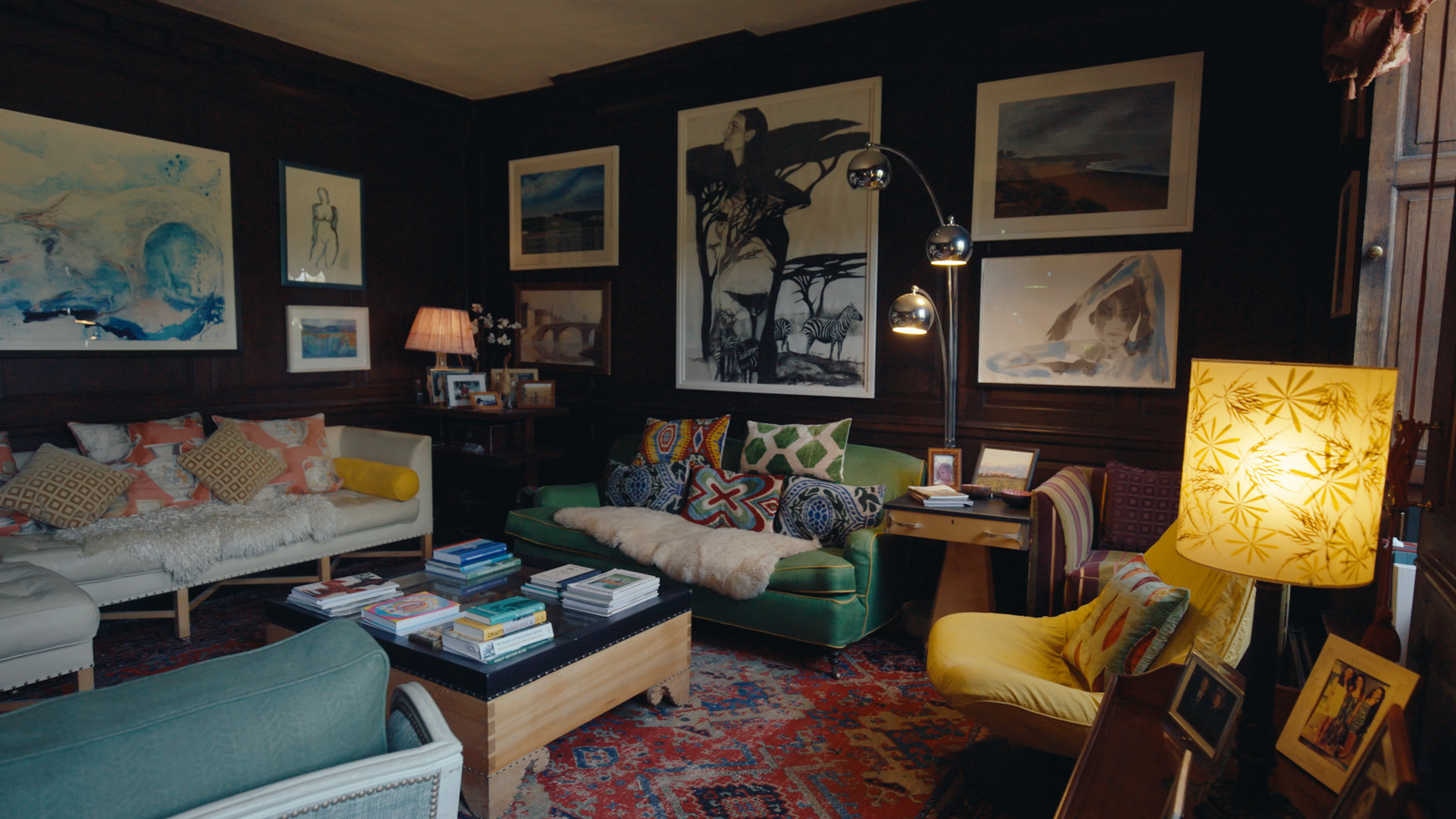
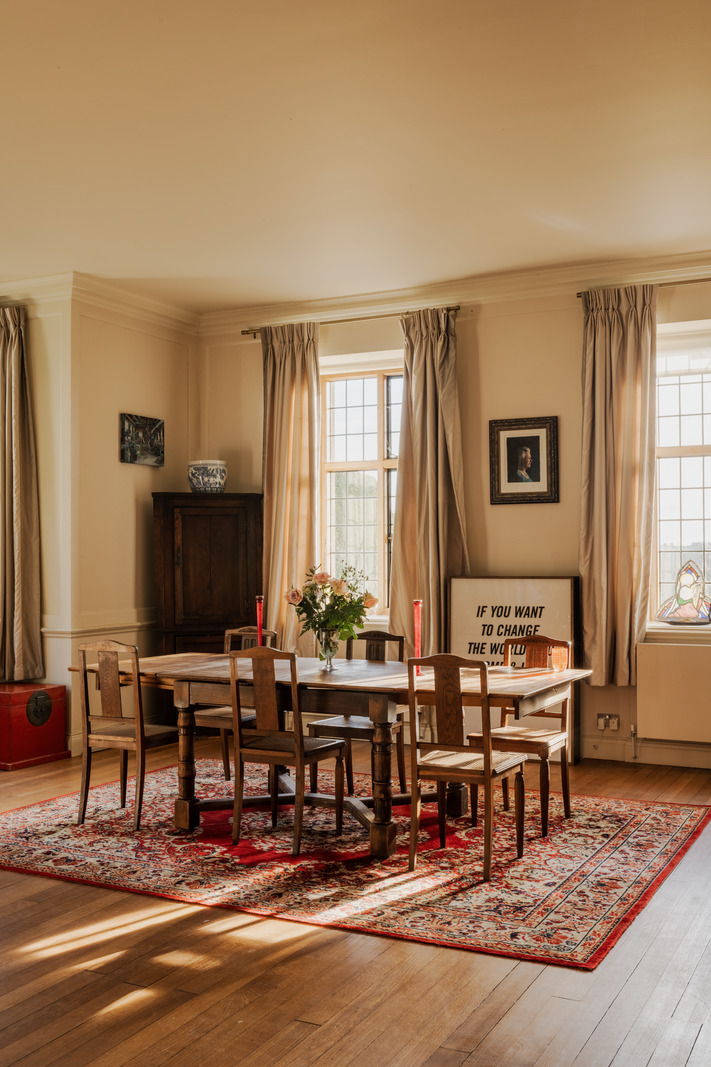
Next door to the sitting room is a second reception space of comparatively intimate yet similarly generous proportions. Light from a second set of bay windows scatters light across the floors, while original panelled walls and an additional log-burning fire lend a cocooning, cosy feel. There is a safe built into a cupboard here that once belonged to Margaret Howard, Countess of Suffolk.
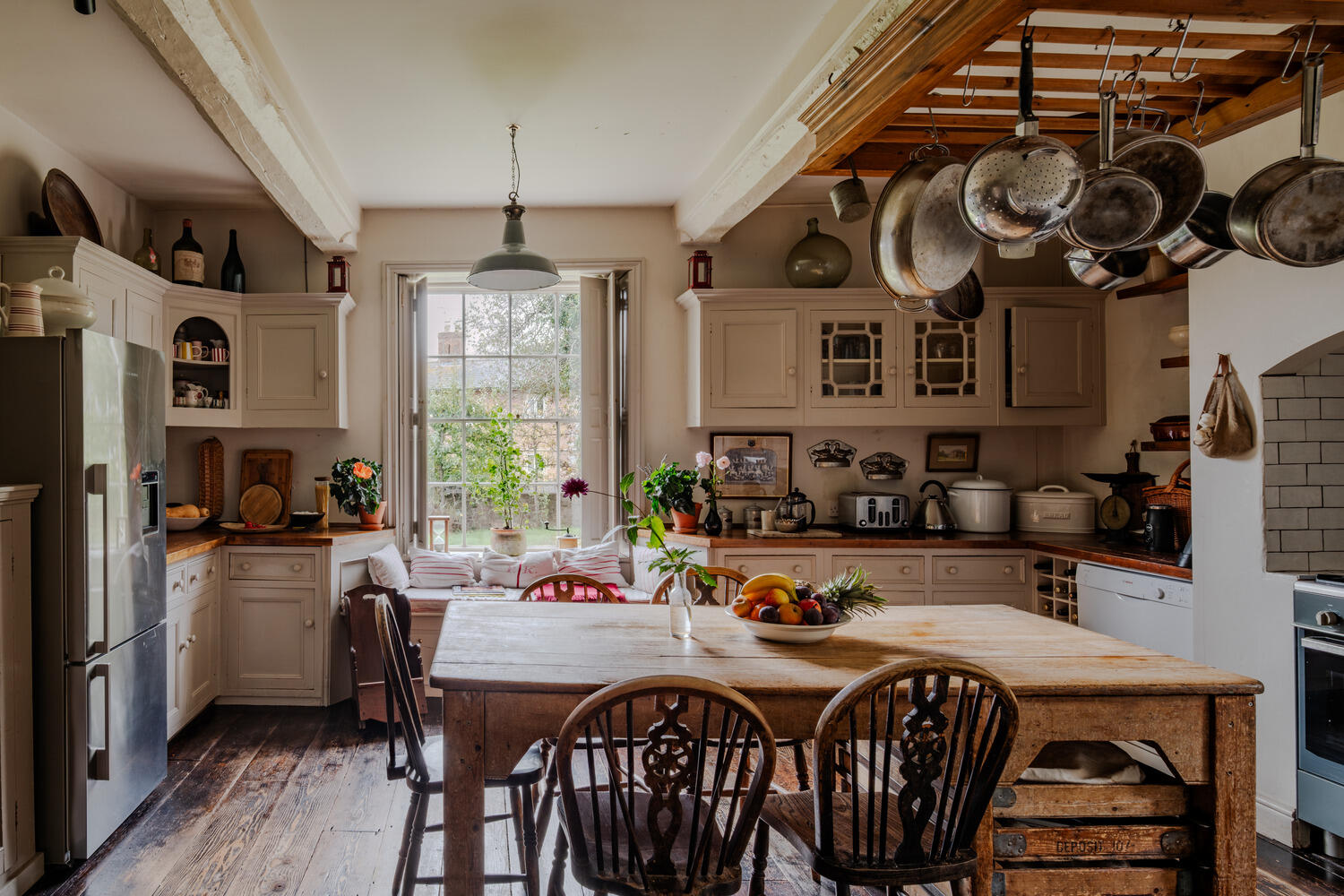
The kitchen lies directly ahead of the entrance hall, with generous handmade wooden cabinetry and worktops that follow the shape of the room. Appliances have been seamlessly integrated and include two ovens, two gas hobs, two dishwashers and an induction electric hob, all from Neff. There is also a Quooker tap for instant hot water and a built-in wine cooler. The roof here is pitched, lending a sense of volume to the space, and is punctuated with skylights. There is an informal breakfast bar here, as well as a larder cupboard tucked just outside of the room. Underfloor heating warms the tiled floor from below.
Both bedrooms lie on the southerly part of the plan, receiving a day-long brightness that amplifies their refined schemes. The main bedroom is an immaculate space with soaring ceilings, a smart en suite with a bath, and built-in cupboards. The second bedroom also has fitted cupboard space and is served by a neat shower room.
The Great Outdoors
The apartment includes two private sections of garden plot in the 17th-century walled garden, as well as a section in a beautiful original glass and metal cold frame. Both of the garden plots have flowers, including roses. A set of stairs in the Japanese garden lead to an elaborate wrought-iron gate nestled within a rusticated stone arch. This magnificent gateway, attributed to the creative genius of Lutyens, formed an integral part of his comprehensive vision for remodelling the house and gardens in 1913.
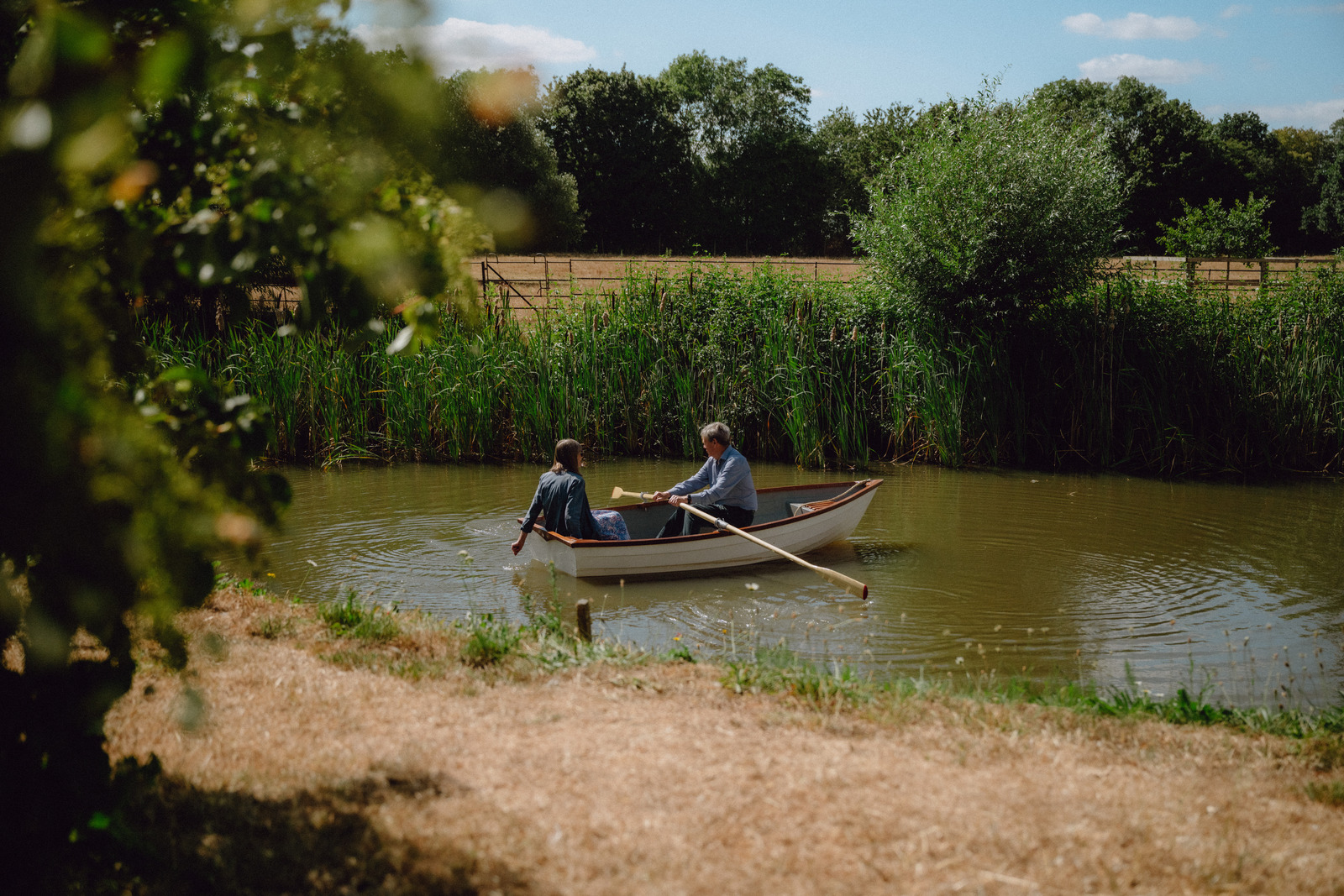
Redlynch House is enveloped by 25 idyllic acres of well-kept estate land, with numerous beautiful walks on the doorstep. The estate has a tennis court with breathtaking views across rolling fields and a heated swimming pool bordered by historic roses, perfect for watching the sunset. There are plenty of productive fruit trees for residents to help themselves to. Additionally, a listed games house, manicured gardens, walled gardens and enchanting woodlands filled with bluebells, snowdrops and wild garlic complete the captivating surroundings.
This apartment has two private garages as well as access to the shared separate car park in the grounds.
Out and About
Bruton’s excellent dining options include the Michelin-starred Osip II, The Old Pharmacy, At the Chapel, The Newt and Roth Bar and Grill at Hauser and Wirth gallery. All can be reached in around five minutes by car or half an hour by foot from Redlynch. In nearby Batcombe, Margot Henderson’s The Three Horseshoes adds to the excellent dining options in the area.
North Somerset is well-renowned for its wealth of local produce, independent food producers and growers. Westcombe Dairy is easily reached for award-winning cheese and charcuterie. Landrace Bakery’s new outpost is now conveniently on-site, offering a daily dose of sourdough bread made from stoneground UK grains milled at the new Landrace Mill, alongside Brickells ice cream and Woodshedding Beer. There is a good selection of farm shops for organic produce, including The Slow Farming Company, a local distillery, and for field-grown flowers and herbs, Re-Rooting is also nearby.
Babington House can be reached in around 30 minutes by car and Frome is also close by – around a 30-minute drive away. Frome’s growing community of independent shops, creative businesses and eateries include Rye Bakery, Projects Frome, Moo and Two, Frome Hardware, Eight Stony Street, and Frome Reclamation Yard. The Frome Independent, a monthly market showcasing local artisans and food producers, has also helped put Frome on the map, attracting over 80,000 visitors annually.
Surrounded by rolling fields and open countryside, the area is renowned for walking and cycling opportunities. Visit the breathtaking 18th-century landscaped gardens and Palladian mansion at Stourhead, a National Trust estate with a café, shop and gallery — all just a 15-minute journey by car.
The sought-after villages of Mells and Nunney also lie around 25 minutes north. Nunney is characterised by its historic centre and, most notably, its picturesque moated medieval castle built in the 1370s by a local knight, Sir John de la Mare. The village has a popular local pub, The George Inn. A popular spot for Sunday lunch is The Talbot Inn in Mells or wood-fired pizza from The Walled Garden opposite. Shaftesbury is easily accessed in around 25 minutes by car, and the fantastic coastline around Lyme Regis is around an hour’s drive away.
There is a selection of excellent schools in the area, including Sherborne School, Sherborne School for Girls, King’s Bruton, The Gryphon School, John Taylor High School and Abbot Beyne School. There is also a good primary school in nearby Zeals, Whitesheet Church of England Academy.
With easy access to the A303 and M3, London is reachable in under three hours. Rail connections are also very good, with Castle Cary approximately 15 minutes away by car, offering direct rail services to London Paddington in an hour and a half. Bruton station has trains to Bath Spa and Bristol in approximately an hour, which in turn have trains to Paddington in an hour and 20 minutes.
Council Tax Band: F
Tenure: Share of Freehold
Underlying Lease Length for the apartment: 106 years
Service Charge: Approx. £5,800 per annum for the house and estate grounds (this includes a pro-rota repairs to shared areas and the outside of the building, cleaning services, communal garden upkeep, and use of gym/sports/swimming facilities)
Building Insurance: Approx. £1,969 per annum


 Related Stories