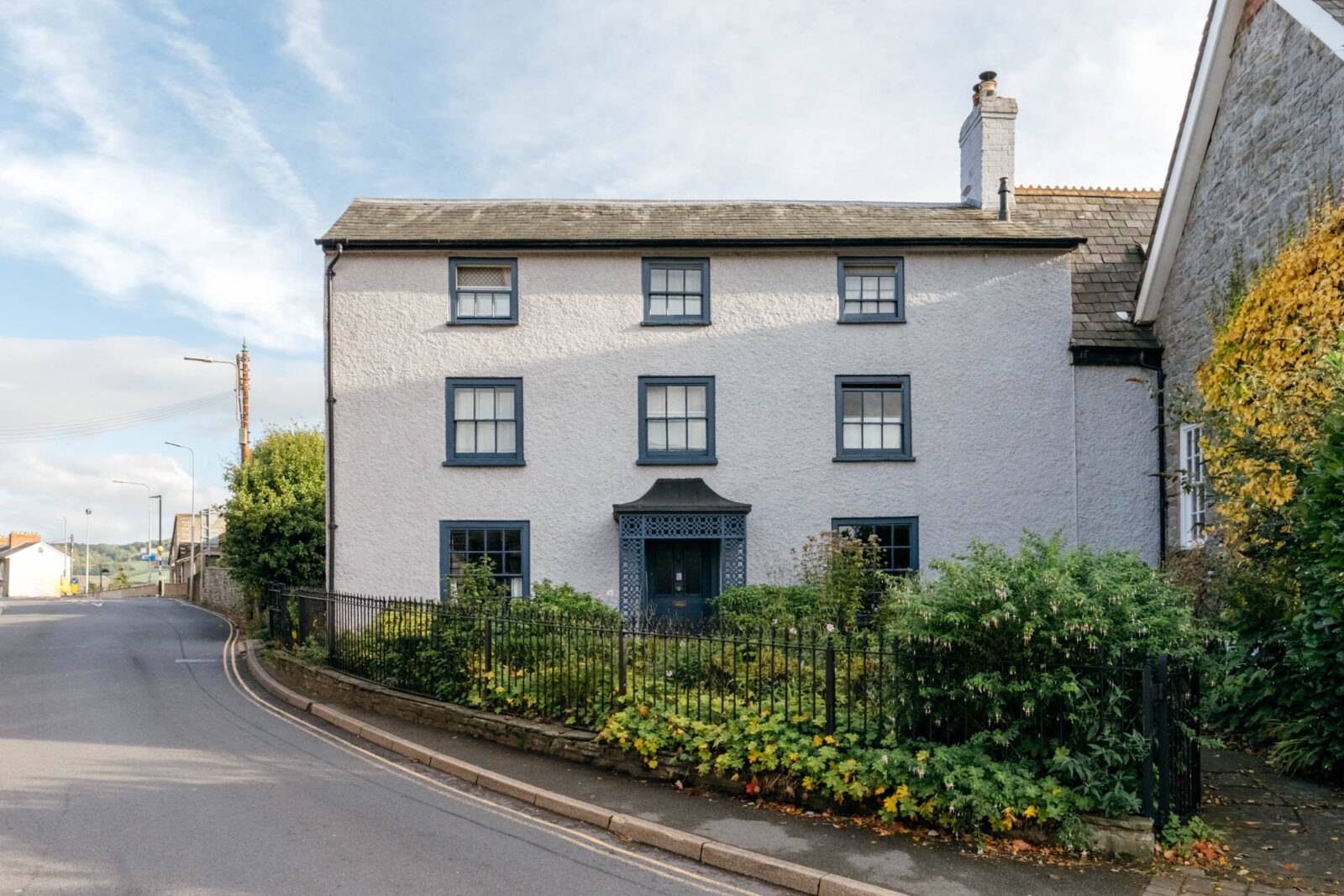
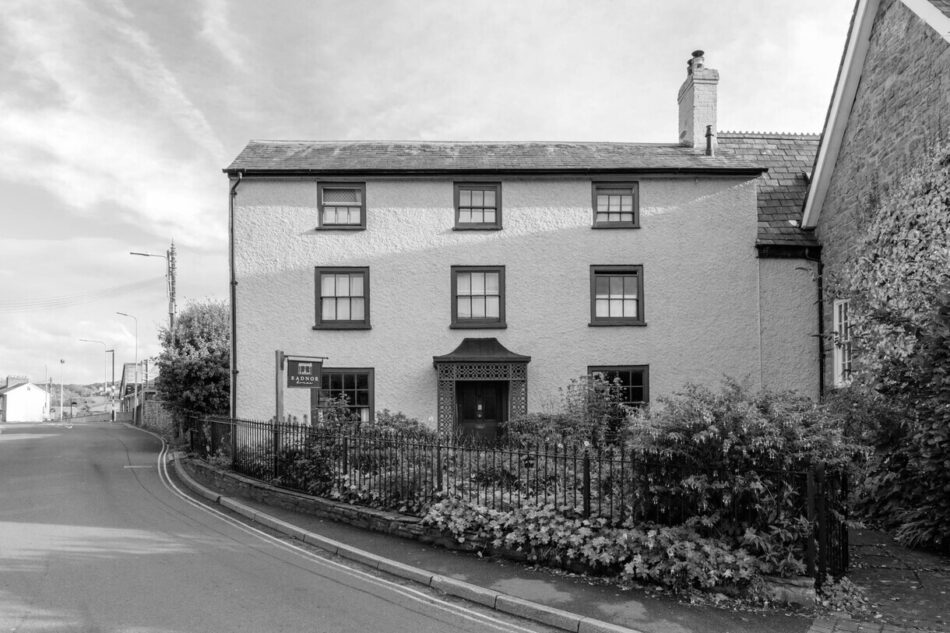
Iron railings and a gate open to a flagstone path that leads through a front garden planted with herbaceous perennials. The cream stucco façade of the house is punctuated by windows, a front door, and a porch painted in a contrasting blue.
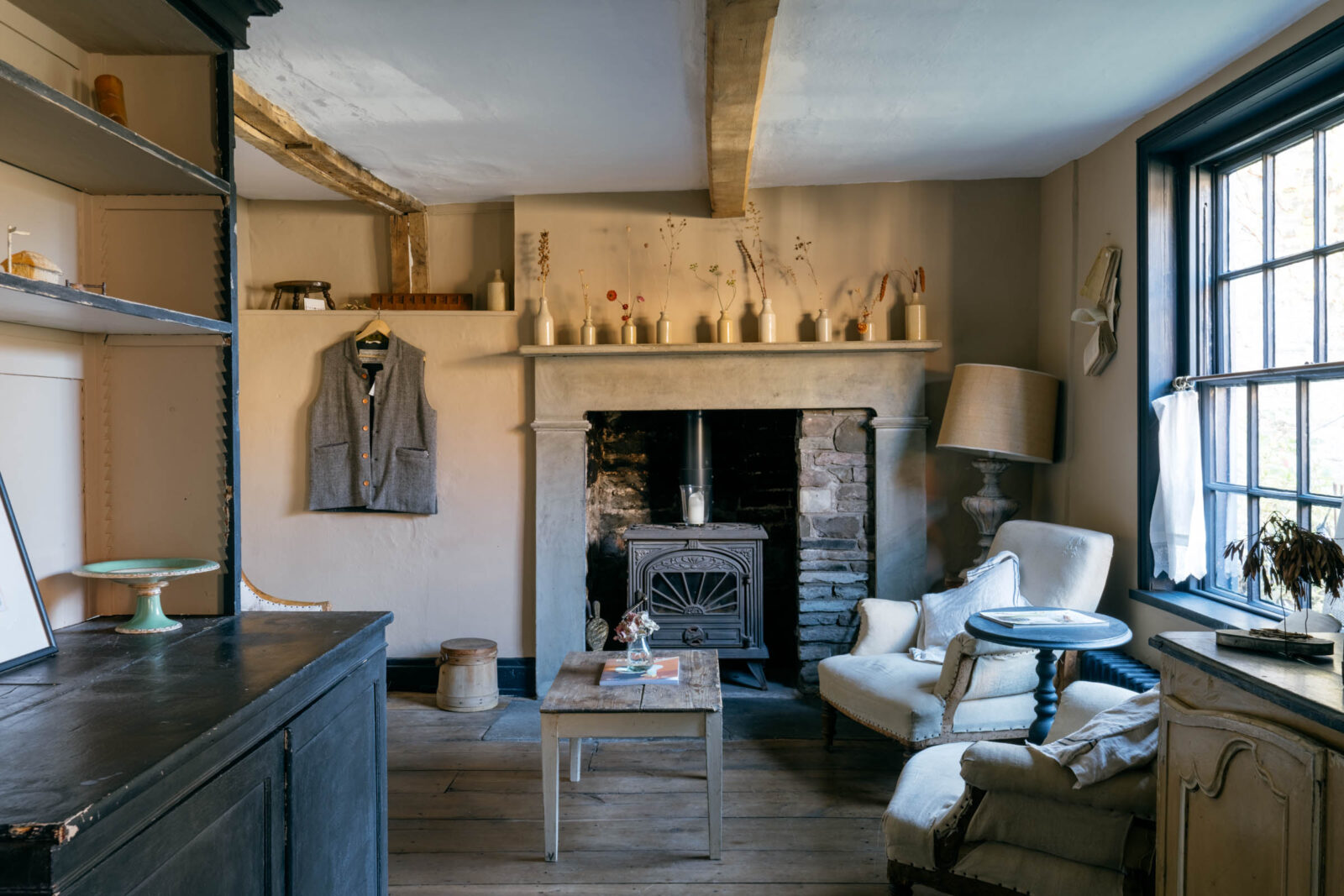
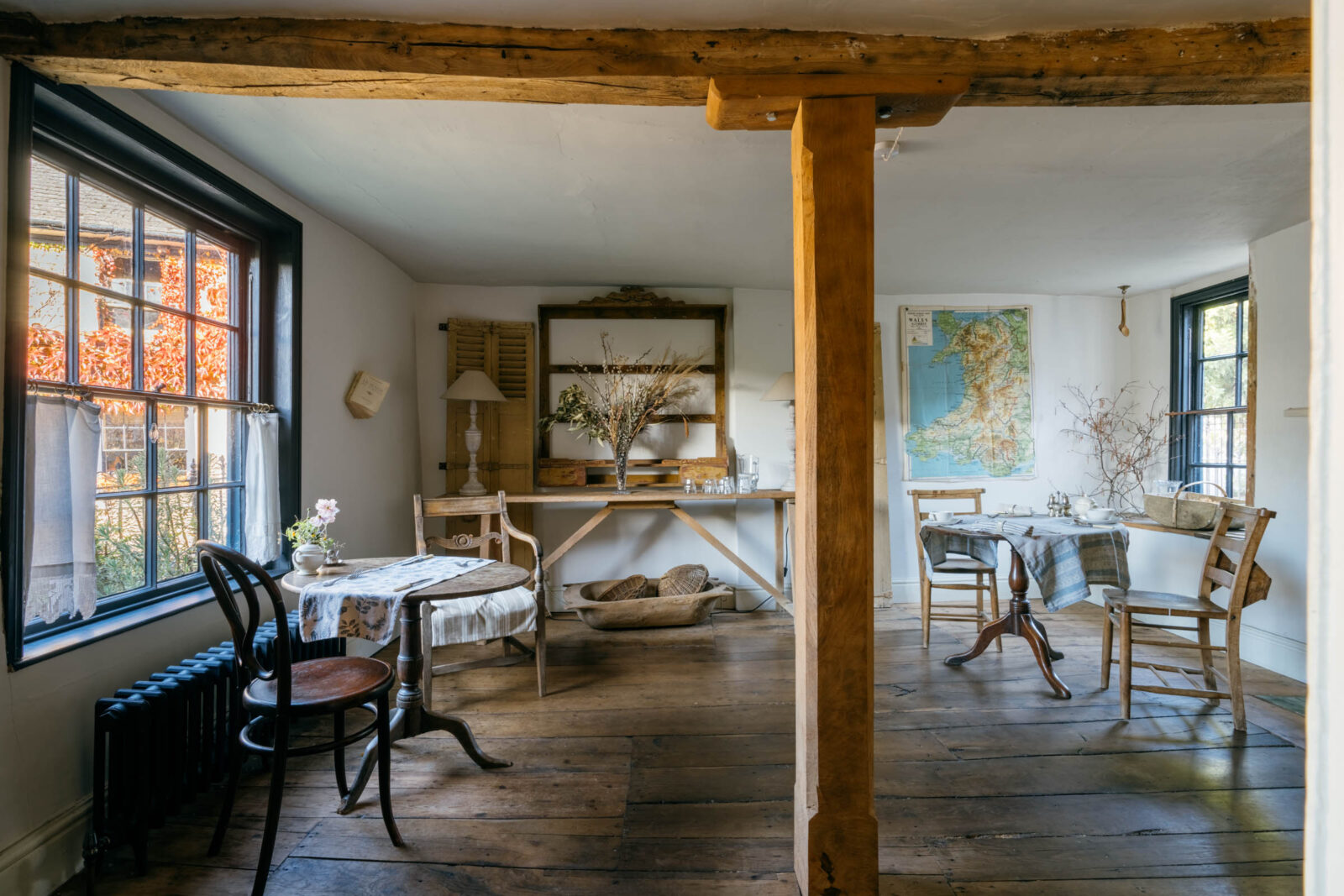
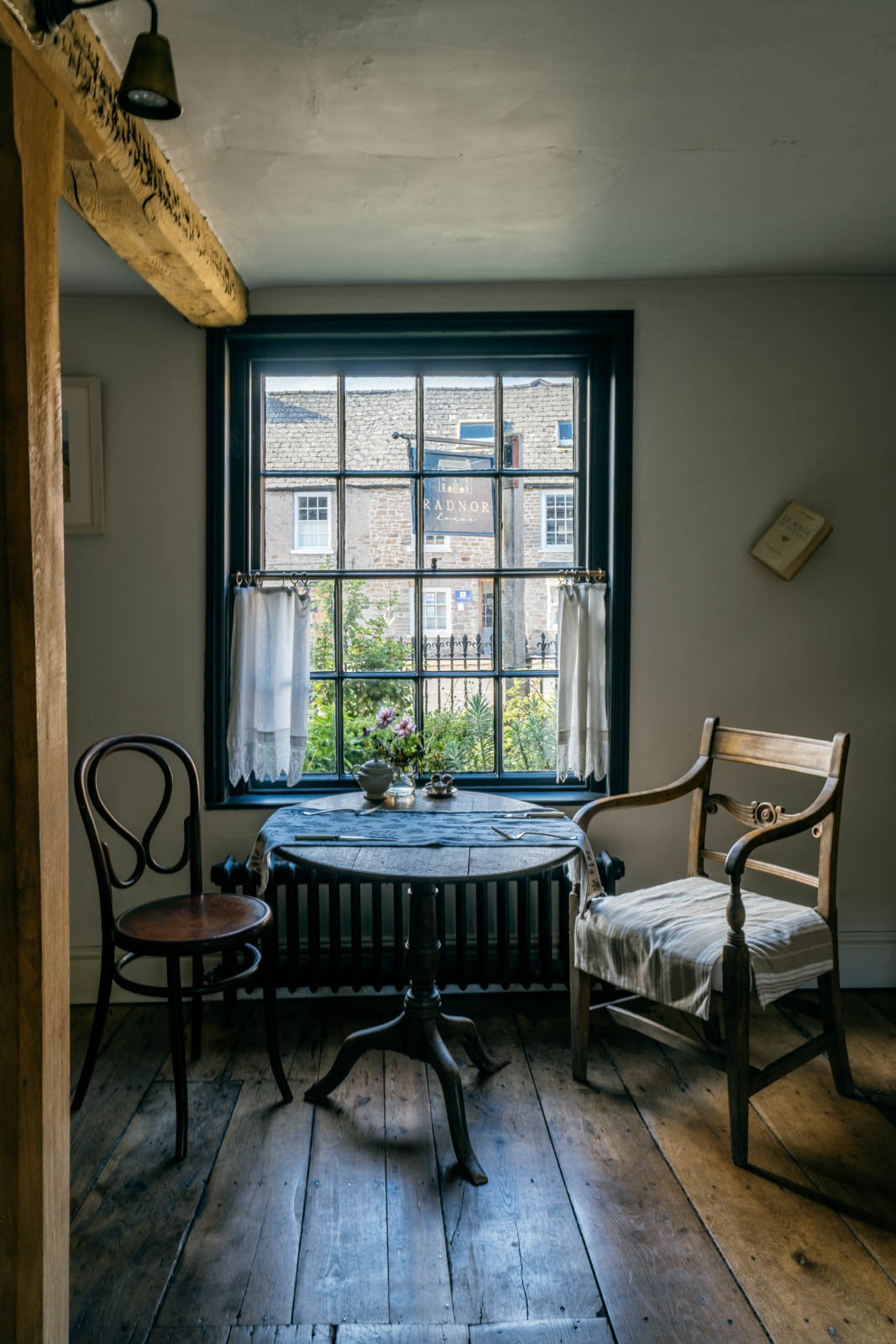
Entry is to the main reception room, painted in the neutral tone, accented by the exposed oak beams that run overhead. A wood burner sits in the original hearth, decorated with a stone fireplace. Across the hall, a second reception room is used by the current owners as the dining room for the bed and breakfast run in the front portion of the house. Original floorboards run underfoot, and the room is anchored by the pretty fire grate complemented by a striking surround in the same shade. Eight-over-eight sash windows let in light across the ground floor and overlook the front garden.
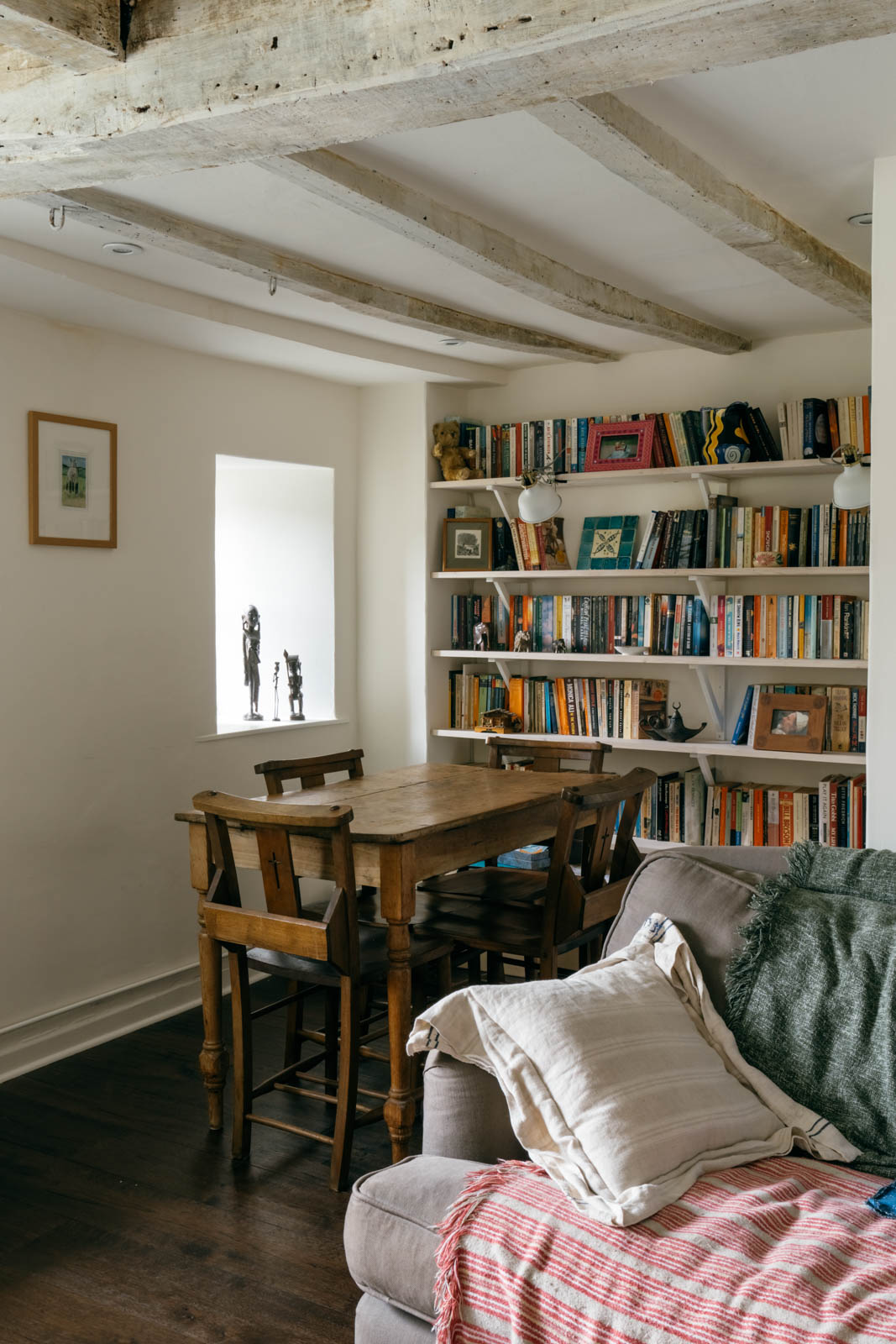
At the back of the plan is a large kitchen with French doors onto the patio and garden beyond. Shelves run along the walls, and exposed copper piping adds rustic charm. A pair of reclaimed half-glazed doors lead onto the expansive living area. Here, there are lime-washed beams, and a cosy wood burner is set in the Georgian fireplace; this room also has direct access to the garden.
A central staircase in the hallway leads to the first and second floors, acting as a spine in the centre of the house. On the first floor is the principal bedroom, which is entered through a walk-in dressing room. Dual-aspect, this room overlooks both the front and back garden. The pretty en suite has double vanity sinks made from reclaimed 19th-century wash basins and a beautiful rolltop bathtub. A separate staircase from the back living room gives access to the two other bedrooms on the first floor, one with a rolltop bath and chamfered lime-washed beams. Both share a bathroom with double sinks and a shower.
On the second floor, a further three bedrooms are en suite, with one set into the eaves and illuminated by skylights.
The Great Outdoors
Running along the rear of the house is a flagstone patio with a covered seating area shaded by a substantial fig tree that blooms with fruit in the summer. It is protected from winds and the perfect spot for eating outside on a sunny day. Potted perennials lead onto a workshop area and further shed. A few steps lead up to the garden lawn, where an established yew hedge with a lancet-cut aperture demarcates the garden beyond this. This secondary garden space has planning for a one-storey tabernacle for use in conjunction with the house and with access from the back lane, which runs along the rear border of the plan. Planning permission for this can be found here.
Out and About
Hay-on-Wye is a lively town famed for its many bookshops and revered literary event, the Hay Festival or, as it’s been coined, ‘the Woodstock of the mind’. Richard Booth’s Bookshop and Cinema is a local institution. The Old Electric Shop is a well-curated emporium, stocking the work of local artisans alongside vintage clothes and books. It also serves delicious modern vegetarian food. Chapters is a celebrated local restaurant with serious foodie credentials. The beloved borders sheep’s milk ice cream maker, Shepherds, can also be found in Hay. Hay Castle is a centre for arts, literature and learning with a full range of events, exhibitions and workshops throughout the year.
There are opportunities for canoeing and swimming on the River Wye, within a five-minute walk of the house. The village of Cusop is nearby with a church and a village hall. Cusop Dingle was historically a hive of industrial activity with five working mills driven by the Dulas Brook, which formed the western boundary with Wales. The brook and river, which are home to trout, otter and kingfishers, are a short walk away from the house and provide access to Offa’s Dyke Path, the trail to Hay Bluff and extensive hillwalking routes through the Black Mountains.
Enjoying close ties with Hay, equally lively Presteigne is a short drive away and has an excellent fishmonger and greengrocer, as well as a popular pizzeria, Daphne’s. Ludlow and Ledbury are both within reach, as is the city of Hereford, the Forest of Dean and the Brecon Beacons.
The closest train station to Hay on Wye is Hereford, which lies approximately 20 miles to the east and provides direct services to London Paddington in around three hours. It also runs direct services north to Manchester and south to Cardiff and Newport, with further connections to London and the South West. Cheltenham, Cardiff and Bristol are all reachable in around an hour and 40 minutes by car.
Council Tax Band: E

 Related Stories