InigoInigo Logo

How My Garden Grows: a remarkable island garden on an ancient moated estate in Suffolk

In the latest instalment of the How My Garden Grows podcast, our host Francine returns to her heartland to visit the 14th-century moated estate at Columbine Hall. She meets its owner Hew, who – together with his late wife Leslie – transformed what was once a muddy farmyard into a wondrous garden of vistas ...

Homes / Interiors / Podcast
words
Francine Raymond
film and photography
Ellen Hancock with additional footage by Conor Higgins
How My Garden Grows: a remarkable island garden on an ancient moated estate in Suffolk

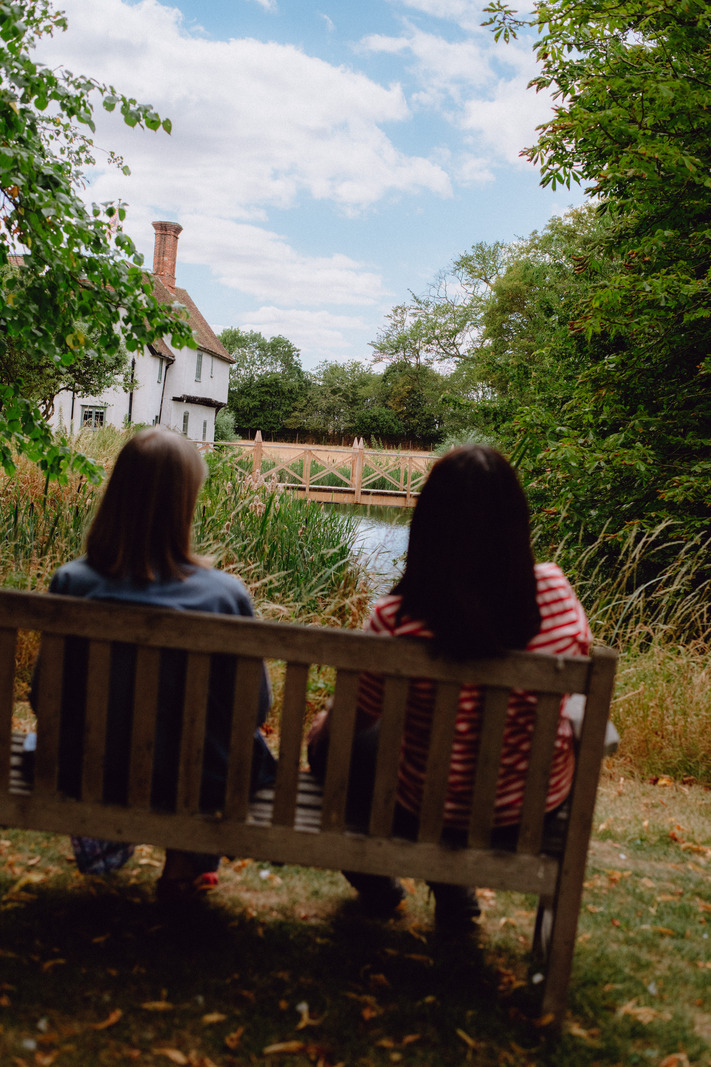
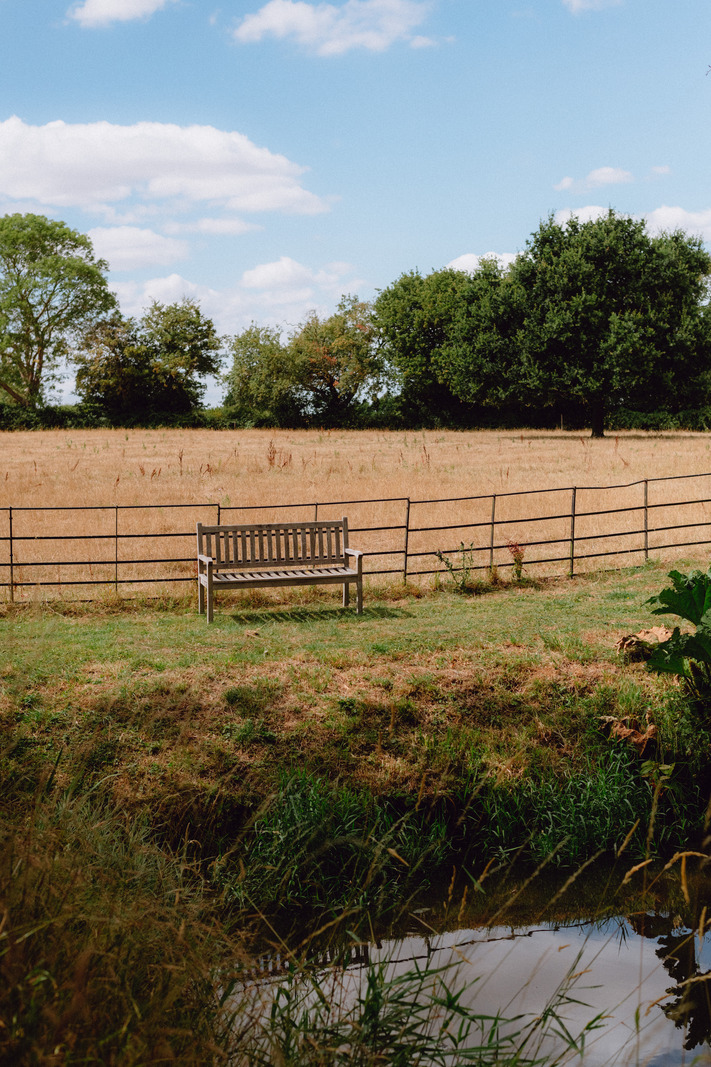
Deep in my heartland in the Suffolk countryside, in an oasis not far from where my family lived for 30 years, is a small, moated estate: a 14th-century house with an island garden and parkland beyond. Now, in August, the landscape a study in blonde fringed with dark trees, local artist Thomas Gainsborough would have felt at home among this pastoral bliss.

Newspaper publisher Hew Stevenson first saw the site in November 1992 with his wife, the author and journalist Leslie Geddes-Brown. (Leslie was the former deputy editor for both Country Life and The World of Interiors, and the author of countless books on gardens and interior design). Back then, Columbine was a concrete farmyard, covered in mud, surrounded by modern farm buildings with asbestos roofs and all the sad paraphernalia of a derelict farmyard.

“It was a forlorn house in a romantic setting, rising on two sides directly out of a deep moat”, Hew explained, “but half a dozen grain silos dominated the view as you approached, with a rusting petrol tank, a collapsing Nissan hut and a modern pre-fab concrete garage completing the scene. But somehow, we could see potential.”

With grain silos demolished and overhead wires buried, concrete and asbestos were removed to reveal timber-framed barns. Views were enhanced by planting 1,000 English native woodland trees, and a garden of vistas was planned; the moat was breached and the couple embarked on a lifelong transformation.

The formal garden, an acre on the levelled platform surrounded by the moat, was designed by friend George Carter to a 17th-century-inspired design, mainly of mown grass spaces subdivided by hornbeam hedges. A pleached lime avenue lined up with views from the house, while a small yew-lined ante room led to the house. Other spaces would be left as plain lawned rooms, with strategically placed gaps offering glimpses of Red Poll cattle in the park and views of the surrounding countryside.

As Leslie explained in an article for Country Life in 2016, “George left the planting to us, and because we like to keep things understated, we decided against flowering borders and massed shrubberies. We leave the moat banks wild and there is always a froth of cow parsley which seeds itself wildly and encourages wildlife”.

She continued “I suppose we have been influenced by Italian gardens where the designers have tried a bit of everything in a few acres, thus we have a small wilderness with native trees, an orchard filled with blossom all spring, and of course there is a bog garden planted with massed ferns and wild garlic (good for soup), but to create an understated rural space needs discipline, so we try to deny an urge to floss up the garden. Visitors praise its peaceful atmosphere. Like all gardens, peace is only achieved as a result of frenetic self-control”.

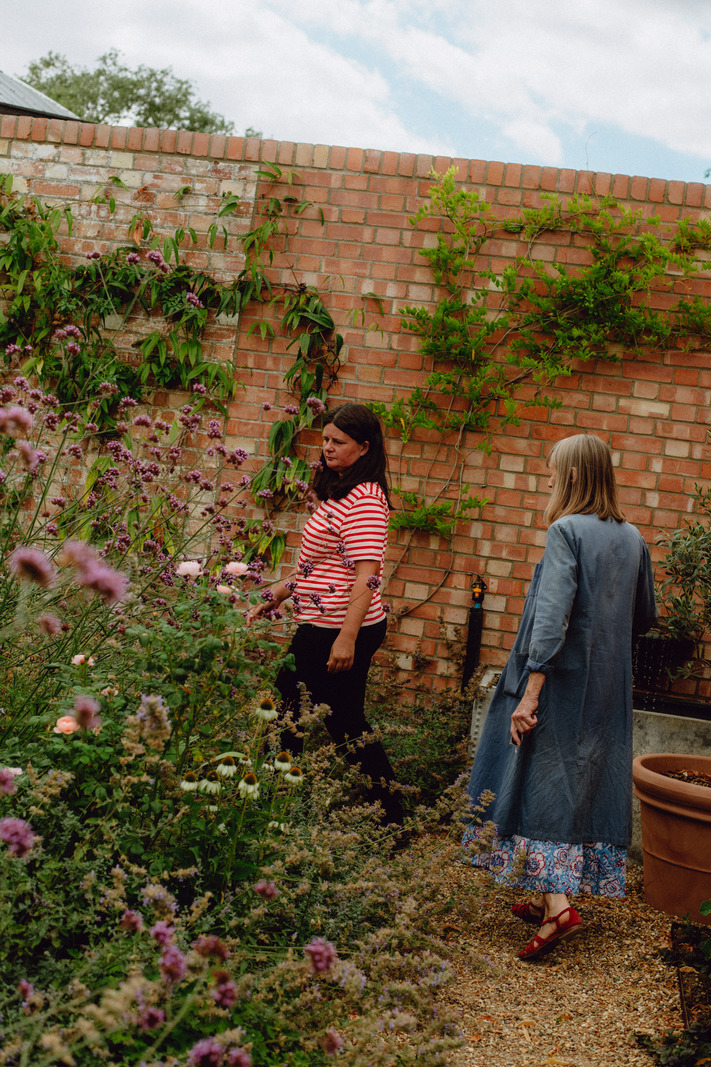
The approach to the house passes through the farmyard. A large modern barn blocked a view of the 18th-century West Barn, so the roof was removed, the walls lowered and the concrete floor dug out to make a gravelled courtyard with four flowerbeds – the creation of gardener Kate Elliot, who arrived at Columbine aged 16, almost 30 years ago. Like her flowerbeds, Kate’s career has blossomed: she is a member of the Gardeners’ Guild and the Chartered Institute of Horticulture, and is a holder of narcissus cultivars for the National Plant Collection.

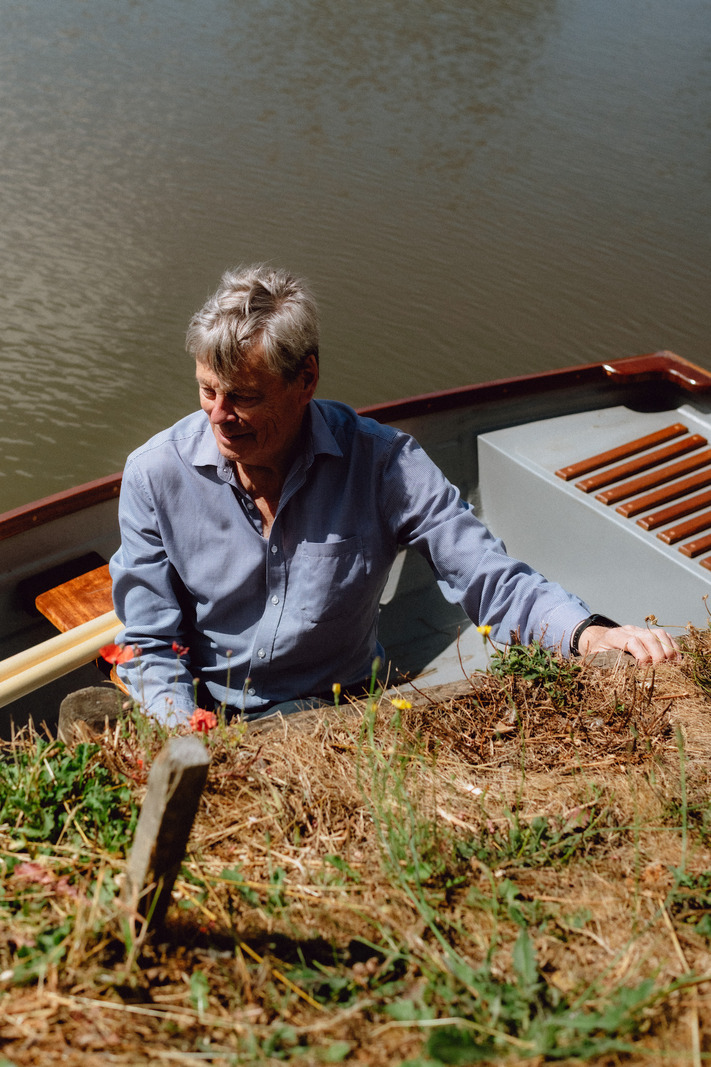
Very sadly, Leslie died five years ago, but Hew has carried on developing the garden, building bridges and enjoying the pleasure it brings to others. Thanks to Kate and her team, the garden opens regularly for the local hospice, raising thousands and inspiring its visitors. The spacious moat-side West Barn can be rented for weddings and parties, while the Gig House and Clock Tower are available for holidays.

Gardens grow and live on, a testament and reminder of their owners. The garden is at its best in spring, when a succession of massed bulbs chosen by Leslie take over the beds, walks, pots, orchards and wilder bits of Columbine. Last year, an Italian-style walled garden rose from a modern barn opposite the recently restored Clock Tower, while a stylish wooden bridge now crosses the northern bank of the moat, and a brand-new sturdy brick bridge welcomes visitors.

Garden clippings

If you need to create a barrier for either aesthetic or practical reasons, a hedge is an attractive and efficient solution. They diffuse wind and attract wildlife.

  • Classical hedges include these well-clipped favourites: evergreen yew and holly, deciduous hornbeam (as at Columbine) and beech in purple or green.
  • Native mixed hedges of hawthorn, blackthorn, field maple, dog rose and spindle with berries and hips are especially good for wild birds.
  • Fruit hedges of crab apple, elderberry, cherry plum, hazel and wild cherry offer extra bounty.
  • Low hedges: rosemary, lavender, hebe, berberis and ilex crenata (box substitute).
  • Unusual hedges: sea buckthorn with grey foliage and vitamin-rich orange berries, Pyrus catalia with ornamental pears and silky grey leaves, or tamarisk for a veil of tiny, pretty leaves and pink or white flowers.
  • Instant hedging is available from hedgenursery.co.uk, hedgesdirect.co.uk and wykehammatureplants.co.uk

Further reading

The gardens at Columbine Hall are open to the public on Sunday 20th September, 1-5pm. Book tickets via their website columbinehall.co.uk.

Follow Kate on Instagram.

How My Garden Grows: episode nine

listen here