


“Ghosts are a poet’s working capital.
They hold their hands out from a further shore.”
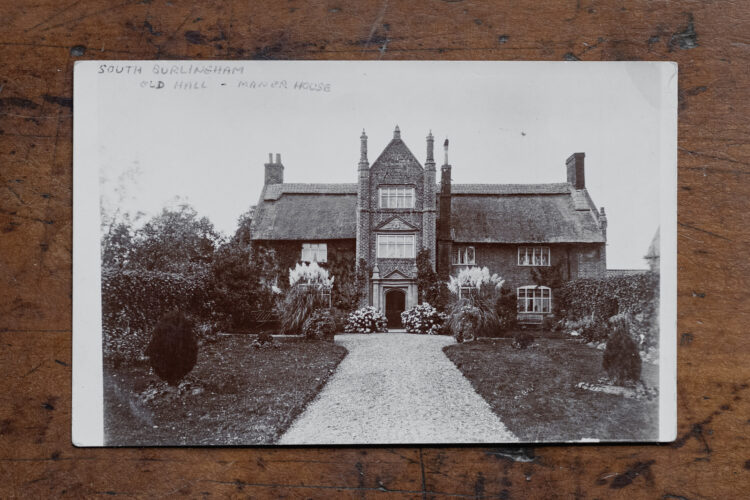
A little over 10 miles from the centre of Norwich, and much closer to the city’s creeping urban periphery, Old Hall sits in a landscape that still feels wild and remote. This is a silent, slow world of open fields, tidal rivers, Saxon church towers, and sedge-lined marshes. Less showy than the gentrified coastline to the north and less self-assured than the stately west of the county, the pocket of countryside between Norwich and Great Yarmouth has unsung qualities – not least a remarkable stock of medieval and Tudor buildings.
Old Hall is one of the very best of these structures, a compact manorial farmhouse, Elizabethan at its core, with a captivating set of additions from every phase of its history. There can be very few houses in England that possess Old Hall’s unique blend of renaissance architecture, decorated surfaces (ancient and modern), potent literary associations, and traces of lives lived with intensity, joy and creativity. The most recent custodians of the building, Margaret Steward and her husband Peter Scupham, stumbled across the house in 1990. Peter, who died three years ago, was a much-loved poet, respected for his technical ability and densely layered work, the latter characteristic also being a feature of the house.
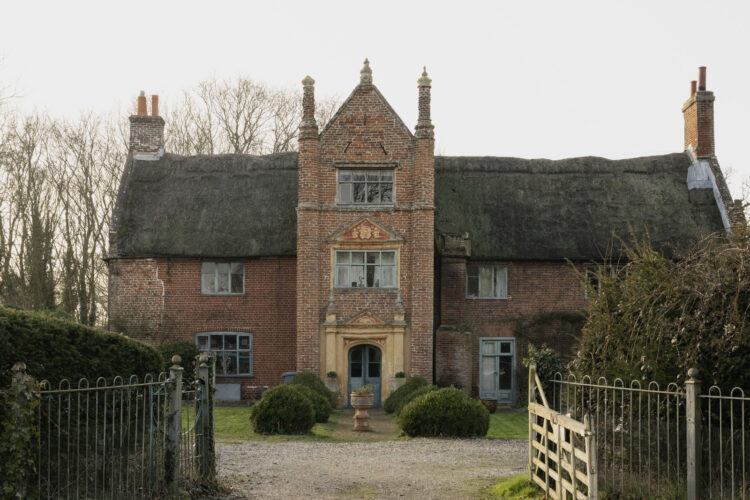
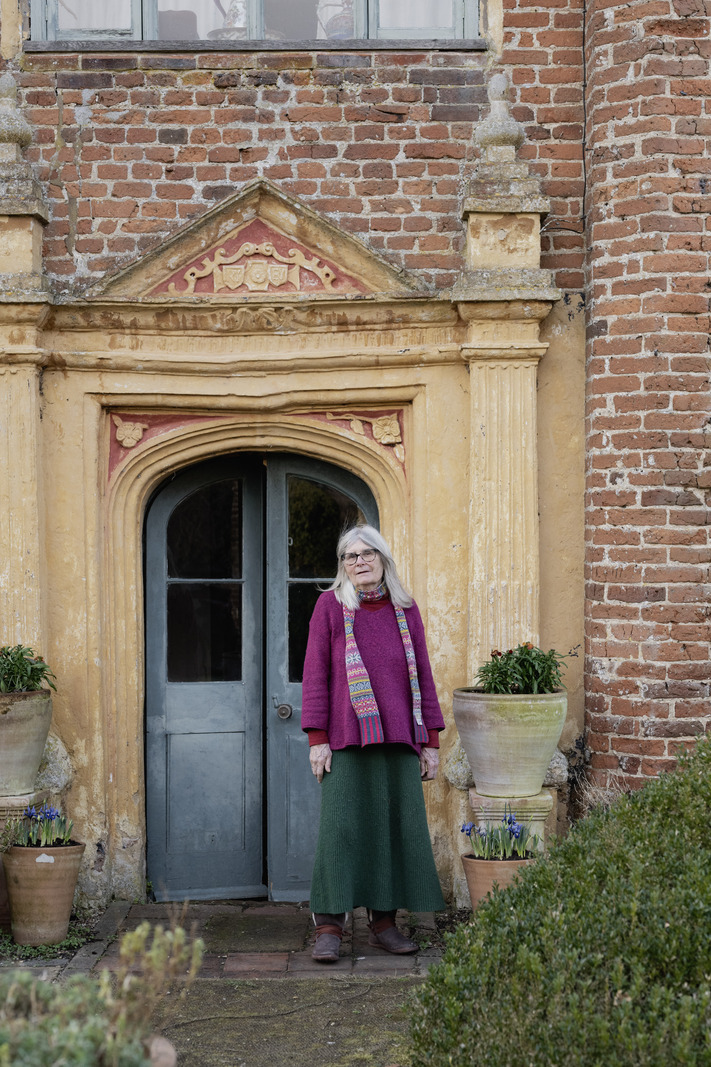
Approached from a sharp bend in the road, Old Hall looms abruptly over a yew hedge. At first glance it seems like many other Norfolk farmhouses, with sturdy brick walls supporting a thatched roof. Only as the porch comes into view does the house reveal itself to be utterly unlike anything else in the area. Projecting with a pleasing lack of symmetry, the entrance features stuccoed pilasters and pediments, a frieze with a jaunty mermaid and merman, and brick finials that crumble theatrically against the pale sky.
When they first discovered the house, Margaret tells me over tea, it was “boarded and shut up, damper and darker looking than it actually turned out to be”. Having purchased the property through the murky process of ‘invited offers’, the couple became the latest in Old Hall’s great chain of owners and occupants. Among their predecessors are the 17th-century lawyer Robert Younger and his daughter Anne, who married the playwright Robert Daborne from Old Hall. A contemporary of Shakespeare, Fletcher and Webster, Daborne’s works include A Christian Turn’d Turk, the story of a pirate called John Ward who converts to Islam. Following centuries of neglect, Daborne’s play, with its swirling anxieties about the Muslim world, has found new audiences in recent years (I read it as an undergraduate at King’s College London).
As Margaret and Peter slowly became acquainted with Old Hall’s maze of rooms, they discovered that some of its best features lurked behind layers of alteration. Much of this imposed work dated from the period when the house was owned by Norfolk County Council, who divided the building in two and leased it to smallholders as part of scheme for soldiers returning from the Great War. Council farms, the agricultural equivalent of council houses, are still relatively common in east Norfolk.
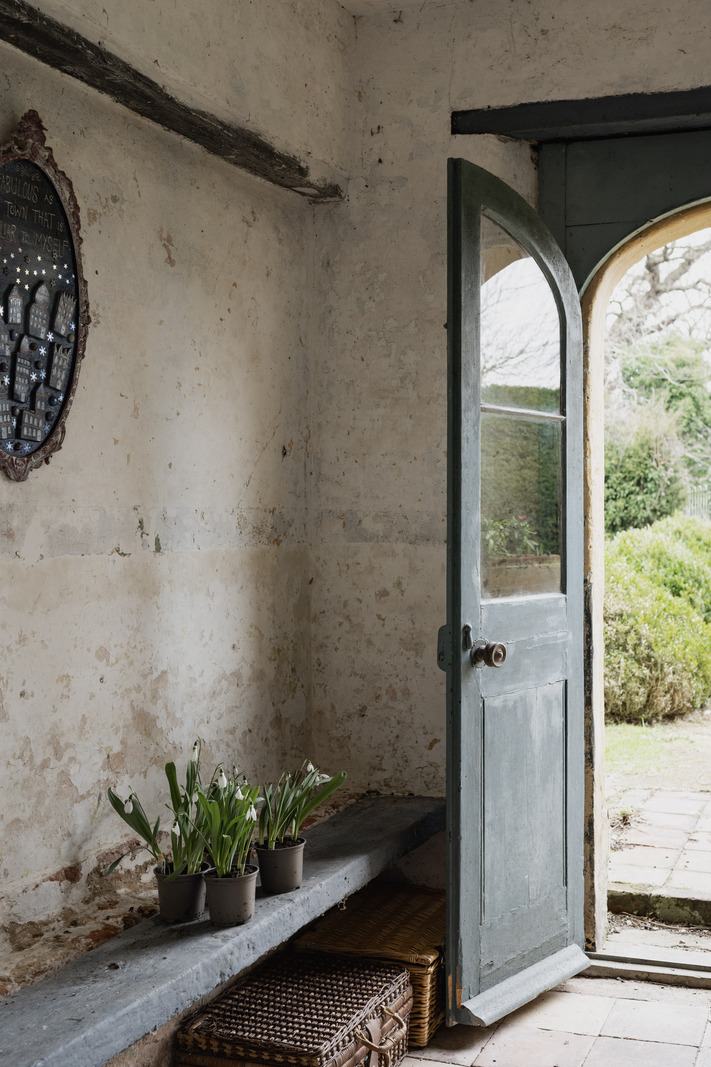
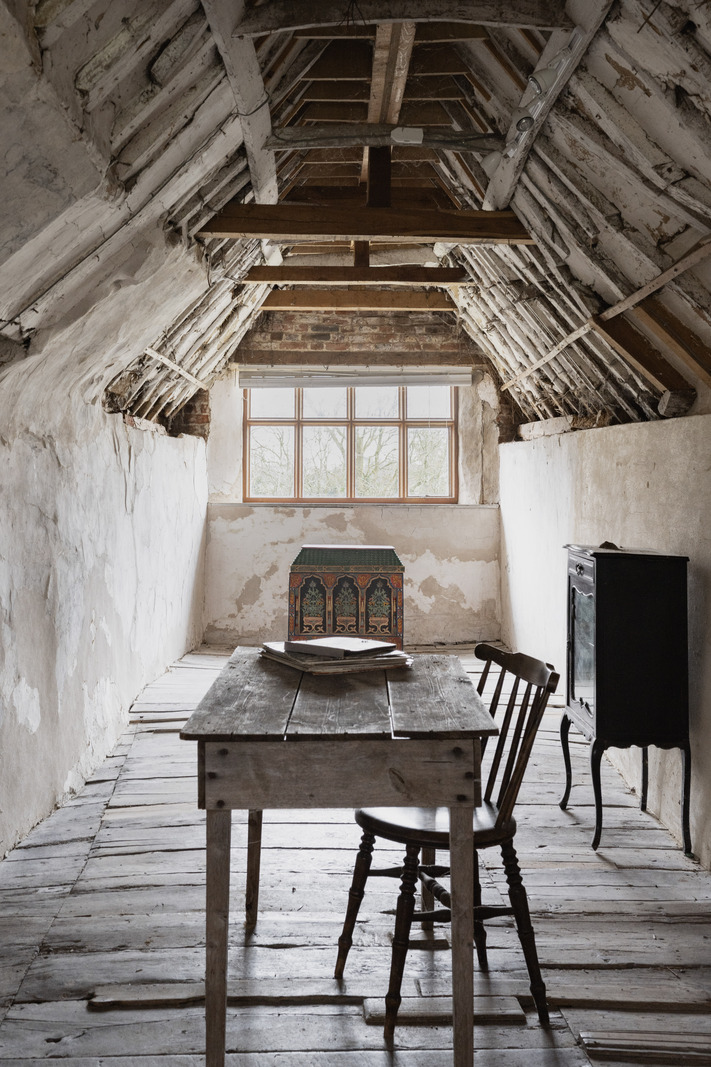
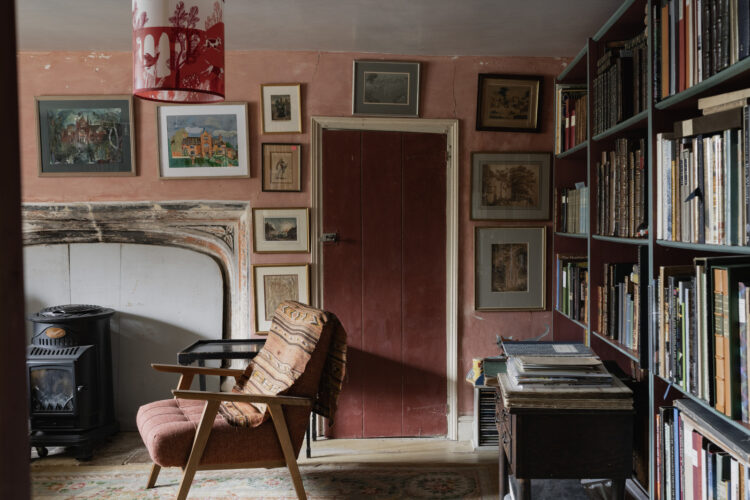
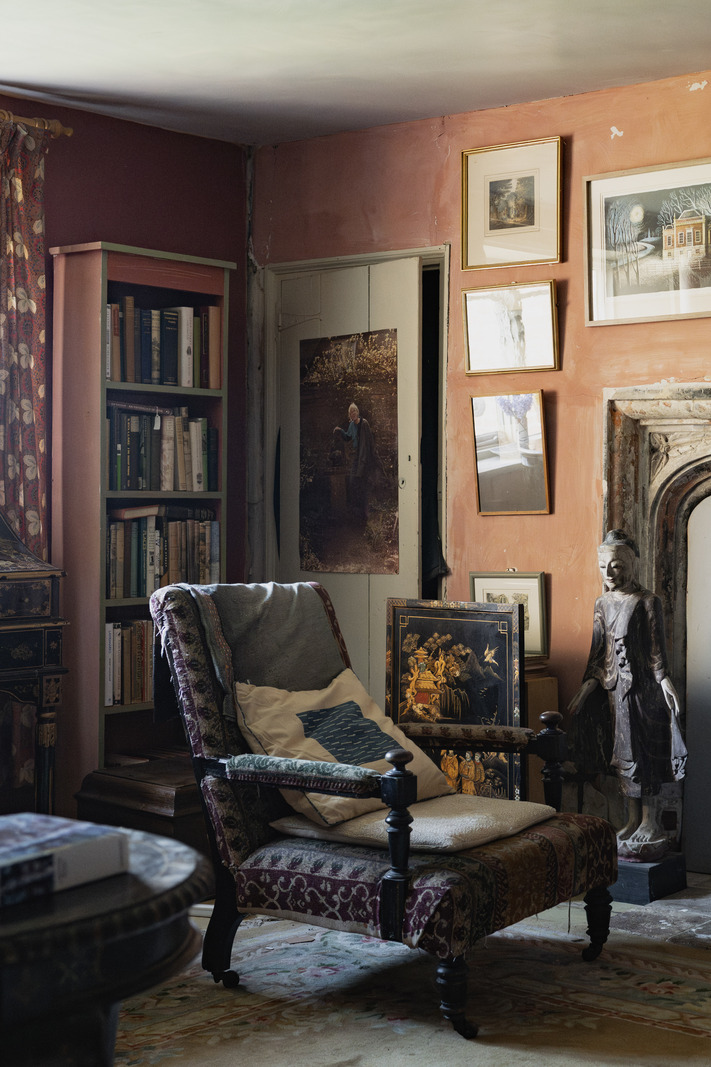
Passing through the faded front doors, painted an exquisite shade of teal blue, a screens passage opens onto a series of parlours and sitting rooms, the furthest of which has a cavernous fireplace. On the first floor is a solar, an upstairs room used in the 17th century for relaxing and entertaining, later commandeered by Peter for his library. Beyond this are a warren of intercommunicating bedrooms, including the ‘rose room’, named after the fading foliate murals on the walls. The top floor, approached by a spiralling oak staircase, has the best room in the house: a long, proud gallery that runs the width of the building, with undulating floorboards and tufts of thatch reaching through the lime plaster on the ceiling.
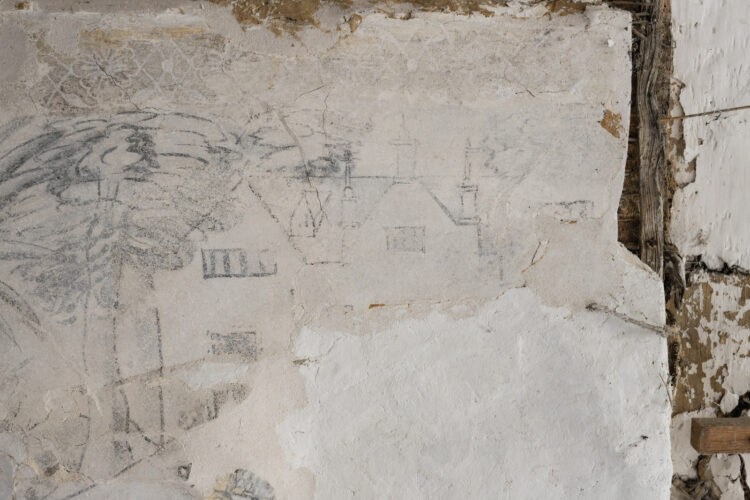
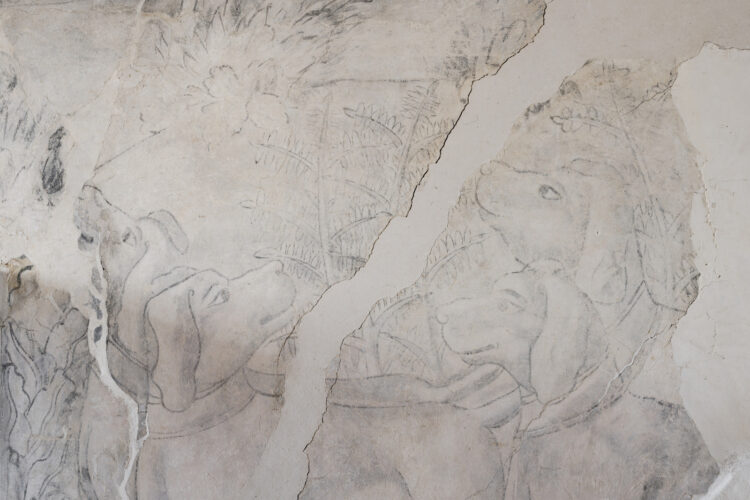
It was here that Margaret and Peter made their most exciting discovery: a stunning set of wall paintings of national significance. Executed in ‘grisaille’, the monochrome murals illustrate the various stages of a Tudor hunt. In one corner of the room, a pack of dogs stare out from the wall as if freshly painted, “a pinched Meet / with coal-black eyes / who must quarry out four centuries of spellbound sunlight”, writes Peter in a poem about the gallery. Below the east window, a huntsman sits frozen upon his horse, primed for the chase. Elsewhere the painter depicts the house not as it is, but as it might have been had the earliest occupants been wealthier or lived longer, with projecting wings to the north and south in a fashionable ‘E plan’.
Margaret and Peter’s thoughtful approach to restoring these murals, and sensitive interventions elsewhere, are a moving lesson in how humans can befriend a building. “We were not in a way the owners”, says Margaret, “more we were just looking after it for a bit, living lightly without altering too much”. Equally remarkable is the way that, without altering too much, the couple have managed to add their own strata of personality to an already richly layered building.
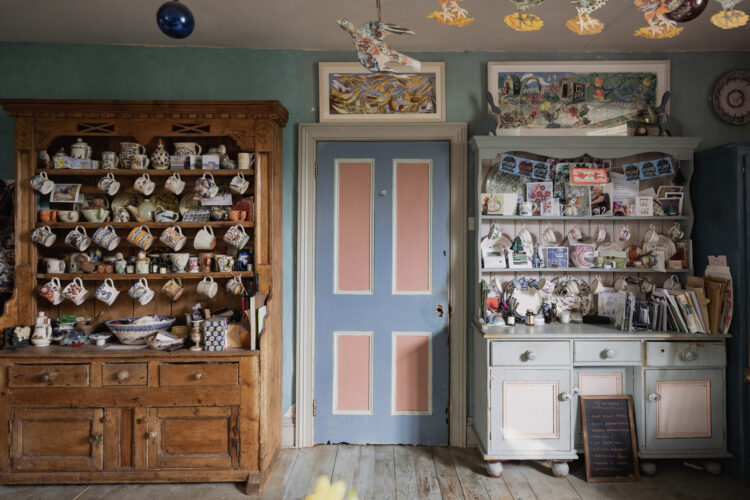
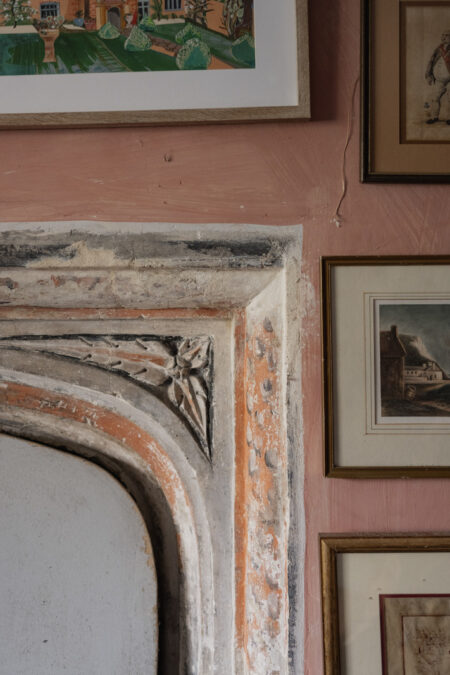
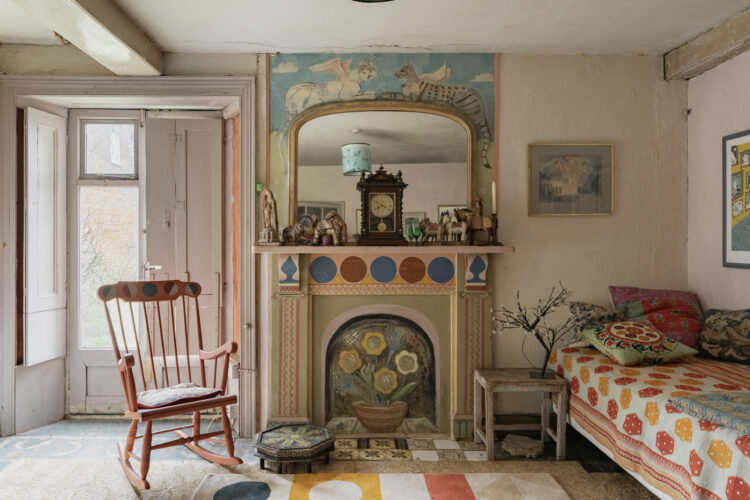
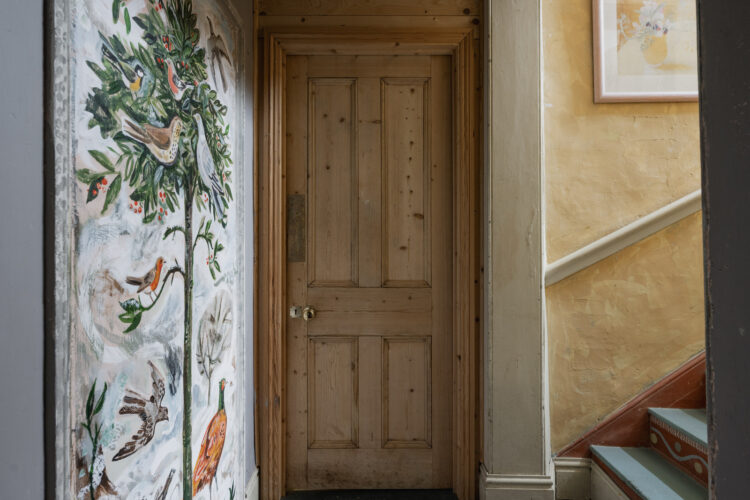
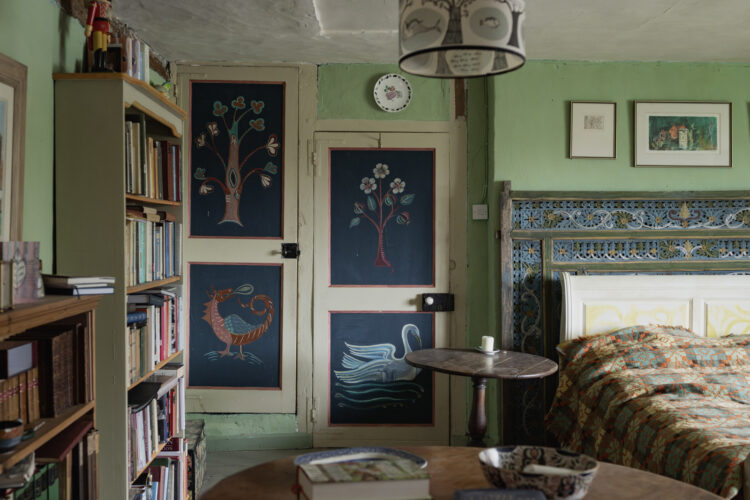
Taking her cue from the paintings in the long gallery and the rose room, Margaret and her friends, including the artist Mark Hearld, decorated many of the available surfaces in the house, from furniture to fittings. The influence of the Bloomsburys is unmistakable (“the Charleston of East Anglia” a friend once called it), but with a sense of colour that is more complex and dramatic than that of Duncan Grant or Vanessa Bell. “We saw the house as a series of theatre sets”, says Margaret, who taught drama in local schools, including my own, and regularly put on plays with Peter in the sprawling gardens.
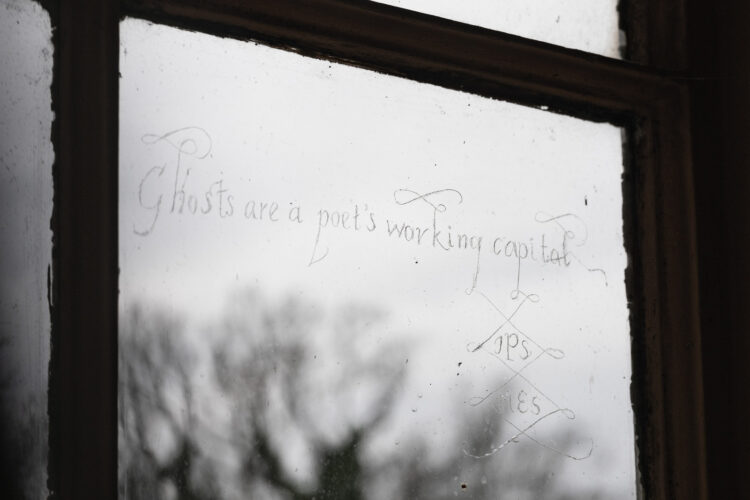
On the window of a guestroom, one of Old Hall’s many visitors has taken the liberty of engraving the words “Ghosts are a poet’s working capital”. The line, taken from a poem by Peter, is a typical example of the kind of playful flourish, often executed by friends, found throughout the house. As I read my way through Peter’s Collected Poems, it became clear that for him, as for Margaret, the word ‘ghost’ is not used in any ordinary sense. Rather than signifying something fear-inducing or paranormal, Peter’s ghosts are a more benign species of apparition – from Robert Daborne to the countless guests and family members who have become part of the fabric of the house, not least the inscriber of the window.
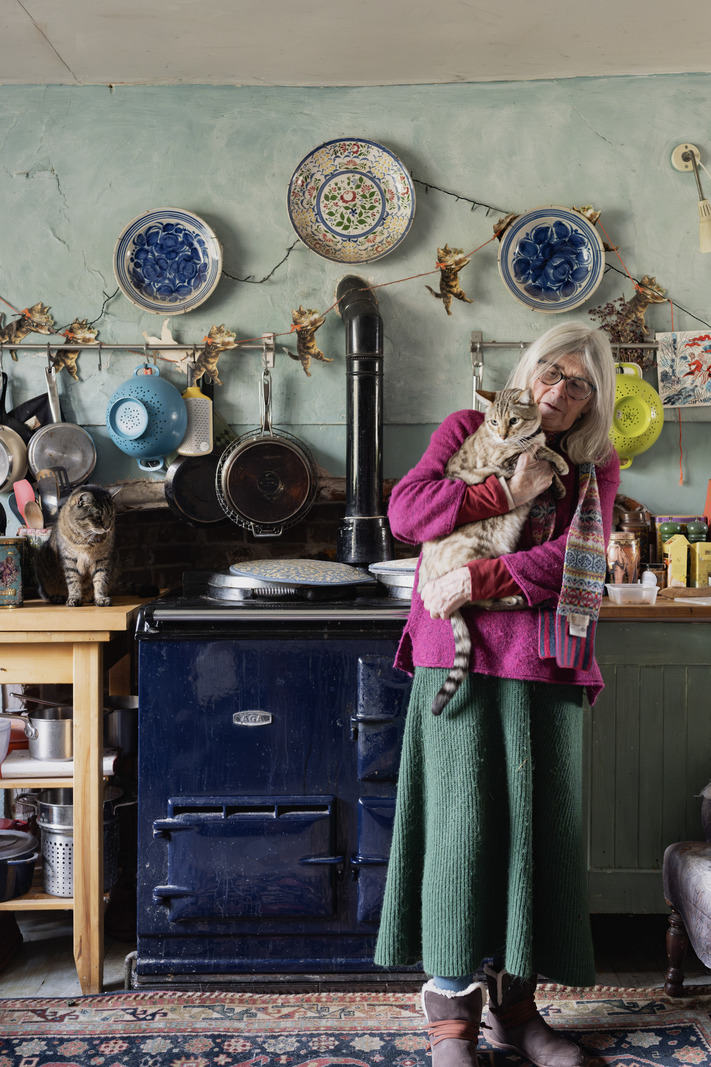
In the title poem from Peter’s final collection, Invitation to View, he imagines a group of visitors coming to Old Hall long after he and Margaret have left it behind – when they too have joined the ranks of benign ghosts. Just before I left, Margaret told me that Peter “liked to give the dead an inch or two more life through his poetry”, and in this case he extends the privilege to himself:
“Pity you didn’t know us in our day –
We might have found you sitting by the lime
In sleepy summer or in scented May
At lunch with Peter looking for a rhyme
He’d kicked into the long grass by the pond
And Margaret tickling some old cat. Yes, fond
of desultory stuff as life went by …”
Read more of Peter Scupham’s poems here.
George Younge is an an interior designer and craftsman. Follow him on Instagram here.
Stay inspired
subscribe